Banana peels become catalysts to enhance bio-oil from sewage sludge
Researchers in Qatar discovered that non-activated biochar from banana peels increased biocrude yield from sewage sludge to 37.88%, thanks to its high potassium content.
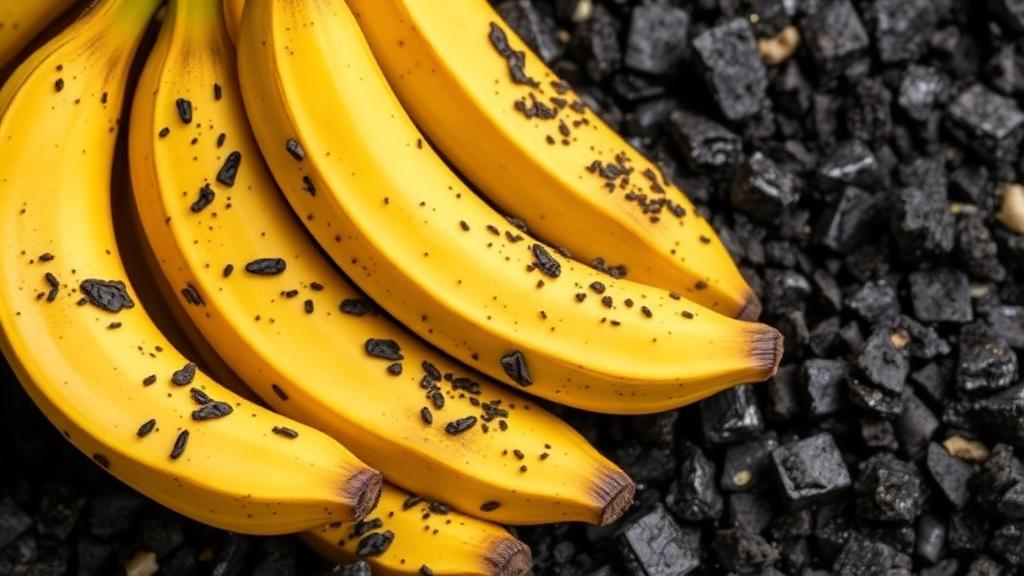
Researchers in Qatar have demonstrated a novel approach to valorizing waste streams by using biochar derived from banana peels as a catalyst to enhance bio-oil production from sewage sludge. The study, published in Case Studies in Chemical and Environmental Engineering, highlights the potential of combining agricultural residues with sewage sludge to create a more efficient hydrothermal liquefaction process.
The research team, led by Rim Ismail, Sabah Mariyam, Mohammad Alherbawi, and Tareq Al-Ansari, investigated the catalytic properties of biochar produced from banana peels and agricultural residues. They compared three feedstocks: sewage sludge pellets, mixed agricultural residues, and banana peels. Each was processed to eliminate heat and mass transfer limitations and analyzed for its chemical composition and calorific value.
Banana peels exhibited the highest volatile matter content and calorific value, making them a promising candidate for biochar production. The biochars were produced in a fixed-bed quartz reactor under nitrogen and carbon dioxide atmospheres, with the latter promoting micropore enlargement through the Boudouard reaction. However, initial biochars showed low surface areas, prompting a two-step chemical activation with potassium carbonate.
The activation process dramatically increased the surface area of banana peel biochar, enhancing its catalytic properties. This activated biochar, rich in potassium, was tested in hydrothermal liquefaction of sewage sludge. The non-activated biochar increased biocrude yield significantly, while the activated version showed a different catalytic behavior, indicating that potassium content, rather than porosity, was key to performance.
The study suggests that waste-derived biochars, particularly those rich in naturally occurring alkali metals like potassium, could play a significant role in bioenergy production. This approach not only addresses waste management challenges but also contributes to the circular economy by transforming waste into valuable resources.
Source: Biochar Feed