Clearing the way for renewable carbon fiber production
Engineers at Washington University in St. Louis have developed a renewable carbon fiber using lignin, reducing production costs by 25% and maintaining industry standards for strength.
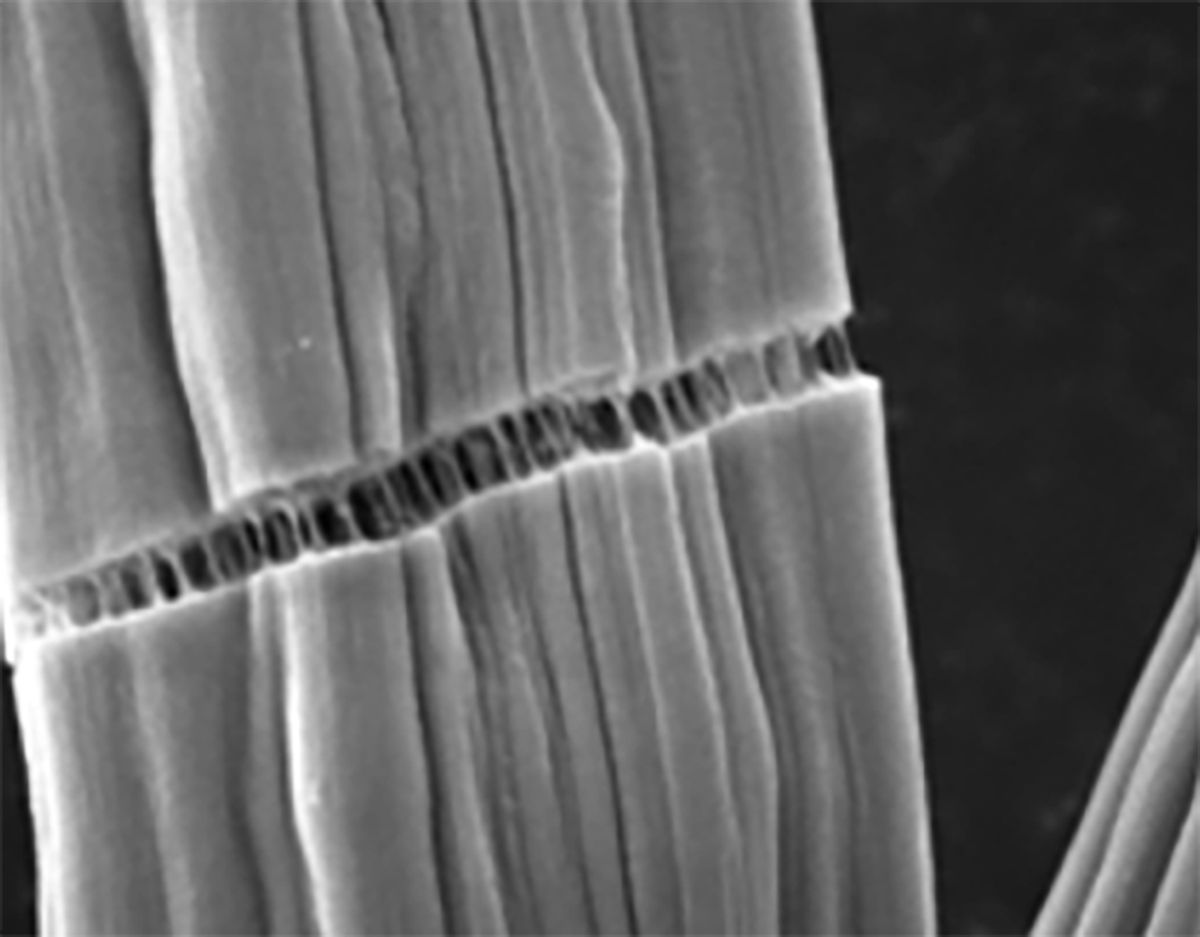
Researchers at Washington University in St. Louis have developed a method to produce renewable carbon fiber using lignin, a waste product from the paper pulping and biorefining industries. This advancement could reduce reliance on petroleum-derived polyacrylonitrile (PAN), which is costly and contributes to carbon emissions. The study, published in the journal Matter, highlights the potential for lignin to replace up to half of the PAN used in carbon fiber production, cutting costs by 25% and lowering emissions.
The team, led by Joshua Yuan, Lucy & Stanley Lopata Professor and chair of energy, environmental and chemical engineering at WashU McKelvey Engineering, has also introduced a process that incorporates single-walled carbon nanotubes into the polymer matrix. This innovation enhances the crystallization alignment, which is crucial for the quality of carbon fiber. The nanotubes act like rebar, improving the tensile strength and elastic modulus of the final product.
The research outlines a three-step process: creating a nanotube template that mixes with lignin and PAN, running the precursor solution through wet spinning and tension-assisted heat treatment, and optimizing carbonization to strengthen the fiber. This method results in a lignin-based carbon fiber with a highly aligned crystalline structure, meeting industry standards for various applications, including automobiles, sports equipment, and wind turbines.
The study received support from the Lucy & Stanley Lopata Professorship, the US Department of Energy, the Institute for Materials Science and Engineering, and the NSF CURB Engineering Research Center.
Source: Carbon Fiber Feed