Colour changing carbon dots provide new tool against counterfeit goods
Researchers in China developed colour-changing carbon dots that fluoresce under ultraviolet light, offering a new method to combat counterfeit goods. The dots respond to acidity, solvents, and concentration.
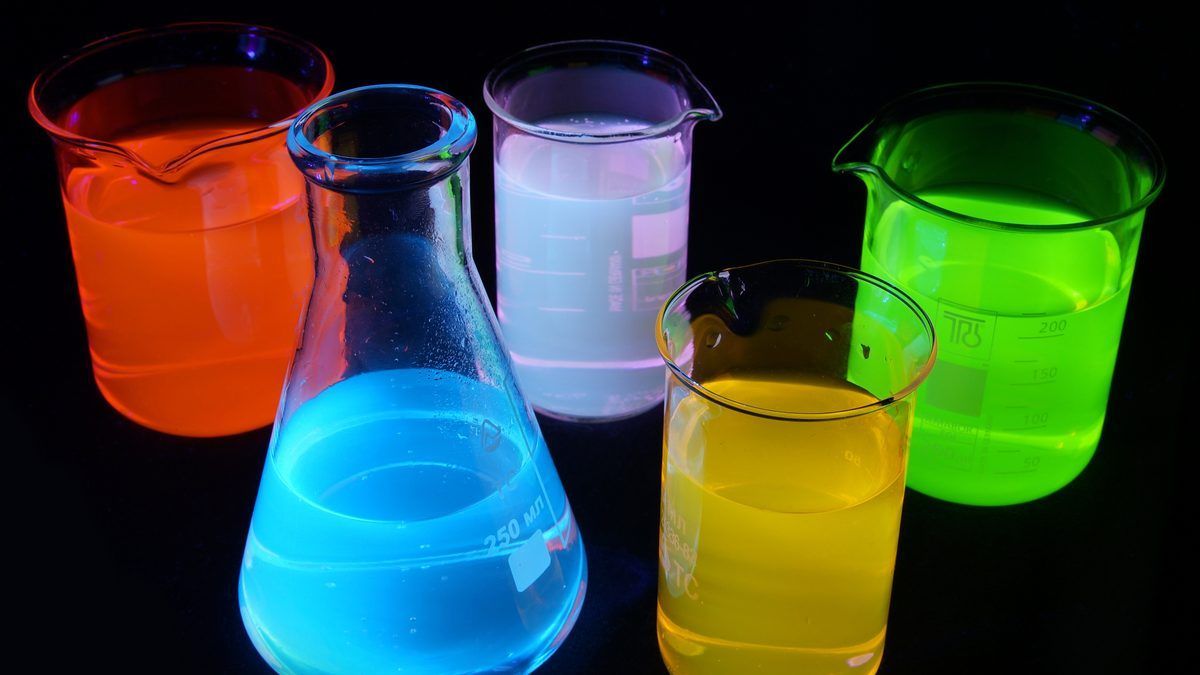
Researchers in China have developed innovative color-changing carbon dots that could significantly enhance anti-counterfeiting measures. These carbon dots, created from two precursor compounds, exhibit bright fluorescence under ultraviolet light and change color based on acidity, solvent type, and concentration. The findings were published in Optics and Photonics News by Optica.
Carbon dots are characterized by their bright fluorescence at visible wavelengths, with a carbon-rich core and a shell of surface molecules that influence color. Previous attempts to alter the color of these dots resulted in minimal wavelength changes and reduced brightness. The new approach addresses both issues by incorporating functional groups on the dot surfaces that react to their chemical environment. In liquid form, the dots fluoresce red in acidic conditions and green in alkaline solutions, allowing the color to act as a sensor. The color change is reversible with changes in pH, and similar shifts occur in various solvents such as water, toluene, methanol, and ethanol, as well as at different concentrations.
By adjusting the ratio of the two precursors, the researchers further modified the color of the carbon dots. One variant produced colors ranging from yellow-green to orange-red with nearly 100 percent efficiency, while another variant extended the range into the blue spectrum with slightly lower efficiency. This tunability allows for a full spectrum of colors by varying the proportions of the starting materials.
The carbon dots can also be used in solid forms. When mixed with polymers, they create powders and thin films that fluoresce in blue, green, yellow, and red wavelengths. These films are foldable and have been used to coat decorative objects. Additionally, Taiwanese scientists have developed a self-healing gel that changes color when stretched or heated, indicating rapid advancements in smart materials responsive to touch and chemical changes.
These films can encode hidden messages, using different colors to represent simple text in fluorescent films. As a result, the color-changing carbon dots function as an ink that is only visible under specific lighting conditions. Replicating a fake label would require the same dots, films, and lighting conditions, making it a challenging task.
Traditional anti-counterfeiting tools have limitations. Holograms can be duplicated, and QR codes can be reproduced with printers. In contrast, a color-shifting film is more difficult to replicate because it requires precise chemistry. While a hologram only needs a printer, these dots necessitate specific precursors and lighting, highlighting the security advantage.
The research team also developed a multi-level encryption system, encoding information in a 6 by 8 grid by altering initial conditions. The dots were then exposed to ultraviolet light or sunlight or treated with acid. One demonstration combined fragmented data from four display channels into a single complete password.
The significance of this development lies in its potential to combat the global counterfeit goods trade, which costs billions annually. Color-changing carbon dots could protect labels, documents, banknotes, and medicine packaging, with a quick light flash verifying authenticity.
Led by Siyu Lu from Zhengzhou University, the research offers a novel approach to smart optical materials that sense their environment and convey information. The study was published in ACS Central Science. Such advancements demonstrate how laboratory science can transition into everyday applications, like transparent solar panels turning windows into power sources.
While the carbon dots are still in the experimental phase and not yet commercially available, they represent a promising step forward. Factories will need to scale up film production and ensure durability against heat, light, and time. However, the bright colors, flexibility of the films, and functional codes indicate that these carbon dots have successfully passed initial tests, with real-world applications on the horizon.
The potential for a tiny dot that changes color with a simple chemical reaction to protect consumer goods is both elegant and practical. This blend of aesthetics and functionality is rare, making this scientific advancement particularly noteworthy.
Source: Emerging Nano Carbons