Review assesses MXene synthesis methods and safety for biomedical use
Researchers reviewed MXene synthesis methods, highlighting safer alternatives to hydrofluoric acid etching. They assessed the biomedical potential of MXenes, including their use in cancer therapies and diagnostic imaging.
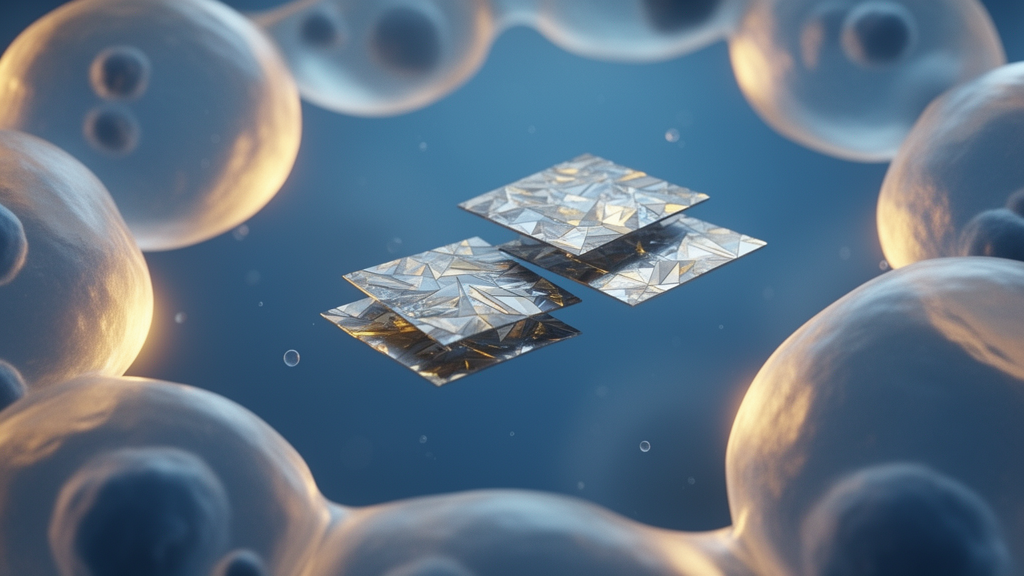
An international research team led by Sowri Victor Varun Raju and Shanmuga Sundar Saravanabhavan has published a comprehensive review in Discover Materials, examining the synthesis and biomedical applications of MXenes. These two-dimensional nanomaterials, composed of transition metal carbides, nitrides, and carbonitrides, have gained prominence over the past decade due to their diverse functionalities in energy storage, electrochemistry, and biomedical engineering. MXenes are characterized by the chemical formula Mn+1XnTx.
The review critically assesses the main chemical methods for synthesizing MXenes from their layered MAX phase precursors. It highlights the shift from traditional hydrofluoric acid etching to safer alternatives, such as in situ hydrofluoric acid generation using lithium fluoride and hydrochloric acid (LiF-HCl), molten fluoride salt treatments, electrochemical exfoliation, and hydrothermal or solvothermal methods. These synthesis routes impact the nanomaterials' surface termination spectra, structural defects, colloidal stability, and scalability for biomedical applications.
A significant aspect of the review is the comparison between hydrofluoric acid etching and hydrofluoric acid-free methods, focusing on their implications for biomedical use. The authors emphasize that the etching chemistry affects the biological toxicity, chemical functionalization, and clinical suitability of the materials. By analyzing how different reagents alter the nanomaterial interface, the review underscores the importance of synthetic choices in establishing the safety characteristics necessary for medical applications.
The review outlines the core physicochemical properties that make MXenes suitable for diagnostic and therapeutic uses, such as high electrical conductivity, tunable surface terminations, large specific surface area, and strong near-infrared photothermal conversion. These properties have enabled MXenes to be used in photothermal cancer therapy, photodynamic therapy, and sonodynamic cancer therapy.
In diagnostic imaging, MXenes are explored as contrast and detection agents in various modalities, including magnetic resonance imaging (MRI), computed tomography (CT), photoacoustic imaging, and fluorescence detection. The review evaluates surface functionalization strategies to enhance the performance and safety of these diagnostic and therapeutic systems in physiological environments.
To provide guidance for safety evaluations, the authors compile a toxicological profile covering oxidative stress, immunotoxicity, genotoxicity, hemocompatibility, and biodegradability. The review addresses the inconsistent findings in current safety literature, aiming to clarify the biological tolerance of these nanomaterials.
While much research has focused on titanium carbide MXene Ti3C2Tx, the review expands to include other MXenes such as niobium carbide (Nb2C), tantalum carbide (Ta4C3), vanadium carbide (V2C), titanium nitride (Ti2N), and molybdenum carbide (Mo2C). It highlights the potential of MXenes in treating neglected cutaneous parasitic infections like cutaneous leishmaniasis and hookworm-related cutaneous larva migrans, suggesting specialized dermatological applications.
Despite laboratory advancements, the review identifies several translational challenges for clinical application. These include limited oxidative stability, inconsistent surface terminations, batch variability, and the lack of GMP-compatible synthesis methods. The authors conclude that overcoming these challenges is crucial for advancing MXenes in clinical diagnostics and targeted therapeutics.
Source: MXenes