Disposable graphene-copper sensor detects lysine enantiomers in whole blood
Romanian researchers developed a disposable graphene–copper sensor that detects lysine enantiomers in whole blood at concentrations as low as one attomole per litre, aiding cancer diagnostics.
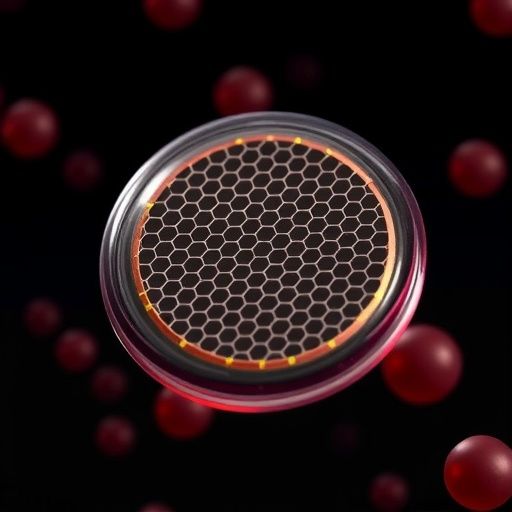
Romanian researchers have developed a disposable electrochemical sensor platform using a graphene–copper composite to detect lysine enantiomers in whole blood. This platform, described in the Journal of Materials Science, offers potential for rapid amino acid chirality profiling in cancer diagnostics, where enantiomeric balance is a significant biochemical indicator.
The sensor, created by Ergün Yukmel Rasit, Raluca-Ioana Stefan-van Staden, and Damaris-Cristina Gheorghe, utilizes a stochastic sensing approach. It features a graphene–copper composite modified with α-cyclodextrin, which enables the detection of individual analyte interactions at the molecular level. This method allows the sensor to differentiate between L-lysine and D-lysine in the complex matrix of whole blood without prior chemical separation.
Graphene's role is crucial due to its high conductivity and large surface area, which enhances electron transfer. Copper atoms in the composite provide additional redox centers, while α-cyclodextrin acts as the chiral recognition element, distinguishing lysine enantiomers by their binding geometries. This setup enables the sensor to produce distinct current signatures for each enantiomer, allowing precise quantification.
The sensor's performance is notable, with a detection range for L-lysine from 1.00×10⁻¹⁶ to 1.00×10⁻⁴ mol L⁻¹ and for D-lysine from 1.00×10⁻¹⁴ to 1.00×10⁻⁸ mol L⁻¹. This contrasts with conventional methods like liquid chromatography, which require extensive preparation and equipment. The new platform provides enantioselective results directly from whole blood, with recovery rates above 99% for both enantiomers.
The research is motivated by the field of chiral metabolomics. Lysine is essential for protein structure and gene regulation, with its acetylation patterns linked to cancer. The sensor's ability to analyze lysine enantiomers in blood could reveal important metabolic signatures for diseases like lung cancer, where shifts in amino acid levels are documented.
The Bucharest team has previously developed similar platforms for other amino acids. This new lysine sensor combines chiral recognition with a disposable format, making it cost-effective for clinical use. The platform's design simplifies the detection process, integrating sample preparation, separation, and analysis into a single step suitable for small blood samples.
Future clinical application will require validation across diverse patient groups. The platform's low detection limits were achieved under controlled conditions, and further studies are needed to ensure reproducibility and correlation with clinical outcomes. Supported by Romania’s Nucleus Program, this research contributes to the trend of moving complex molecular measurements to accessible, single-use devices.
Source: Graphene Feed