Flexible material developed for low-light artificial visual perception
Researchers created a flexible memristor using perovskite quantum dots and graphene oxide, improving low-light image recognition by over 10% and doubling the signal-to-noise ratio.
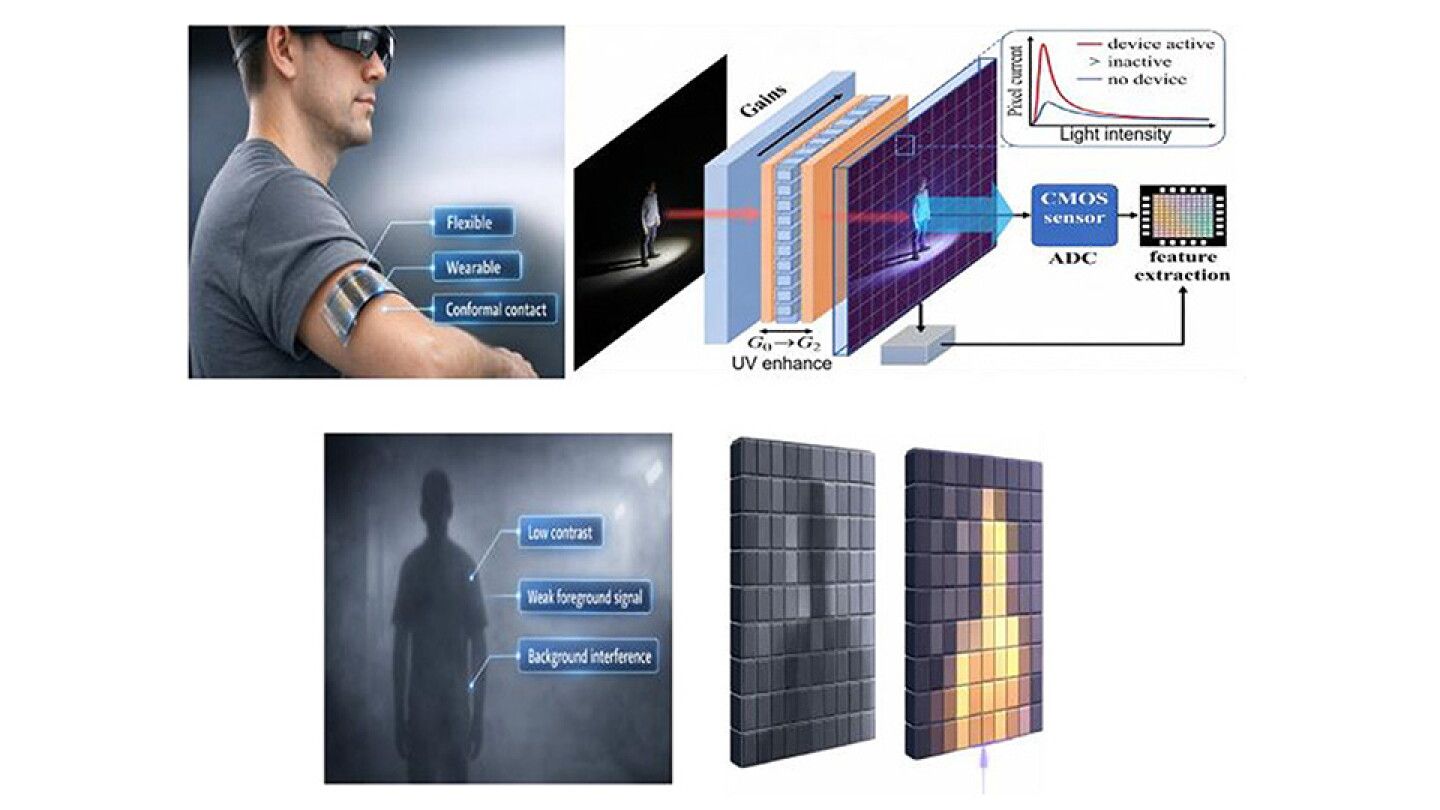
Researchers have developed a composite material combining perovskite quantum dots and graphene oxide to create a memristor with potential applications in flexible neuromorphic visual systems. This material is designed to mimic the biological process of signal weight adjustment, crucial for artificial retina-like sensors.
The memristor exhibits different behaviors under varying light conditions. In low-light environments, its conductance range expands, enhancing its ability to filter noise and amplify faint signals. This capability allows the material to process low-contrast images, resulting in clear silhouettes and improved feature extraction for object recognition.
Jingjuan Wang, one of the authors, noted that this device-level tuning significantly enhances neuromorphic vision performance. The memristor improves recognition accuracy by over 10%, doubles the signal-to-noise ratio, and effectively separates foreground and background signals, all processed locally on the flexible sensor without additional circuitry.
The quantum dot and graphene oxide memristor is also highly flexible, maintaining functionality after extensive bending tests. Its resistance to cracking under deformation makes it suitable for wearable applications, such as attaching to curved surfaces to capture ambient light signals.
Future research aims to integrate these flexible memristor arrays with low-power circuits and incorporate polarization and wavelength-specific responses to emulate human color vision, advancing real-time image classification capabilities.
Source: Graphene Feed