Graphene thin films for neural interfaces
Researchers at ICN2, led by Jose A. Garrido, are developing graphene-based thin film devices for neural stimulation and recording, with work spanning device fabrication, in vivo testing in rodent and large-animal models, and clinical translation efforts. The work demonstrates a pathway for graphene to move from laboratory research into regulated medical devices, advancing the material's role in bioelectronics beyond conventional carbon fiber or composite applications.
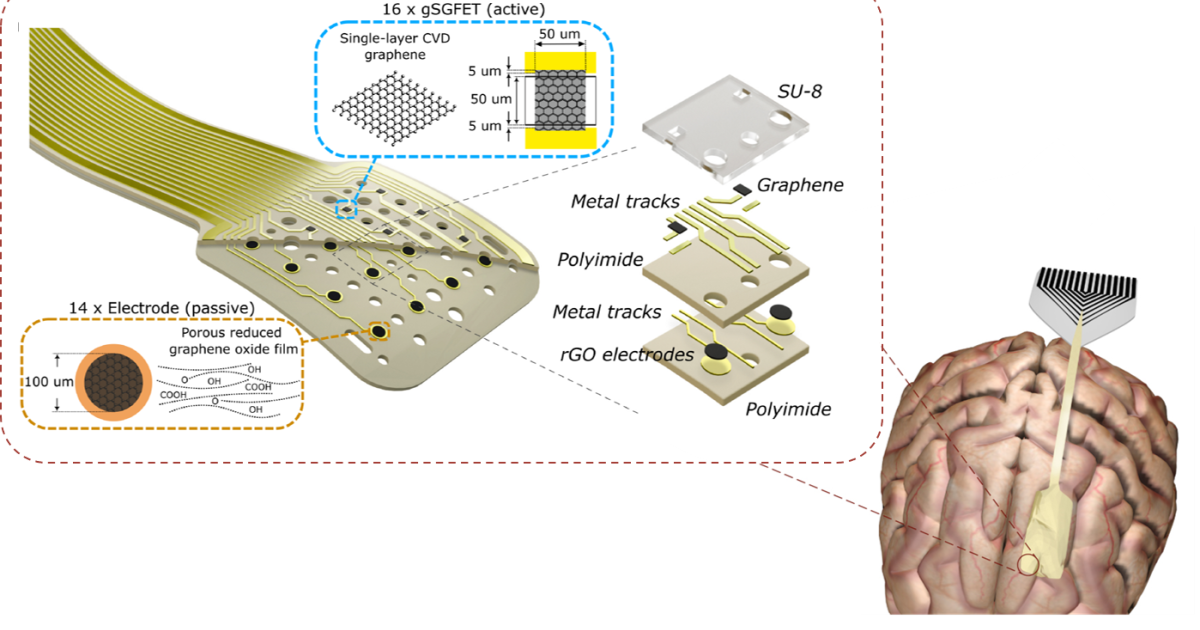
Graphene-based materials are emerging as promising candidates for advanced neural interfaces, offering unique physicochemical properties suitable for implantable devices. These materials are being explored to overcome limitations in current neurotechnology, such as inadequate focal stimulation and low signal-to-noise ratios.
Recent developments in graphene thin film technology have focused on enhancing neural stimulation and recording capabilities. Key areas include device architecture, microfabrication techniques, and surface engineering to improve charge injection and reduce noise. The technology's in vivo performance has been tested in both rodent and large-animal models, demonstrating spatial selectivity and chronic stability.
Efforts are underway to translate graphene-based neural interfaces into clinical settings. This involves addressing challenges related to scalable manufacturing, safety, and regulatory compliance. Jose A. Garrido, a leading researcher at the Catalan Institute of Nanoscience and Nanotechnology, is at the forefront of this research, contributing to significant national and European initiatives aimed at developing these advanced biomedical applications.
Source: Graphene Feed