International Virtual Institute and COMLURB convert urban waste into energy
The International Virtual Institute of Global Changes and COMLURB have converted approximately one ton of urban tree trimmings in Rio de Janeiro into 300 kilograms of biochar and pyrolytic oil using pyrolysis. This initiative transforms municipal green waste into valuable resources for soil improvement and energy research, highlighting a sustainable approach to waste management in the carbon materials sector.
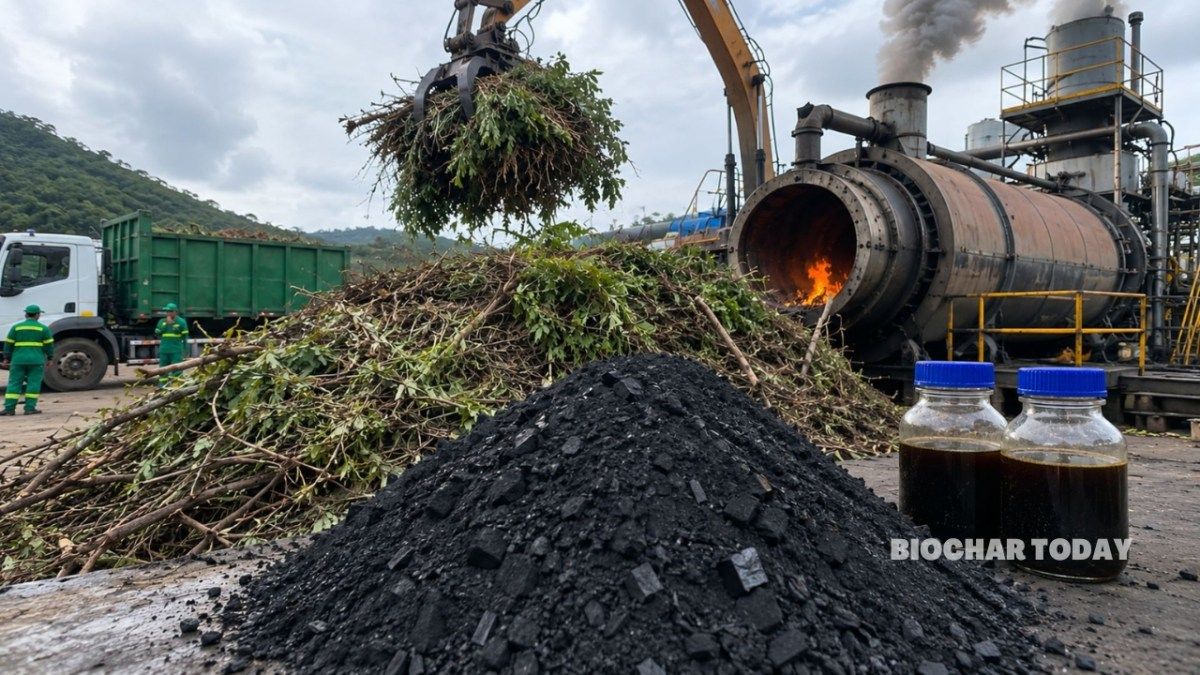
The International Virtual Institute of Global Changes and the municipal urban cleaning company COMLURB have collaborated in Brazil to transform urban tree trimmings into biochar and pyrolytic oil through pyrolysis. This project converts municipal green waste into valuable inputs for soil amendment and energy research.
This research initiative in Brazil has successfully demonstrated the conversion of urban tree trimmings into biochar, a carbon-rich material created from biomass decomposition in low-oxygen conditions. Biochar has applications in environmental remediation, soil improvement, agriculture, carbon sequestration, energy storage, and sustainable materials. Conducted by the International Virtual Institute of Global Changes (IVIG/COPPE/UFRJ) in partnership with COMLURB in Rio de Janeiro, the project repurposes public maintenance waste into valuable environmental resources. The experimental process, carried out at the Laboratory of Applied Research in Decarbonization and Pyrolysis, utilized approximately one ton of municipal green waste feedstock to generate roughly 300 kilograms of combined biochar and pyrolytic oil, establishing a new technological route within the regional circular economy.
The primary challenge addressed by this initiative is the operational and economic burden of managing urban vegetation waste. Municipalities face logistical constraints, requiring specialized teams, collection vehicles, dedicated receiving centers, and complex disposal planning to handle the influx of branches and leaves from routine maintenance. Historically treated as an operational cost and logistical liability, this organic waste stream has strained municipal management infrastructure and budgets without yielding productive applications.
To address these disposal challenges, researchers implemented a thermochemical conversion solution using laboratory-scale pyrolysis technology. COMLURB supplied the tree trimmings and organic waste to the university’s research facility. In a controlled, low-oxygen environment, the biomass underwent thermal decomposition at high temperatures, converting the raw organic matter into stabilized chemical derivatives. This process bypasses conventional disposal pipelines by altering the material’s structural composition, reducing waste volume while capturing its elemental components.
The project established a technological pathway for converting a public liability into dual technical inputs of scientific and practical utility. The resulting carbon-rich biochar provides a baseline material for studies on soil amendment, nutrient retention, and long-term carbon storage. Simultaneously, the recovered pyrolytic oil offers a substrate for future industrial and sustainable energy applications. This collaboration demonstrates how municipal planning and applied science can transform urban waste management expenses into ecological and technical assets.
Source: Biochar Feed