18 articles on Carbon Nanotubes (CNTs) in Composites.
Researchers have developed closed-form entropy measures for degree-based topological indices in hyper armchair carbon nanotubes.

Researchers are enhancing composite materials by integrating carbon nanotubes and graphene-based sheets at the interlaminar regions, potentially improving their failure resistance.

Researchers in South Korea developed a carbon nanotube nanocage that increased the glass transition temperature of a composite by 119%, from 160°C.
Researchers optimized the mechanical properties of thermoplastic polyurethane composites reinforced with multi-walled carbon nanotubes through T6 heat treatment.

Researchers created a carbon nanotube and magnetite aerogel that nearly doubles heating efficiency in induction welding of carbon fiber composites.

Researchers found that using a kitchen blender is more environmentally friendly and effective than traditional ball milling for processing multi-walled carbon nanotubes.

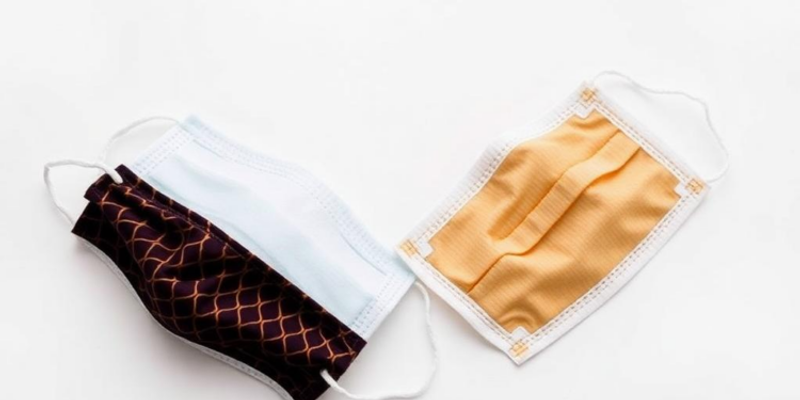
Researchers have transformed discarded masks into high-performance nanocomposites using carbon nanotubes and graphene nanoplatelets.

Researchers have enhanced composite bipolar plates for fuel cells using carbon nanotubes, surpassing stringent international performance standards.

The Advanced Carbons Council calls for a U.S. carbon materials innovation platform focused on standards, testing and buyer qualification. The paper links engineered-carbon supply chains to manufacturing, energy, defense and AI infrastructure. Serves as a model for governments world-wide.
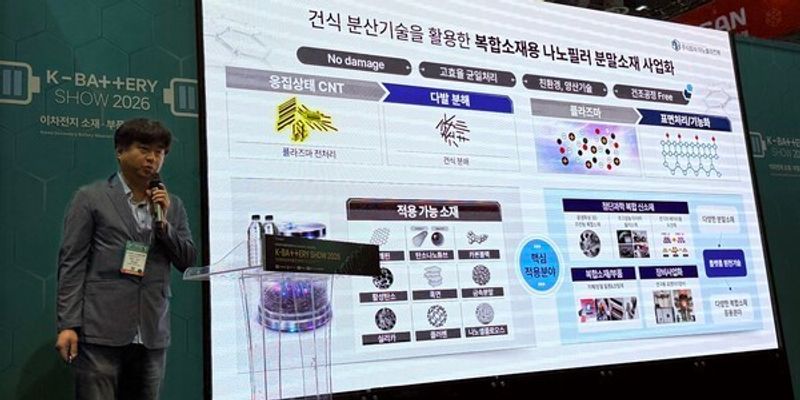
Inoplaztech plans to increase its carbon nanotube conductive additive production to 100 tons annually using proprietary plasma technology, targeting the dry electrode market for batteries.

Researchers at MEPhI have developed a new ultra-strong composite material incorporating carbon nanotubes, aimed at applications in aviation, space, and machinery.

Researchers in China have developed a crystal incorporating multi-walled carbon nanotubes, enhancing its fracture toughness beyond that of diamond.

Researchers developed suspended microdevices to measure the thermal conductivity of carbon nanotubes, revealing quasiballistic transport behavior at micrometer lengths, challenging traditional diffusive models.

Researchers at Van Yüzüncü Yıl University fabricated twelve carbon nanotube-modified PVC/PMMA nanocomposites at three PVC ratios, characterising how the nanotubes change thermal and electrical behaviour.
Composites reinforced with graphene and multi-walled carbon nanotubes are reshaping defence and aerospace design, where strength-to-weight now counts for more than the tonnage of steel and platforms.

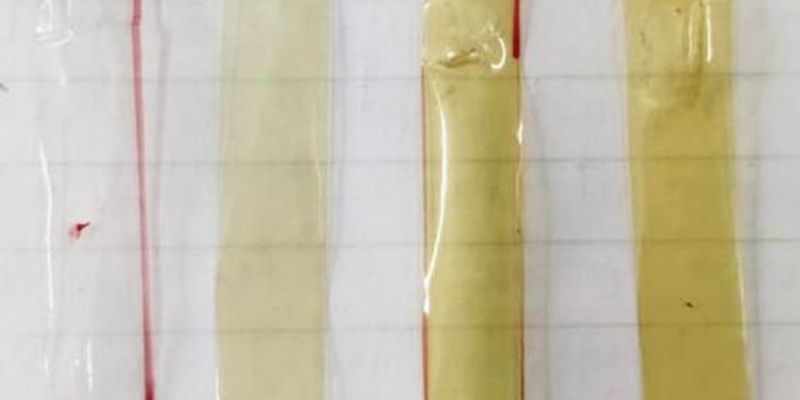
Researchers at Beijing Renhe Information Technology Co., Ltd. have developed a new CNT/BC composite hydrogel membrane, designated CBC4. This material could enhance the mechanical properties of carbon nanotube-based composites, offering potential improvements in strength and flexibility for various applications.
Researchers prepared 4D-printed shape memory polyurethane nanocomposites containing 0.25 to 1.0 wt% multi-walled carbon nanotubes by solvent casting, characterising the effect on mechanical and shape-recovery behaviour.

Professor Chang Liu of the Institute of Metal Research, Chinese Academy of Sciences presented research at an NTU MSE seminar on SWCNT-based hybrid materials, including a SWCNT/Cu core-shell fiber with a specific electrical conductivity of 1.15×10⁴ S m² kg⁻¹ and FeCl3-filled CNT fibers reaching 1.35×10⁷ S m⁻¹ conductivity and 2.54 GPa tensile strength. The work advances CNT fiber and film applications in electrical conductors, thermoelectric devices, and electrocatalysis by addressing the longstanding dispersion challenge that has limited SWCNT composite development.