Monetizing pyrolysis: commercial pathways for tire oil and recovered carbon
Operators can boost profits from tire pyrolysis by refining oil and carbon black into higher-value products. Upgraded materials meet industrial standards, attracting stable buyers and better margins.
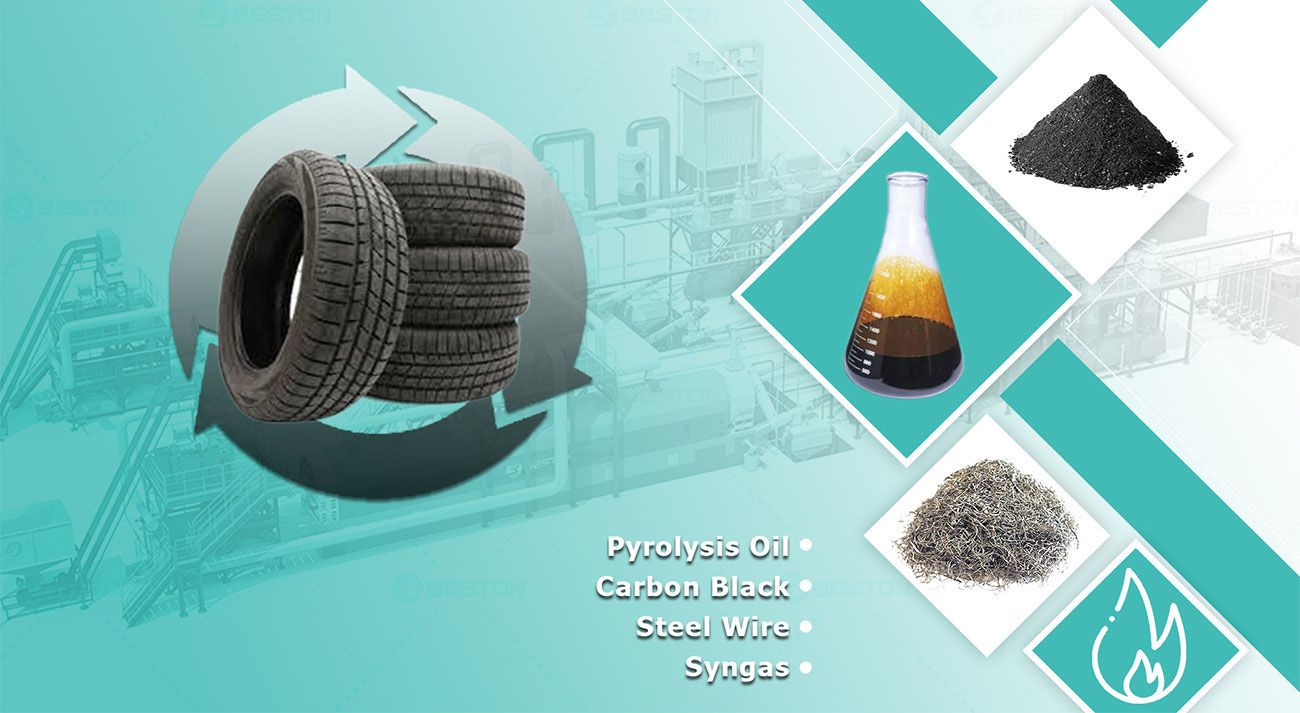
Pyrolysis of waste tires and plastics is often seen as a waste treatment solution, but its true commercial potential lies in transforming the resulting products—oil, carbon black, and synthetic gas—into marketable commodities. Operators face the challenge of converting these intermediate products into goods with stable buyers and higher profit margins.
A thriving pyrolysis business requires more than just producing fuel; it involves understanding downstream markets, enhancing product quality, and creating value-added products through refining and processing. Tire pyrolysis oil, the primary liquid output from waste tire processing, contains a mix of hydrocarbons, aromatic compounds, sulfur, and other organic components, depending on the feedstock and operating conditions.
The simplest business model involves selling raw pyrolysis oil as industrial fuel, but this often yields limited profit due to competition with conventional fuels and strict buyer requirements. A higher-value approach involves upgrading the oil through processes such as filtration, desulfurization, and fractional distillation, which separates the oil into fractions with consistent specifications.
Recovered carbon black (rCB) is a frequently underestimated product of tire pyrolysis. Raw pyrolysis carbon black contains ash, residual oil, metallic impurities, and additives from tire manufacturing. Untreated carbon black fetches lower prices as it cannot directly replace conventional carbon black in industrial applications. However, its value increases significantly after purification and processing, which involves drying, grinding, magnetic separation, ash reduction, classification, and surface modification.
Grinding is crucial as particle size affects performance in rubber compounds, plastics, coatings, and inks. Fine and consistent particles enhance compatibility with industrial applications. Upgraded recovered carbon black can be used in rubber products, tire components, plastic masterbatch, conveyor belts, coatings, and pigment applications. The strongest market opportunity lies in partially replacing virgin carbon black, offering economic and sustainability benefits.
Pyrolysis machinery also produces non-condensable gases, known as syngas or pyrolysis gas, containing hydrogen, methane, carbon monoxide, and light hydrocarbons. The most common commercial use is internal energy recovery, where many pyrolysis plants burn their own gas output to heat the reactor, reducing external fuel dependence and lowering operating costs.
The key to successful pyrolysis commercialization is not treating all outputs as simple raw materials. Additional processing creates stronger pricing power, transforming raw tire oil into refined industrial fuel, raw carbon black into upgraded recovered carbon black, and waste gas into process energy or electricity. This approach is akin to selling refined petroleum products rather than crude oil.
Operators should identify potential customers and product specifications before building a pyrolysis plant. Producing materials without a clear market strategy introduces unnecessary commercial risk. Successful pyrolysis projects often form partnerships with rubber manufacturers, fuel distributors, chemical companies, and industrial energy users.
The future of pyrolysis lies in creating consistent, valuable industrial products from waste. Tire pyrolysis oil can become a refined feedstock, recovered carbon black can become a premium material, and syngas can enhance profitability by reducing energy costs. Companies that succeed in pyrolysis will understand downstream markets, invest in product upgrading, and transform waste-derived materials into reliable commercial products.
Source: Biomass & Recycled Carbons Feed