Natural biomass-derived conductive e-skin patch for wearable tech
Researchers developed a conductive e-skin patch using aminated multi-walled carbon nanotubes and dopamine integrated into carboxymethyl starch.
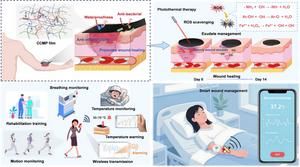
A team of researchers has developed a natural biomass-derived multimodal conductive electronic skin (e-skin) patch, integrating skin-interfacing wearable bioelectronics with smart wound healing capabilities. This e-skin patch, created by scientists from Shaanxi University of Science and Technology and Wenzhou Medical University, combines smart wound dressings with bioelectronics for real-time physiological signal monitoring on a portable wireless platform. The study, published in Nano Research, highlights the patch's potential for precision wound management and intelligent healthcare applications.
The e-skin patch is fabricated using aminated multi-walled carbon nanotubes (MWCNTs-NH₂) and dopamine, integrated into a carboxymethyl starch/carboxymethyl chitosan/polyvinyl alcohol matrix through supramolecular assembly. This construction provides the patch with high electrical conductivity (24.1 S/m), efficient photothermal conversion, strong antioxidant activity (>96.5%), and effective antibacterial properties. The patch also features an ultra-high swelling capacity of 1374%, enabling rapid absorption of wound exudate while maintaining a moist healing environment.
In a rat full-thickness wound model, the patch achieved a 99% wound healing rate within 14 days, significantly reducing pro-inflammatory factor levels and promoting vascular regeneration. The integration of a miniaturized electronic chip allows the patch to transmit real-time data on wound micro-motion, temperature, strain, respiration, and bioelectric signals via Bluetooth to computers or mobile devices.
The research team, led by Xugang Dang and Manhui Zheng, emphasizes the advancement of e-skin technology from single-functional devices to systems that support human-machine-environment symbiosis. This development represents progress toward next-generation flexible e-skin systems that are shape-adaptive, highly sensitive, multifunctional, and cost-effective, paving the way for personalized medical electronics in wound care and health monitoring.
The work was supported by the Shaanxi Provincial Department of Education Scientific Research Program, the "Scientists + Engineers" Talent Team Construction Project of Xianyang City, and the Shandong Province Key Research and Development Plan. The study was published in Nano Research, a peer-reviewed journal sponsored by Tsinghua University and the Chinese Chemical Society, which focuses on nanoscience and nanotechnology research.
Source: Carbon Nanotubes Feed