New nanocarbon compound shows promising anti-cancer activity
Researchers at BEMMS, in collaboration with ICMR-NARFBR, developed a nanocarbon compound showing up to 90% effectiveness in destroying breast cancer tumor tissue in preclinical mouse studies.
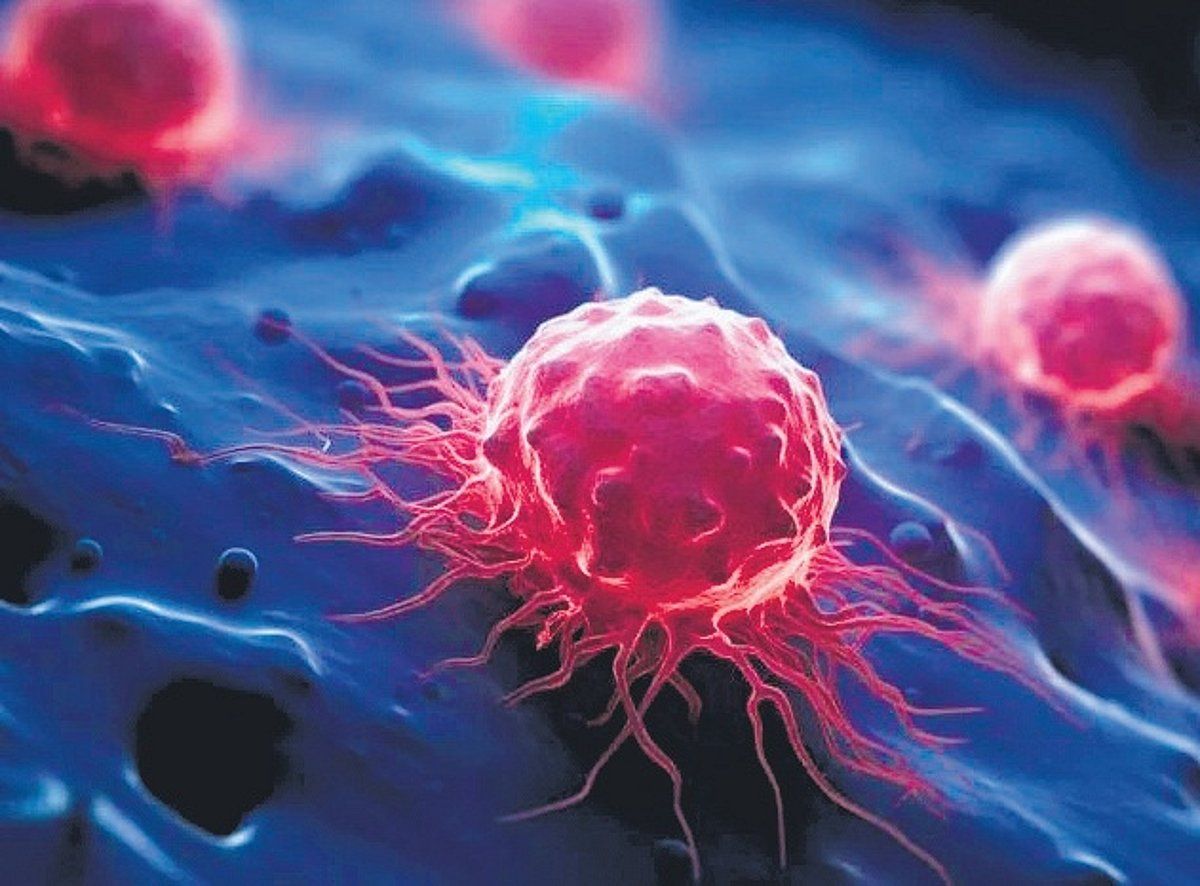
A water-soluble nanocarbon compound developed by S V Eswaran and his team at Balman Eswaran Bio Medicine and Materials Science Pvt Ltd (BEMMS) in collaboration with ICMR-NARFBR has demonstrated potential anti-cancer activity in preclinical trials. The study, conducted at the ICMR-National Institute for Pre-Clinical Research, evaluated three nanocarbon formulations created by BEMMS at IIT Delhi’s Foundation for Innovation and Technology Transfer. These include fullaraziraman, a fullerene-based material, and formulations based on single-walled carbon nanotubes (SWCNT) and reduced graphene oxide (rGO).
The findings suggest that these compounds may be effective against breast cancer, including triple-negative breast cancer. Fullaraziraman showed up to 90% effectiveness in destroying tumor tissue in individual animals when administered three times a week, with no observed side effects in the organs or other parts of the body.
Fullaraziraman and SWCNT-Mn (II) complexes were found to reduce tumor growth, with fullaraziraman causing extensive tumor tissue destruction. In treated mice, 40-90% of the tumor tissue exhibited necrosis, indicating significant tumor-cell death. The SWCNT formulation resulted in about 40% necrosis in two of the three animals studied.
The study involved mice implanted with a human breast cancer cell line used for studying triple-negative breast cancer. No treatment-related clinical symptoms or mortality were reported, and the animals' body weights remained stable. Tumor growth reduction was evident in the measurements recorded during the study.
In untreated mice, the average tumor volume increased significantly, while in the fullaraziraman group, the increase was much less pronounced. The SWCNT group also showed a reduced increase in tumor volume. Eswaran stated that further steps include producing the compound in larger quantities, refining its formulation, and conducting more detailed toxicity studies in larger animals before considering human trials.
The researchers are seeking funding to scale up production and conduct additional studies. They aim to develop sufficient quantities of the compound for potential human use within the next one to one-and-a-half years, contingent on funding and successful study completion.
Beyond cancer, these materials are being explored for potential use against neurodegenerative diseases and in advanced nanodevices. The study involved only three animals per treatment group, and larger studies are necessary to confirm the safety and effectiveness of the formulations. Further research on dosage, mechanisms of action, survival, and metastasis is recommended.
An Indian patent was granted on January 31, 2023, for these studies. The management team at BEMMS includes M P Balakrishanan, P Manoharan, and Rajul Bhaskar.
Source: Carbon Nanotubes Feed