OCSiAl Nanotubes Enable Next-Generation Aviation Battery Technologies
OCSiAl nanotubes are playing a critical role in a new project supported by the European Union through Horizon Europe that aims to develop aviation-grade battery cells capable of exceeding 400 Wh/kg— an energy density widely considered essential for commercially viable electric regional aircraft.
- OCSiAl’s single wall carbon nanotubes address critical conductivity and stability challenges associated with next-generation battery architectures, enabling battery cells with energy density exceeding 400 Wh/kg.
- These technologies are being further advanced through an EU-backed project in which OCSiAl plays an active role, focusing on silicon-rich anodes and dry-coated cathodes.
- While focused on electric aviation, the project is expected to contribute to the competitiveness of Europe’s broader battery industry.
OCSiAl nanotubes are playing a critical role in a new project supported by the European Union through Horizon Europe that aims to develop aviation-grade battery cells capable of exceeding 400 Wh/kg— an energy density widely considered essential for commercially viable electric regional aircraft. While the target application is aerospace, the technologies being developed address challenges relevant across the broader battery industry.
To achieve high energy density, improved safety, and scalable manufacturing, the consortium is integrating several of the industry’s most advanced technology trends, including silicon-rich anodes and dry-coated cathodes—two technologies widely regarded as essential for next-generation high-energy-density batteries and more sustainable solvent-free manufacturing. OCSiAl’s TUBALL single wall carbon nanotubes serve as a key enabling material across these battery architectures.
In contrast to conventional conductive additives, single wall carbon nanotubes form long-range conductive networks throughout the electrode, bridging active material particles and reinforcing the electrode structure. As a result, they provide superior electrical conductivity and mechanical stability, while improving bending flexibility, reducing electrode swelling during charge/discharge cycles, and minimizing spring0back after calendering.
“Single wall carbon nanotubes are increasingly used in many next-generation battery technologies, including silicon-rich anodes, high-nickel and single-crystal NCM cathodes, LFP cathodes, solid-state batteries, and dry electrode architectures,” said Andrej Seniut, Head of Energy Projects at OCSiAl. “The industry has already moved from validation to large-scale adoption. In 2025 alone, the number of electric vehicles using batteries containing single wall carbon nanotubes tripled to exceed one million worldwide.”
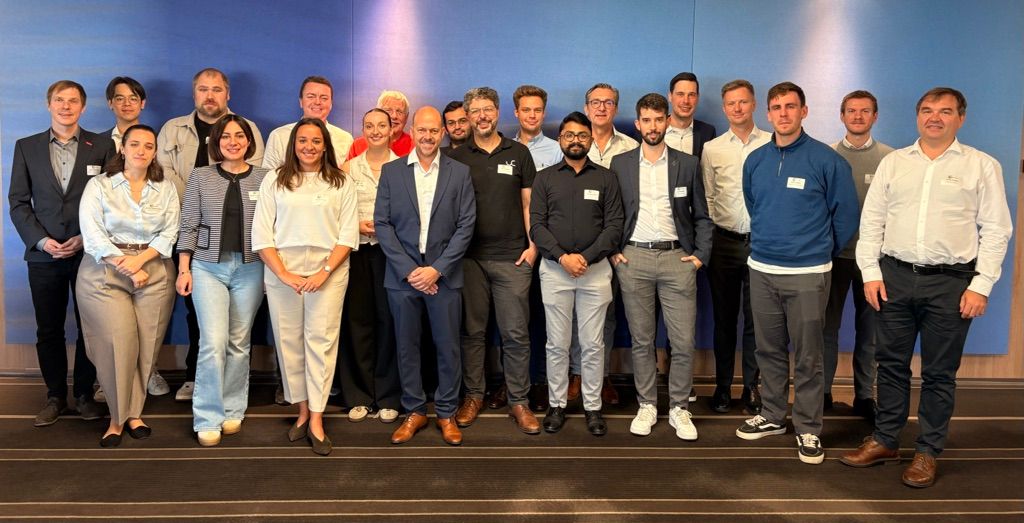
The consortium brings together leading players from across Europe’s battery and aviation value chain. UniverCell contributes its expertise in advanced cell development and manufacturing, while aircraft developer Vaeridion provides the direct link to future electric aviation applications. Other consortium partners, OCSiAl, Daikin Chemical Europe, Technische Universität Braunschweig, EURA, Uppsala University, CIDETEC, Addionics, IKA, and LEONHARD KURZ Stiftung, bring expertise in advanced materials, battery technologies, and manufacturing solutions. By combining capabilities across the entire development chain, from materials and cell design to production processes and aircraft integration, the consortium aims to accelerate the transition from laboratory-scale battery innovations to next-generation electric aviation platforms.
Source: original article