Polish scientists convert waste plastic into heat-conducting material
Polish researchers developed a recycled plastic composite with carbon nanoplatelets that conducts heat over four times better than the original material. This innovation enhances potential applications in electronics.
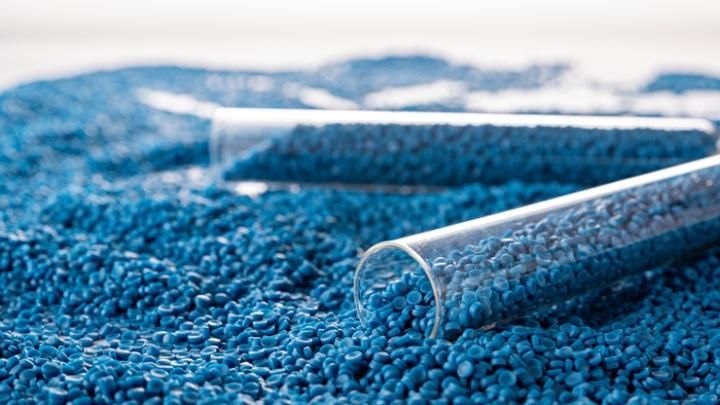
Researchers in Poland have developed a composite material from recycled plastic that significantly enhances thermal conductivity by incorporating carbon nanoplatelets. This new material conducts heat over four times more effectively than its original form.
The study, conducted by the Military University of Technology and Warsaw University of Technology, focused on transforming recycled plastic into a lightweight material suitable for cooling applications. The composite consists of 90% recovered high-density polyethylene (HDPE) and 10% recycled rubber, with small amounts of polypropylene typical of industrial waste.
To enhance the thermal properties, the researchers added 5 to 20% of carbon-based materials, including synthetic graphite nanoplatelets, expanded graphite, or shungite. These additives were not recycled but were crucial in imparting new properties to the plastic.
Testing revealed that adding 20% graphite nanoplatelets increased thermal conductivity to 1.803 watts per meter-kelvin, a fourfold improvement over the untreated material. The nanoplatelets created effective pathways for heat flow due to their well-dispersed flat particles.
In contrast, expanded graphite and shungite were less effective. Expanded graphite left gaps, while shungite formed isolated clusters, resulting in less continuous heat-conducting networks.
The composite's tensile strength also improved by 43% with the highest concentration of nanoplatelets, although it became more brittle. The material's flexibility decreased significantly, breaking after being stretched by only 8% compared to 77% for the untreated version.
Despite the improvements, the composite's thermal conductivity remains about 130 times less than aluminum, limiting its use in high-energy devices. However, it could be suitable for lightweight casings and shields where some heat dissipation is required.
Further research is needed to assess the material's durability, aging characteristics, and consistency across different batches of recycled materials. The environmental impact of producing the additives and recycling processes also requires evaluation.
The findings were published in Materials Today Communications.
Source: Graphite Feed