Porous graphene mesosponge enhances lithium-ion battery power and energy density
Researchers improved lithium-ion battery performance by adding graphene mesosponge, enhancing energy and power densities through efficient electronic and ionic transport in densely packed electrodes.
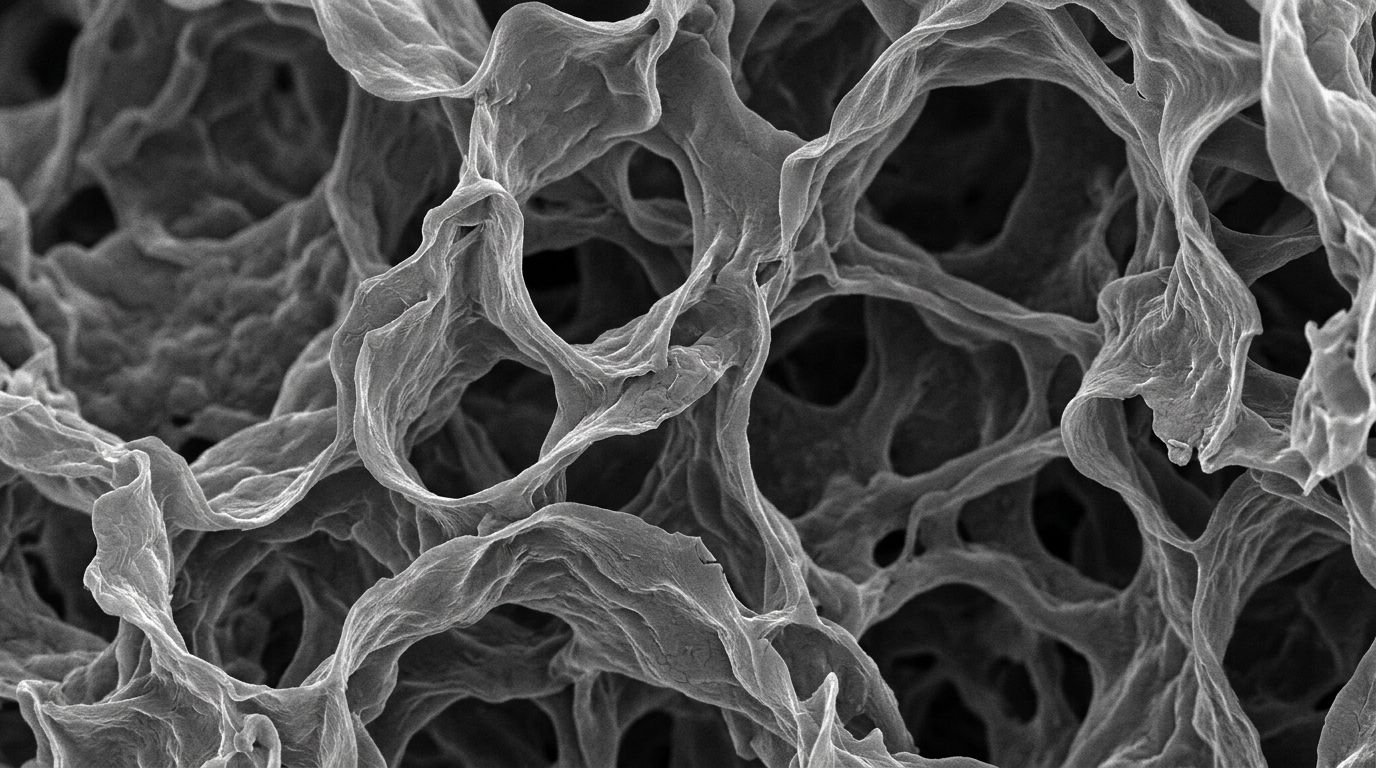
A recent study has highlighted the potential of graphene mesosponge as a conductive additive in lithium-ion batteries, significantly enhancing both energy and power densities. Published in Advanced Energy Materials on October 8, 2026, the research demonstrates that incorporating a small amount of graphene mesosponge into battery electrodes facilitates faster discharge rates while maintaining high performance. This is achieved through the creation of three-dimensional interconnected carbon pathways, which enhance both electronic conduction and ionic transport in densely packed battery electrodes, effectively addressing long-standing performance limitations.
The push for more powerful lithium-ion batteries is driven by the need for cleaner, sustainable energy solutions for devices ranging from smartphones to electric vehicles. Current commercial lithium-ion batteries are often limited by the positive electrode, which restricts overall energy density. Researchers have been exploring ways to increase energy density by boosting the proportion of active materials and minimizing components that do not store electricity, such as conductive additives and polymer binders. However, this approach can hinder the free movement of electricity and lithium ions in densely packed materials. Pure nickel oxide has been considered as an electrode material for high-energy systems, but it degrades under high voltage, affecting the battery's charge and discharge efficiency. Professor Naoaki Yabuuchi from Yokohama National University noted that achieving efficient electron and ion transport in high-loading, densely packed electrodes remains a significant challenge.
To overcome this challenge, the research team conducted a comparative study of three carbon materials—acetylene black, single-walled carbon nanotubes, and graphene mesosponge—as potential conductive additives. Their experiments showed that graphene mesosponge effectively tailors electrode microstructure through its sponge-like mesoporous framework. This structure allows for the formation of three-dimensional networks that conduct electrons and ions. The porous architecture enables liquid electrolyte to penetrate deeply into the battery's energy-storing regions and remain within the mesopores, promoting rapid ionic transport. The interconnected carbon framework also ensures efficient electronic conduction. Yabuuchi explained that this architecture forms a network that retains electrolyte within its mesopores, facilitating ion transport and enhancing rate capability.
The team used focused ion beam scanning electron microscopy (FIB-SEM) tomography to examine the internal structure of the composite electrode. This three-dimensional imaging technique confirmed that graphene mesosponge creates a uniformly distributed internal structure throughout the electrode. Its nanoscale sponge-like architecture allows electrons to move freely within the electrode matrix, resulting in excellent rate performance under practical conditions at high current densities. The researchers identified the use of functional conductive additives like graphene mesosponge as a viable strategy to maximize battery output. Yabuuchi emphasized that their findings show graphene mesosponge as a transformative additive for improving energy and power densities in lithium-ion batteries through rational microstructural design.
With graphene mesosponge proving effective for high-energy and high-power positive electrodes, the researchers are expanding their investigation to broader battery applications. Yabuuchi stated that their ultimate goal is to achieve fast-charging capability with a graphite negative electrode, paving the way for lithium-ion batteries that combine high energy density, high power density, and fast-charging capability. The study was conducted by an interdisciplinary team from Yokohama National University, Yonsei University, and 3DC Corporation, with financial support from the Japan Society for the Promotion of Science and the Japan Science and Technology Agency.
Source: Graphene Feed