'Stealth film' thinner than hair blocks 99.9999999% of electromagnetic waves
South Korean researchers have built a carbon nanotube film thinner than a human hair that blocks more than 99.9999999% of electromagnetic waves and evades thermal imaging, with fighter jets and drones the intended use.
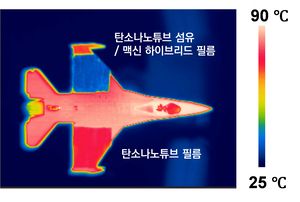
Researchers in South Korea have developed an ultra-thin composite film that blocks over 99.9999999% of electromagnetic waves. This innovation combines carbon nanotube (CNT) fiber with MXene to achieve electromagnetic shielding, infrared stealth, and high mechanical strength. The material, thinner than a human hair, is poised for applications in advanced weapons systems, aerospace, and next-generation communications and electronics.
The research, led by Kim Tae-hoon from the Korea Institute of Materials Science (KIMS) and teams from the Korea Institute of Science and Technology (KIST), addresses the need for lightweight and flexible materials that can block both infrared detection and electromagnetic threats. Traditional metal shielding materials are limited by their weight and lack of flexibility, while CNT fibers and MXene each have distinct advantages and drawbacks.
CNT fiber is known for its strength and electromagnetic shielding capabilities but struggles with infrared radiation and film production. Conversely, MXene offers low infrared emissivity but lacks mechanical strength and stability. By combining these materials, the researchers created a structure likened to 'bricks and cement,' enhancing the film's mechanical and shielding properties.
The process involved introducing amine functional groups to CNT fibers to bond with MXene, forming a film where CNT fibers act as 'bricks' and MXene as conductive 'cement.' This architecture prevents fiber slippage, increases mechanical strength, and enhances electromagnetic shielding. The MXene coating reduces infrared emissions, aiding stealth capabilities.
Despite its thinness of 17.5 micrometers, the film achieved an electromagnetic shielding performance of approximately 90 decibels across various frequency bands. It also demonstrated a tensile strength of 1.02 gigapascals, comparable to high-strength steel, and maintained performance under challenging conditions.
The film's potential applications include use in fighter jets, drones, and 5G and 6G communications devices, where it can provide electromagnetic shielding and reduce infrared detection risks. The research was published in Advanced Composites and Hybrid Materials, highlighting its significance in the field of composite materials.
Source: Carbon Nanotubes Feed