Sustainable construction central to Ellington anaerobic digestion facility
The Ellington anaerobic digestion facility will use 115 tons of Arigna biochar for ground stabilization, aiding carbon offset in construction. Completion is expected in approximately 18 months.
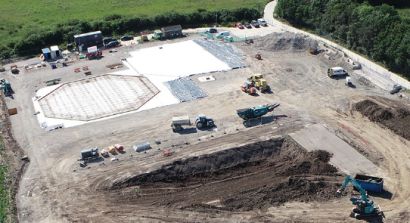
The Ellington Anaerobic Digestion Facility will integrate advanced carbon materials into its construction process, notably incorporating biochar for ground stabilization. Biochar, a carbon-rich material derived from biomass, offers long-term carbon storage and is gaining traction in construction for its potential to offset embodied carbon in cement and ground engineering. Approximately 115 tons of Arigna biochar will be utilized in this project.
Once operational, the facility will process up to 50,000 tons of food waste annually, producing a nutrient-rich fertilizer and generating green gas sufficient to power around 5,500 homes. Principal contractor O’Brien Moran and Co. has commenced construction, expected to last 18 months, followed by a testing and commissioning phase.
David O’Brien, Managing Director of O’Brien Moran and Co., stated, “OBM is pleased to partner with SUEZ and Stantec’s EPCM specialists on this project. We are confident in delivering a successful outcome.”
Circularity is a key focus for SUEZ in this development, addressing the construction sector's significant CO2 emissions. The previous on-site facilities were dismantled carefully, allowing for the reuse of over 10,500 tons of concrete and reclaiming approximately 60% of the structural steel for the new building.
The facility will utilize existing landfill gas power generation for its energy needs, contributing to local energy security through biogas production. The project aligns with the Circularity in Practice initiative, promoting circular solutions like waste reduction, material reuse, and high-quality recycling.
John Scanlon, Executive Vice President UK at SUEZ, remarked, “We are excited to enhance food waste recycling and renewable energy generation sustainably. Our approach includes repurposing materials from the previous facility.” Michelle Pinggera, Chair of Circularity in Practice, added, “SUEZ exemplifies circularity in construction, from reusing concrete and steel to applying biochar. These measures highlight how projects can reduce waste and lower embodied carbon.”
Source: Biochar Feed