Thin device stores energy, strengthens structures, and is recyclable
Recycled supercapacitors with carbon-fiber cathodes maintained performance comparable to original devices through initial fabrication and two recycling cycles.
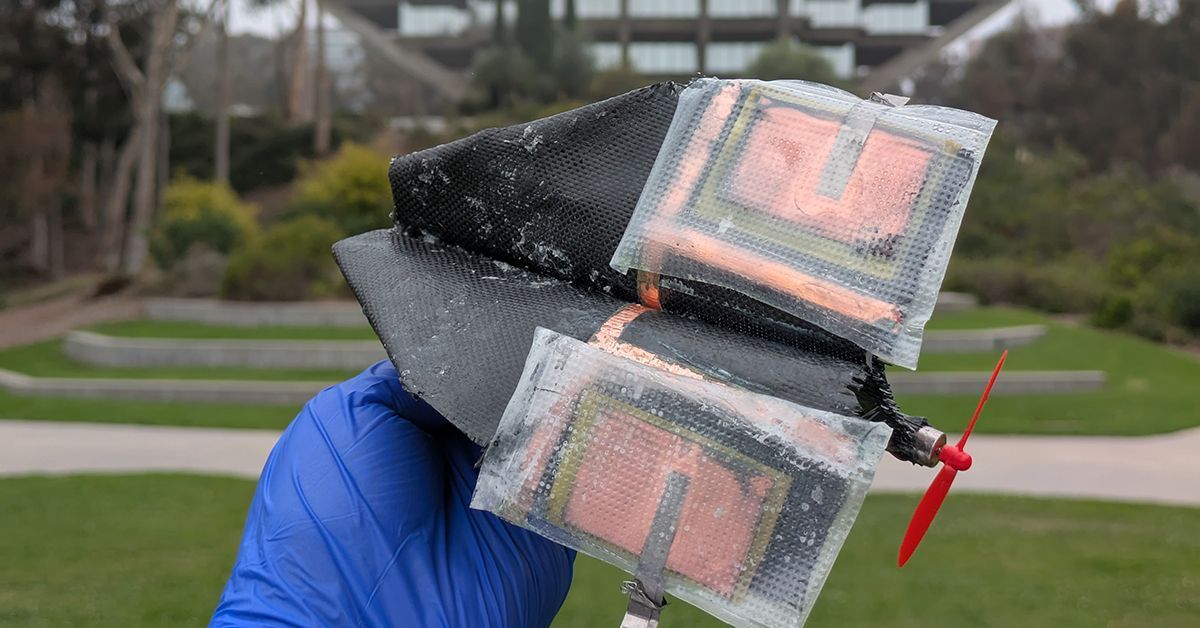
Researchers at the University of California San Diego have developed a structural supercapacitor that integrates energy storage with structural reinforcement and recyclability. The innovation, published in ACS Energy Letters, leverages carbon-fiber in its cathode layer, enhancing both its mechanical and electrochemical properties.
The structural supercapacitor presents a sustainable energy storage solution for lightweight electric vehicles and applications where space and weight are critical. Led by Professor Tse Nga (Tina) Ng from the UC San Diego Jacobs School of Engineering, the team demonstrated the device by integrating four supercapacitors into the wings of a miniature glider. These supercapacitors not only powered the glider's propeller but also reinforced the wing structure.
In tests, the glider traveled 12 feet with the supercapacitor-powered propeller, compared to 8 feet without it. The device's design allows for easy recycling, addressing the challenge of separating materials in conventional supercapacitors. The structural supercapacitor's layers can be disassembled and reused, promoting sustainability.
The device builds on previous work by combining high electrochemical performance with mechanical strength, now adding recyclability. "Sustainability and performance do not have to be competing goals," said Nandu Koripally, a PhD student in Ng's group. The supercapacitor's anode is made of zinc metal and copper foil, with a carbon-fiber cathode and a solid electrolyte layer of porous resin.
Unlike traditional supercapacitors, this device uses a water-based zinc ion electrolyte, enhancing its environmental profile. Recyclability tests showed that the carbon-fiber cathode could be reused twice, maintaining performance over 172,000 charge-discharge cycles. This approach could significantly reduce electronic waste.
The research underscores the potential for energy storage devices to integrate into structural components, promoting a sustainable future. "We've shown that they can become part of the structure itself," Ng noted. The study, "Recyclable Zinc Ion Structural Supercapacitor Enabled by Porous Vitrimer," highlights this innovative approach.
This work received support from various institutions, including the National Defense Science and Engineering Graduate Fellowship and the National Science Foundation. It was conducted at the San Diego Nanotechnology Infrastructure at UC San Diego.
Source: Carbon Fiber Feed