WashU develops automotive-grade carbon fiber from lignin waste
Washington University in St. Louis researchers developed a lignin-based carbon fiber that meets automotive standards, reducing production costs by 25% and using half the petroleum-derived precursor.
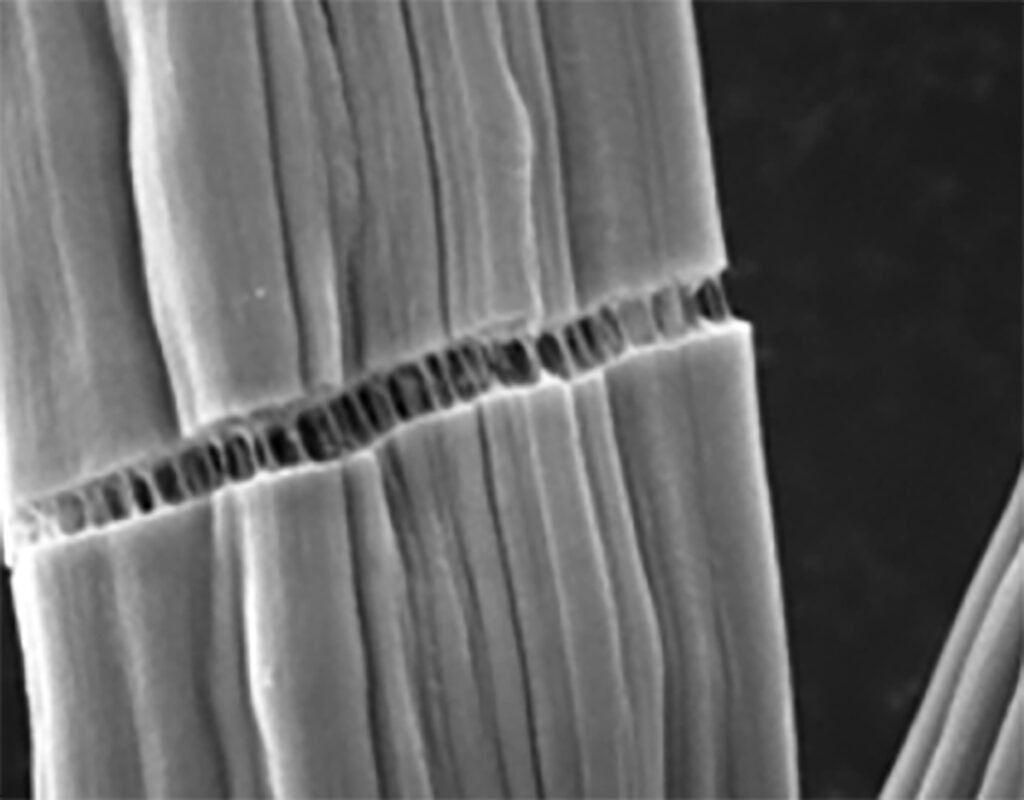
Researchers at Washington University in St. Louis (WashU, Mo., U.S.) have developed a lignin-based renewable carbon fiber that meets automotive standards for tensile strength and elastic modulus. This innovation uses less petroleum-derived precursor and reduces production costs compared to conventional carbon fiber. The study, published in the journal Matter, suggests potential applications in automotive composites and other carbon fiber-reinforced polymer (CFRP) uses.
The WashU team utilized lignin, a byproduct of the paper pulping and biorefining industries, to improve carbon fiber production methods. Lignin is the second most abundant natural biopolymer on Earth, and its typical disposal has a significant environmental impact. By incorporating lignin, researchers reduced the use of synthetic polyacrylonitrile (PAN), a petroleum-derived product that accounts for up to 50% of carbon fiber manufacturing costs.
The research team found that by integrating lignin, they could halve the PAN usage and cut production costs by 25%, while also reducing carbon emissions. To ensure the new carbon fiber met automotive standards, they employed single-walled carbon nanotubes to guide crystallite alignment within the polymer matrix, enhancing the material's mechanical properties.
The process developed by WashU involves creating a nanotube template that mixes well with lignin and PAN, followed by wet spinning and tension-assisted heat treatment, and finally optimized carbonization. This three-step process maximizes crystallite content and orientation, resulting in a strong carbon fiber.
While the initial focus is on automotive applications, the optimized fiber has potential uses in other industries such as sports equipment and wind turbines. The research received support from the Lucy & Stanley Lopata Professorship, US Department of Energy, and other WashU facilities and centers.
Source: Carbon Fiber Feed