Brazil converts urban tree trimmings into biochar and pyrolytic oil in pioneering project
Researchers at the International Virtual Institute of Global Changes, COPPE/UFRJ, in partnership with COMLURB, have converted one ton of urban pruning waste in Rio de Janeiro into approximately 300 kilos of biochar and pyrolytic oil. This initiative demonstrates the potential of using urban plant waste as a raw material for producing carbon-rich biochar, which can be used as a soil conditioner and for carbon storage, contributing to sustainable waste management and decarbonization efforts.
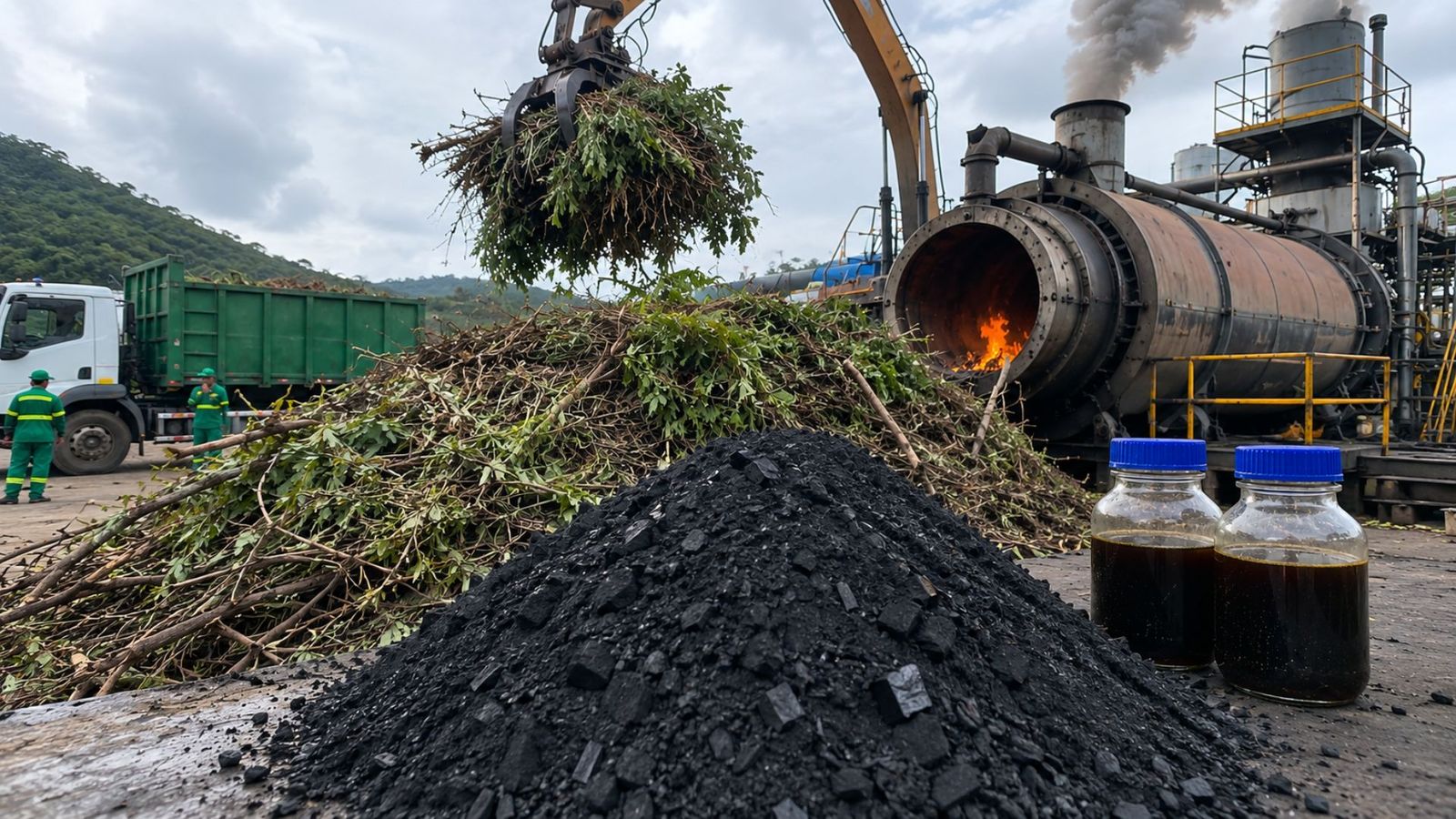
In Brazil, urban tree trimmings are being repurposed into biochar and pyrolytic oil, integrating green waste into the circular economy. This initiative, led by the International Virtual Institute of Global Changes (IVIG) at COPPE/UFRJ in collaboration with COMLURB in Rio de Janeiro, demonstrates how common urban waste can be transformed into valuable environmental and technological resources.
The project utilizes pyrolysis, a process that heats plant waste in a low-oxygen environment, to produce biochar and pyrolytic oil. Approximately one ton of pruning waste from COMLURB was processed, yielding around 300 kilograms of these products. This research is part of broader studies on urban waste valorization and energy utilization, aiming to alleviate pressure on traditional waste disposal systems.
Urban pruning, involving the maintenance of trees and green spaces, generates significant volumes of plant waste. This material, often seen as a logistical challenge, is now being re-evaluated as a resource for environmental and energy studies. The pyrolysis process decomposes biomass into biochar, a stable carbon-rich charcoal, and pyrolytic oil, which holds potential for energy and industrial applications.
Biochar, derived from urban pruning, is being explored as a soil conditioner and a means for carbon storage. This aligns with efforts to extend the lifecycle of discarded materials, especially those with low economic value. Pyrolytic oil, another product of this process, is under investigation for its energy applications, contingent on further treatment and technological development.
The collaboration with COMLURB ensures that the research remains relevant to real-world urban cleaning operations. By treating plant waste as a raw material, the project proposes new possibilities for waste management, contributing to decarbonization efforts and the circular economy. This approach highlights the potential for urban pruning waste to be transformed into valuable inputs for energy, soil, and carbon studies.
Source: Biochar Feed