Carbon nanotori provide quantum computers a third control channel without crosstalk
Physicists at Martin Luther University Halle-Wittenberg have demonstrated that carbon nanotori, specifically C₁₂₀, C₁₄₄, and C₁₆₈, can generate and control toroidal dipole moments, offering a third control channel for quantum computers with zero crosstalk. This discovery is significant for quantum computing as it introduces a new method for qubit control that is orthogonal to existing electric and magnetic control methods, potentially reducing errors caused by crosstalk in superconducting quantum processors.
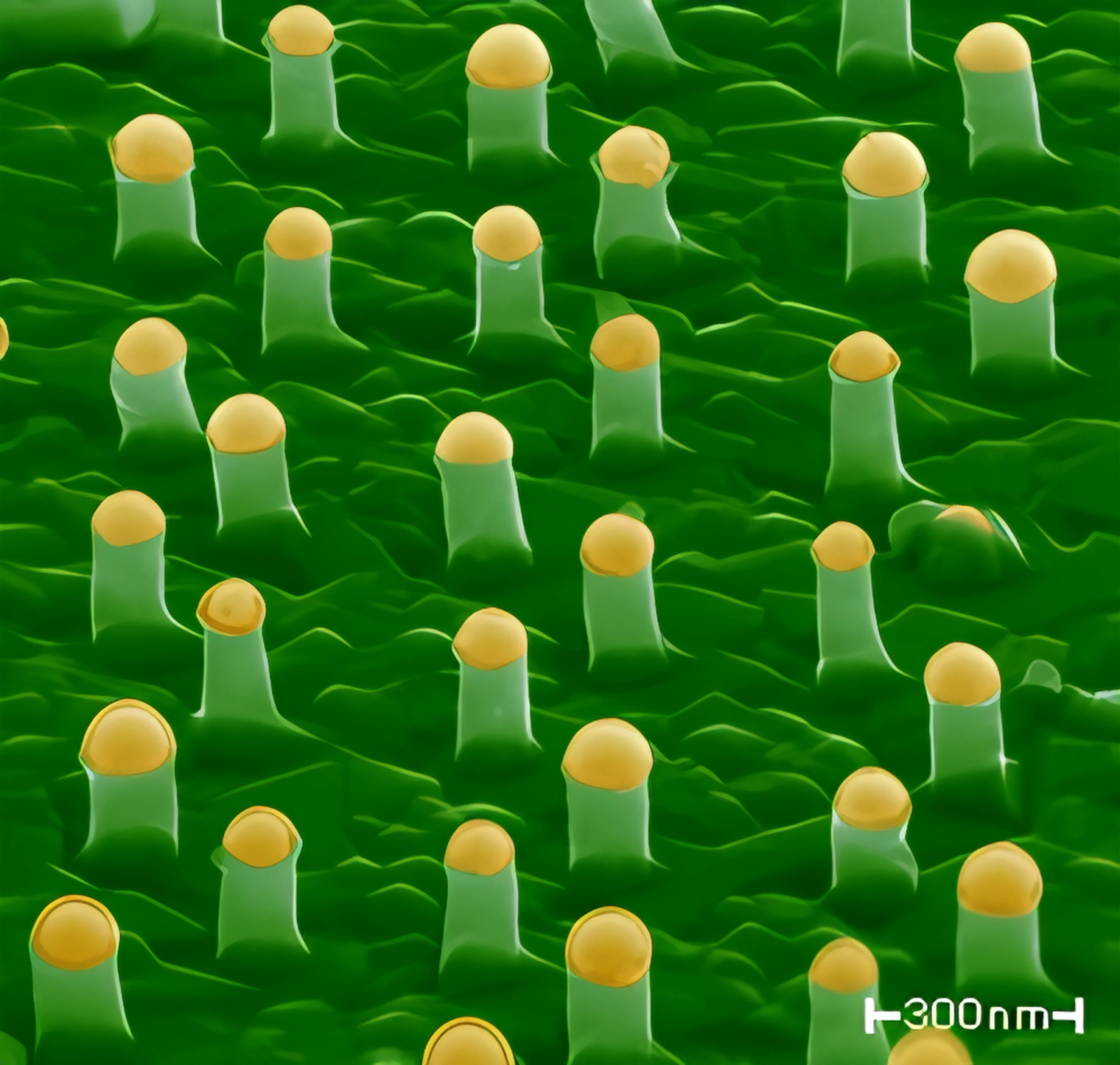
Researchers at Martin Luther University Halle-Wittenberg have demonstrated that carbon nanotori, ring-shaped carbon molecules, can create and control a unique electromagnetic signal without disturbing adjacent components. This discovery, published in npj Computational Materials, highlights the potential of carbon nanotori to address crosstalk issues in quantum computing by providing a third control channel distinct from electric and magnetic methods.
The study, funded by the German Research Foundation, utilized ab initio quantum-mechanical simulations to explore the properties of three specific carbon nanotori: C₁₂₀, C₁₄₄, and C₁₆₈. These structures can host a toroidal dipole moment, an electromagnetic phenomenon that does not produce nanoscale energy losses. This toroidal control is orthogonal to existing qubit control methods, offering a solution to the crosstalk problem that plagues superconducting quantum processors.
Superconducting quantum processors typically use electric and magnetic field pulses to control qubits, but these fields often leak to neighboring components, causing errors. Current mitigation strategies, such as calibration matrices and tunable couplers, address the symptoms but not the root cause. The toroidal dipole moment, however, confines the magnetic field within the torus, preventing external field generation and thus avoiding crosstalk.
The MLU team's approach leverages the inherent geometry of carbon nanotori, which are part of the fullerene family. By applying a static electric field along the toroidal axis, they induce a toroidal moment without energy loss. This mechanism involves symmetry breaking and coherent scattering, leading to a measurable circular dichroism signal that can confirm the toroidal states experimentally.
While the current findings are computational, they open new avenues for experimental synthesis and integration with quantum circuits. The carbon nanotori offer a chemically accessible structure for generating toroidal electromagnetic fields, aligning with independent research in superconducting circuit engineering. This convergence could provide a new, lossless control modality for quantum computing.
The study "Topology-enabled quantum toroidal moment in carbon nanotori" by Arkamita Bandyopadhyay and Jamal Berakdar is published in npj Computational Materials (2026).
Source: Carbon Nanotubes Feed