14 articles on Graphene in Concrete.
Argo Graphene Solutions Corp. secured a 10-year exclusive license from Grapherry, Inc. for its STREAM graphene production technology, issuing 2.5 million shares and 5.5 million warrants.

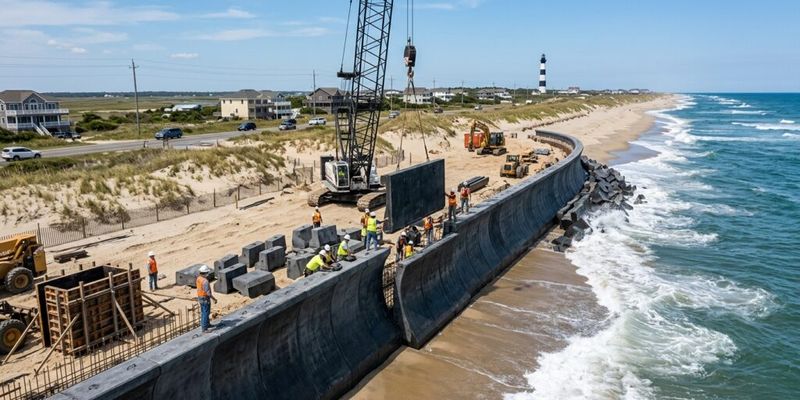
Researchers are evaluating graphene-enhanced concrete for infrastructure projects in North Carolina's Outer Banks, comparing its performance to traditional concrete methods.

In a video, HydroGraph CEO Kjirstin Breure discusses how their graphene enabled a biosensor company to create technology that wasn't possible with other commercially available graphenes.

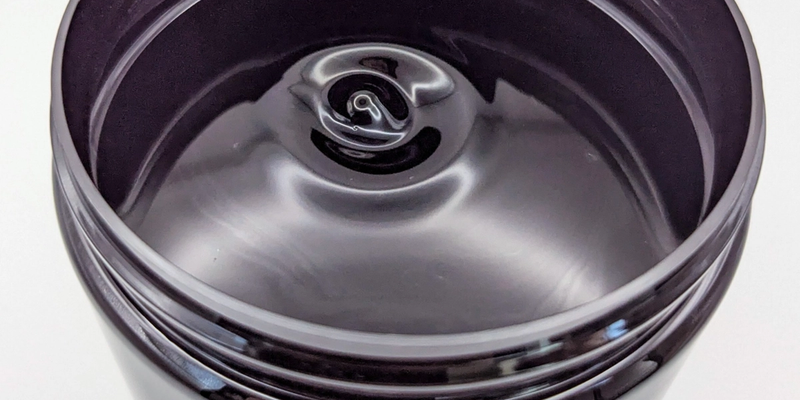
HydroGraph Clean Power has launched Fractal Graphene Paste, a pre-dispersed aqueous concentrate containing 20% graphene by weight, designed to simplify the incorporation of graphene into water-based industrial formulations. This development is significant for the advanced carbon materials sector as it addresses the dispersion challenges associated with graphene, potentially accelerating its adoption in applications such as construction materials, coatings, and thermal management systems.

Turquoise Group has achieved Verified Graphene Producer® status, confirming its capability to produce 30 tonnes of high-purity few-layer graphene annually at its Brisbane facility. This certification enhances the company's credibility in delivering high-quality graphene, a material crucial for applications in coatings, composites, and energy storage.

First Graphene Limited has signed a Memorandum of Understanding with The Sixth Element (Changzhou) Material Technology Co Ltd to distribute its PureGRAPH® CEM additive in China. This agreement targets the cement and concrete sector, offering a significant opportunity for graphene-enhanced materials to reduce carbon emissions in the world's largest cement market.

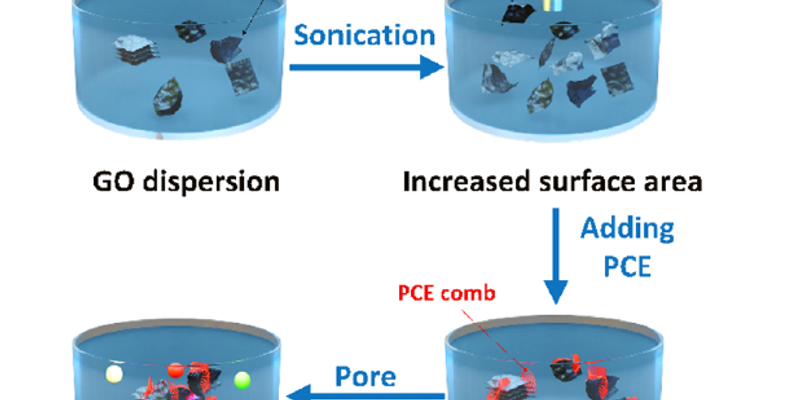
Researchers at the University of California at Los Angeles have discovered how graphene oxide (GO) can enhance concrete strength, achieving a more than 20% increase in 28-day compressive strength with just 0.05 wt.% GO dosage. This insight into GO's mechanisms of hydration-seeding and pore-refinement could lead to more effective applications of GO in commercial concrete, optimizing its use for improved structural performance.

Researchers at UCLA have demonstrated that adding 0.05 percent graphene oxide by weight to concrete can increase its 28-day compressive strength by over 20 percent. This finding clarifies graphene oxide's role in enhancing concrete strength, potentially paving the way for its effective commercial application in construction.
HydroGraph Clean Power Inc. commercially launched Fractal Graphene Paste, a 20% graphene-by-weight aqueous dispersion with a 99.8% carbon purity and over two-year shelf life, and has supplied samples to more than 30 customers. The product targets the graphene sector's core adoption barrier—dispersion difficulty—by delivering a stable, ready-to-use concentrate compatible with standard mixing equipment, which could accelerate graphene uptake in composites, coatings, and construction materials.

Argo Graphene Solutions Corp. (CSE: ARGO) closed a license agreement with Grapherry, Inc. on June 25, 2026, acquiring an exclusive worldwide license to Grapherry's STREAM graphene production platform in exchange for up to 11,000,000 common shares and 5,500,000 warrants, with full technology ownership transferring to Argo upon full share issuance. The deal gives Argo control over a scalable graphene production technology targeting construction, agriculture, and energy storage applications, while Grapherry's CEO Vikas Berry joined Argo's board and the company's existing CEO Scott Smale resigned.

Canada's graphene sector has developed across production, construction, filtration, printed electronics, and energy storage, with companies such as NanoXplore operating a 4,000-metric-ton-per-year facility in Montréal and firms like Zentek and Graphene Leaders Canada advancing application-specific products toward commercial deployment. The ecosystem signals a shift from materials science demonstration toward repeatable industrial use cases in carbon-based composites, conductive additives, and separation technologies, though commercial viability still depends on product qualification, standardization, and cost competitiveness against incumbent materials.

The Advanced Carbons Council published a position paper in May 2026 arguing that carbon credit financing should be redirected from geological carbon capture and sequestration toward conversion of captured carbon into advanced materials such as graphene, carbon fiber, biochar, and carbon nanotubes. The paper contends that carbon-to-materials conversion projects are commercially self-sustaining without ongoing subsidies, unlike CCS, and deliver compounding lifecycle emissions reductions across sectors including construction, aerospace, agriculture, and energy storage.

Argo Graphene Solutions Corp. completed its first graphene-infused concrete test pour of 12.5 cubic meters in Bristol, Tennessee, and launched a second pour of 15 cubic meters at the same site, with compressive strength testing scheduled at intervals through Day 56 per ASTM C39 standards. The project provides field-scale data on graphene's performance in cement matrices, targeting up to 30% gains in compressive and tensile strength, which could support broader commercial adoption of graphene in construction materials.

Lancaster University has filed patents on a graphene oxide-enhanced concrete mix using 0.025 wt% graphene oxide that reaches 52 MPa compressive strength with 30% less Portland cement. The development indicates a scalable construction application for graphene oxide that could expand commercial demand for the material while reducing concrete's carbon footprint by 23% per cubic metre.