Olive waste biochar boosts CO2 conversion to methane
Researchers at the University of Castilla-La Mancha used zinc chloride to activate biochar from olive stones, creating a catalyst that achieved 20% CO2 conversion to methane.
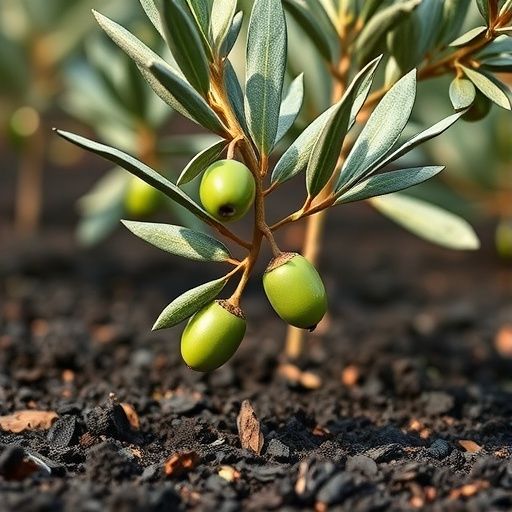
The olive oil industry annually generates substantial amounts of waste, including stones and pomace, which are typically burned or discarded. A recent study by chemical engineers at the University of Castilla-La Mancha, published in Waste and Biomass Valorization, explores the potential of using this waste as a catalyst support for converting carbon dioxide into methane. By treating olive stones with zinc chloride at high temperatures, the researchers produced activated biochars with high surface areas suitable for hosting nickel nanoparticles, facilitating the Sabatier reaction that transforms CO2 and hydrogen into methane and water.
The study focuses on the Power-to-Methane concept, which involves using excess renewable electricity to produce hydrogen through water electrolysis, then reacting it with captured CO2 to create synthetic natural gas. This approach is compatible with existing gas infrastructure, offering a solution for storing intermittent renewable energy. The methanation reaction requires an efficient catalyst, typically nickel, which is often supported on metal oxides. However, carbonaceous supports derived from biomass, like the olive stone biochar, offer advantages such as high surface area, tunable porosity, and renewability.
Olive stones were selected for their favorable composition, including a high volatile matter content and inherent metals that influence catalytic activity. The researchers employed a single-step pyrolysis process with zinc chloride, which enhances the biochar's porosity by promoting dehydration and inhibiting tar formation. The resulting porous carbon structure supports effective nickel dispersion, crucial for catalytic performance.
The team varied the biomass-to-zinc chloride ratio and activation temperature, finding that higher zinc chloride loading and temperatures increased the biochars' carbon content and surface area, reaching up to 1,409 square meters per gram. This enhanced porosity improves adsorption capacity, essential for the methanation reaction, as it requires CO2 molecules to remain near the active nickel sites.
Nickel was deposited onto the activated biochars, and the resulting catalysts were tested for CO2 methanation. The interaction between nickel and the support is critical, as strong interactions prevent sintering, while weak interactions can lead to larger crystallites. The study found that zinc chloride activation also led to the formation of nickel-zinc alloys, which modified the electronic structure of nickel, enhancing catalytic activity.
The research identified a promising catalyst, 10Ni-1:6-800, which achieved a 20% CO2 conversion rate. While modest compared to industrial catalysts, this result highlights the potential of waste-derived materials as cost-effective catalyst supports. The study contributes to the broader effort to utilize agro-industrial waste, reducing environmental impact and supporting circular economies.
Challenges remain, such as ensuring catalyst stability and addressing the potential for carbon support gasification. However, the study demonstrates the feasibility of using olive waste to create effective CO2-to-fuel catalysts, aligning with the growing interest in Power-to-Methane projects across Europe.
Source: Biochar Feed