Plasma reactor experiment produces hydrogen and graphene oxide
Researchers in Texas discovered their plasma reactor, initially aimed at hydrogen production, also creates graphene oxide from methane. This unexpected find offers a potentially cheaper production method.
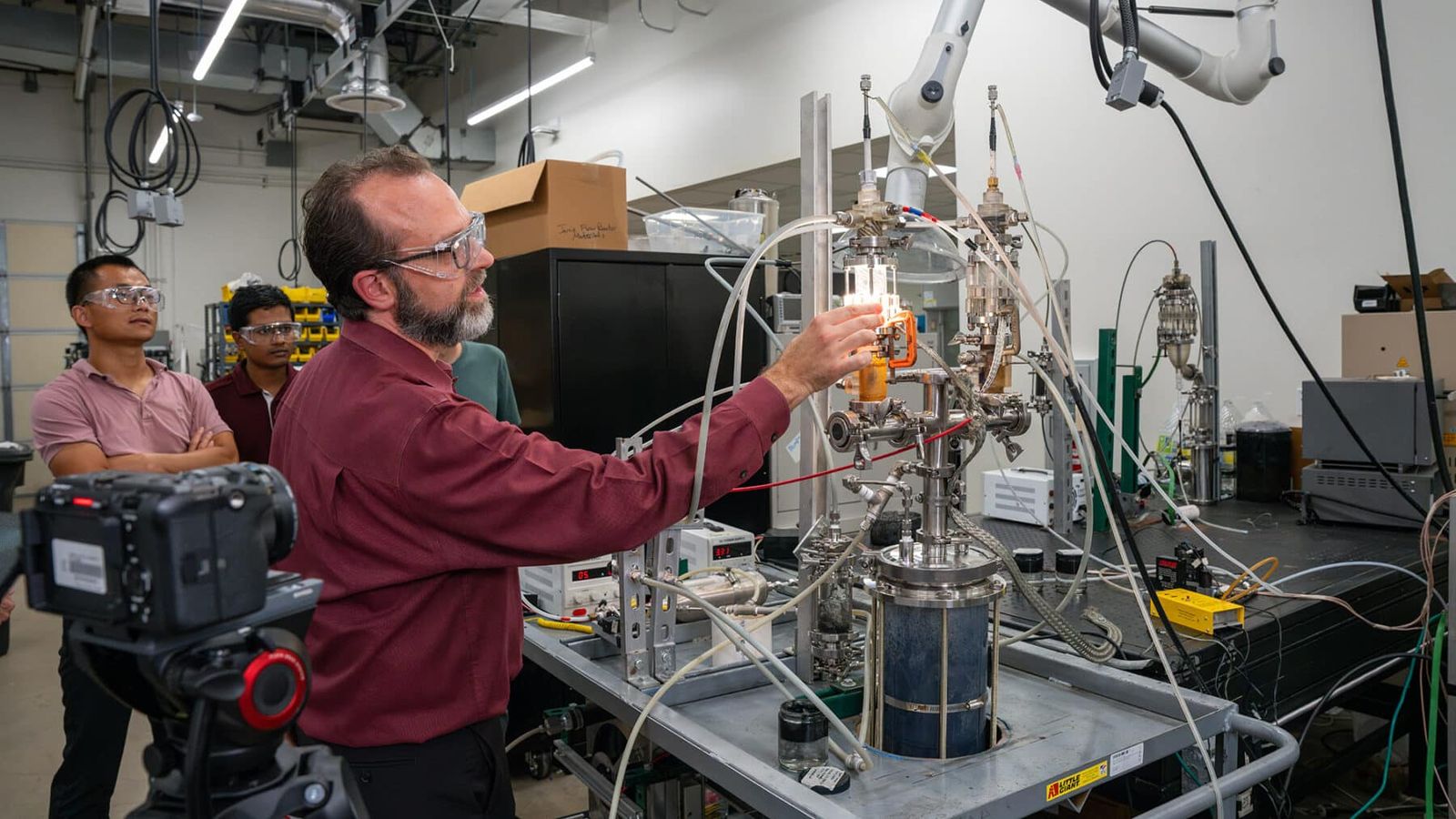
A bench-scale reactor in College Station, Texas, initially aimed at producing hydrogen from natural gas, has unexpectedly yielded graphene oxide, a highly valuable carbon material. The reactor's process involves generating an electrical charge at the interface between methane gas and a water surface, which disassembles methane at the molecular level, releasing hydrogen and leaving carbon atoms in an energetic state. Instead of forming carbon dioxide or solid carbon, these atoms bond with oxygen from the water, creating graphene oxide.
This method of synthesizing graphene oxide directly from methane, rather than mined graphite, offers potential advantages in cost and carbon footprint. The research, published in Nature Communications, highlights a novel approach to producing graphene oxide using a nonthermal plasma water interface, which operates at atmospheric pressure, potentially reducing operational costs compared to conventional high-pressure methods.
The graphene oxide produced in this process has properties comparable to commercially available materials, making it suitable for use in battery electrodes and composite coatings. However, scaling the process from a laboratory setting to commercial production remains a challenge, as continuous operation without degrading quality is yet to be proven.
The use of natural gas as a methane source raises concerns about emissions unless alternative low-carbon sources like biogas are used. While the carbon is sequestered in solid graphene oxide, its environmental benefit depends on its market viability. This dual-output process, producing both hydrogen and graphene oxide, could reduce the cost burden of single-product manufacturing, aligning with the energy transition's need for efficient resource utilization.
Graphene oxide's market value, significantly higher than hydrogen's, suggests a shift in the reactor's economic potential if the process maintains quality at scale. This discovery underscores the importance of observing unexpected outcomes in clean energy research, where the most commercially compelling results may arise from unanticipated material synthesis.
Source: Graphene Feed