Recycled plastic sensor using bamboo biochar and copper detects toxic herbicide paraquat
Researchers in Brazil have developed a disposable electrochemical sensor using recycled PET, bamboo biochar, and copper nanoparticles to detect the toxic herbicide paraquat.
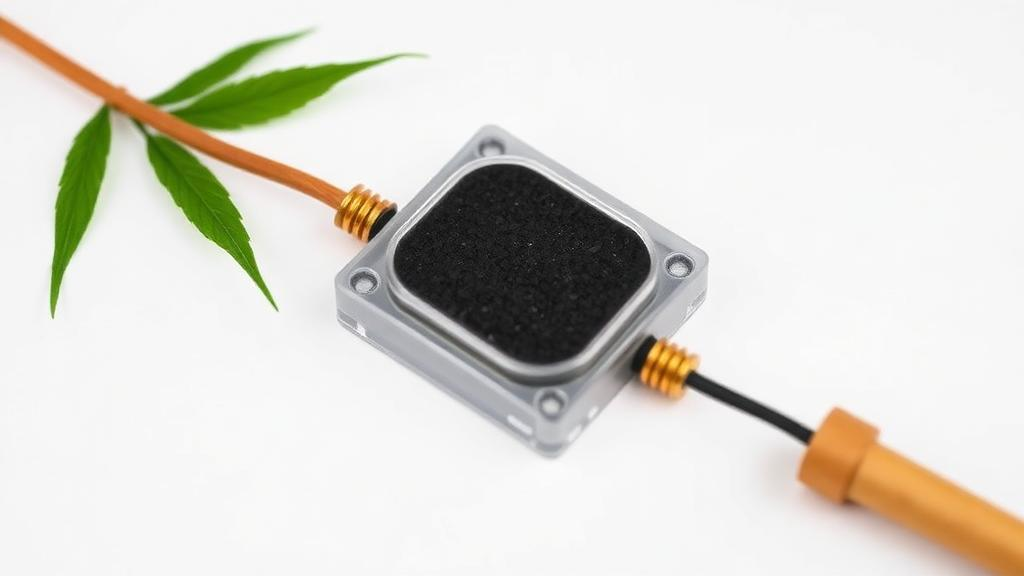
Researchers at São Paulo State University (UNESP) have developed a novel electrochemical sensor utilizing bamboo-derived biochar and copper nanoparticles to detect the herbicide paraquat. This sensor, detailed in Discover Electrochemistry, is fabricated from recycled polyethylene terephthalate (PET) and employs a biopolymer-based conductive ink. The innovative design offers a sustainable approach to environmental monitoring, particularly in regions where paraquat contamination is prevalent.
The sensor's construction involves a screen-printing process on PET substrates, commonly found in beverage bottles. Researchers Erika Y. Ito, Francisco C. Barreto, Martin K. L. Silva, and Ivana Cesarino used adhesive stencils and a conductive ink made from graphite and sodium alginate. The biochar-copper nanocomposite is then applied to the working electrode, enhancing the sensor's electrochemical properties without the need for sophisticated equipment.
Biochar, produced by pyrolyzing bamboo at 900 degrees Celsius, provides high surface area and chemical stability, making it an effective electrode modifier. Copper nanoparticles contribute to the sensor's conductivity and catalytic activity. Together, these materials facilitate the adsorption of paraquat molecules and accelerate electron transfer, improving detection sensitivity.
Characterization techniques confirmed the sensor's composition and structure. Field-emission scanning electron microscopy and energy-dispersive X-ray spectroscopy verified the presence of carbon, oxygen, and copper, while Fourier-transform infrared spectroscopy confirmed the integration of graphite and sodium alginate in the ink.
Electrochemical testing revealed that paraquat undergoes a two-step reduction process, with the sensor demonstrating a linear detection range from 10 to 250 micromoles per liter. The optimal copper content in the nanocomposite was determined to be 20 percent by weight, maximizing the reduction peak intensity. Despite some limitations in selectivity and shelf life, the sensor offers a promising tool for on-site environmental monitoring.
The sensor's design aligns with green chemistry principles, achieving a high AGREE metric score. Future improvements may include anti-oxidation coatings and biosynthesized copper nanoparticles to enhance sustainability. The research highlights the potential of biochar-copper nanocomposites in developing eco-friendly solutions for detecting environmental contaminants like paraquat.
Source: Biochar Feed