Researchers suppress dendrite growth to extend lithium-metal battery life
South Korean researchers have created a copper current collector that evenly spreads lithium, preventing dendrite formation and enhancing the durability of anode-free lithium-metal batteries.
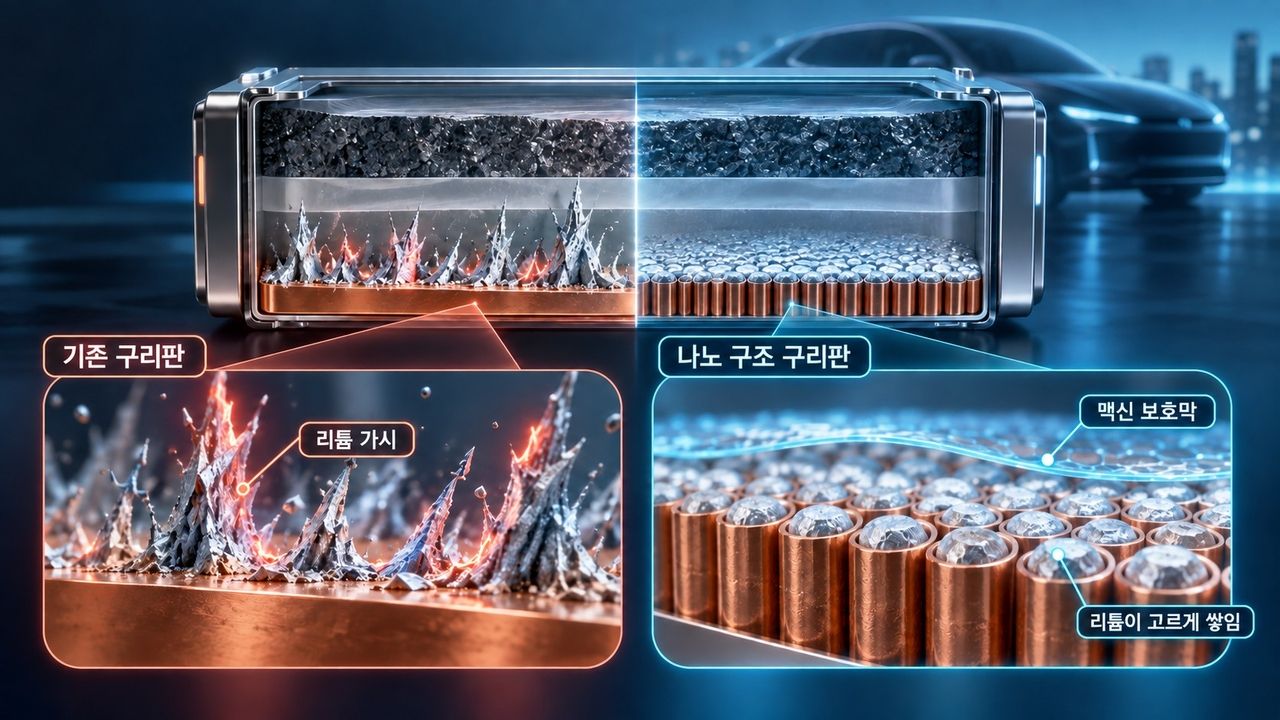
Researchers in South Korea have developed a method to suppress dendrite growth in anode-free lithium-metal batteries, enhancing their lifespan and potential use in high-energy applications. The team from Korea Advanced Institute of Science and Technology (KAIST), Kyungpook National University, and the National NanoFab Center utilized semiconductor fabrication techniques to improve battery performance.
Anode-free lithium-metal batteries differ from conventional lithium-ion batteries by depositing lithium directly onto a copper current collector, eliminating the need for separate anode materials like graphite. This design increases energy density but faces challenges from dendrite formation, which can degrade battery performance.
The research team addressed this by redesigning the copper current collector. They etched fine tubular structures into the copper surface using secondary sputtering lithography, allowing lithium to distribute evenly and reducing dendrite formation. This technique increased the contact area with lithium fourfold compared to a flat copper surface.
Additionally, the team applied a thin MXene layer to the structured copper surface. This advanced material acts as a primer, facilitating the natural formation of a protective layer rich in lithium fluoride during battery operation. This layer minimizes reactions between lithium and the electrolyte, further suppressing dendrite growth.
The researchers aim to commercialize this technology for use in electric vehicles, drones, and energy storage systems, where high energy density and lightweight design are crucial. They plan to scale up the nanofabrication process for large-area production and test large-format cells with various electrolytes and cathodes.
The study's findings were published in Advanced Functional Materials, highlighting the potential of this approach to extend battery life without significantly increasing weight or volume, thus supporting the adoption of high-energy anode-free batteries.
Source: MXenes