Temperature tunes plastic waste upcycling
Researchers at Shihezi University used phosphoric acid-activated walnut shell biochar to catalytically pyrolyze waste agricultural plastic mulch film at three temperatures (300, 350, 400 °C), finding that 350 °C maximized olefin selectivity at 69% while 400 °C reduced tar deposition and produced carbon deposits with lower activation energy for easier regeneration. The findings give biochar catalyst developers a temperature-based framework for balancing product selectivity against catalyst deactivation and regenerability in agricultural plastic pyrolysis systems.
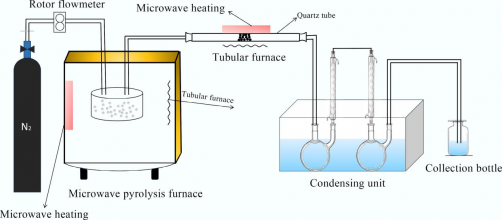
A recent study published in Sustainable Carbon Materials highlights the role of catalytic temperature in the pyrolysis of waste plastic mulch film, using phosphoric acid-activated walnut shell biochar as a catalyst. The research, conducted by Haiyan Yan and Yunfeng Zhao's team at Shihezi University, found that a catalytic bed temperature of 350 °C achieved the highest olefin selectivity at 69%, while a temperature of 400 °C facilitated the formation of carbon deposits that were easier to remove.
Plastic mulch film, commonly used in agriculture, poses environmental challenges due to its persistence in soil and slow degradation. Chemical recycling methods like pyrolysis have gained attention for converting polyolefin plastics into valuable chemicals. Microwave-assisted pyrolysis offers benefits such as rapid heating and improved energy transfer, particularly for materials like low-density polyethylene films. However, catalyst deactivation due to tar and coke deposition remains a significant challenge.
The study explored the effects of different catalytic temperatures on product formation and catalyst deactivation. The researchers processed waste plastic mulch film in a microwave-assisted ex-situ catalytic pyrolysis system, using a walnut shell-derived biochar catalyst. The pyrolysis zone was heated to 500 °C, with the catalytic bed temperatures set at 300, 350, and 400 °C. The resulting pyrolysis oil, tar, and spent catalysts were analyzed using various techniques, including gas chromatography–mass spectrometry and thermogravimetric analysis.
At 300 °C, the catalyst was insufficiently activated, resulting in a high proportion of alkanes and alkenes in the oil and a significant amount of stable tar deposits. At 350 °C, olefin selectivity peaked, but side reactions led to the formation of oxygen-containing tar that could deactivate the catalyst. At 400 °C, the process favored deeper catalytic conversion, increasing aromatic content and gas yield while reducing tar deposition.
The findings suggest that optimal catalyst performance in plastic mulch film pyrolysis involves balancing olefin production with catalyst regenerability. The study provides a framework for designing more selective and stable catalytic systems for upcycling agricultural plastic waste, connecting oil composition, tar chemistry, carbon-deposit kinetics, and catalyst deactivation pathways.
The research received financial support from several projects, including the Xinjiang Production and Construction Corps Guidance Project and the High-level Talent Project of Shihezi University.
Source: Biochar Feed