Turmeric-powered nanofiber scaffold accelerates infected wound healing
Researchers in China developed a nanofiber scaffold combining carbon nanotubes and curcumin, significantly accelerating infected wound healing in rats, with wounds nearly closing in two weeks.
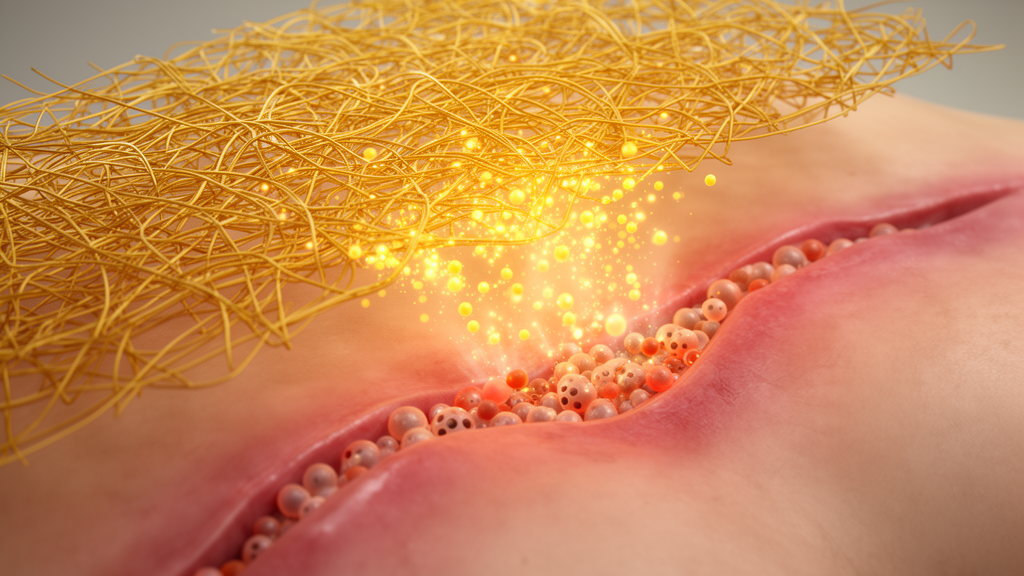
Researchers in China have developed a novel nanofibrous scaffold that integrates carbon nanotubes, aimed at enhancing the healing of chronic infected wounds. The scaffold, detailed in Frontiers in Bioengineering and Biotechnology, combines polycaprolactone, carbon nanotubes, a polydopamine coating, and curcumin to create an electroactive material known as PCL/CNT-PDA@Cur. This material addresses multiple challenges in wound healing, including inflammation, bacterial infection, and oxidative stress.
The scaffold is produced using electrospinning, which creates a fibrous mat from a polycaprolactone and carbon nanotube mixture. This mat mimics the extracellular matrix of skin, providing a conducive environment for cell growth. The carbon nanotubes impart electrical conductivity, facilitating the natural bioelectric signals that promote cell migration and proliferation.
Polydopamine, inspired by mussel adhesive proteins, is used to coat the fibers, enhancing their hydrophilicity and serving as a binding agent for curcumin. This coating significantly improves curcumin's loading efficiency and release profile, allowing for sustained delivery during the critical inflammatory phase of wound healing.
In vitro tests showed that the scaffold supports cell proliferation, angiogenesis, and oxidative stress protection. It also modulates macrophage polarization, shifting cells from a pro-inflammatory to a reparative state. The scaffold demonstrated significant antibacterial activity, disrupting bacterial membranes and suppressing the bacterial SOS response.
Animal tests on rats confirmed the scaffold's efficacy, with treated wounds showing faster closure and improved tissue regeneration compared to controls. The study highlights the potential of this integrated approach, combining turmeric chemistry, mussel adhesion, and carbon nanotube electronics, to address persistent wound healing challenges. Further validation in larger animal models is needed before clinical application.
Source: Carbon Nanotubes Feed