Ultraviolet laser creates flexible circuits from waste materials
Researchers at the National University of Singapore have developed a method to create laser-induced graphene circuits on kraft paper using a 355-nanometer ultraviolet laser, enabling flexible, biodegradable electronics.
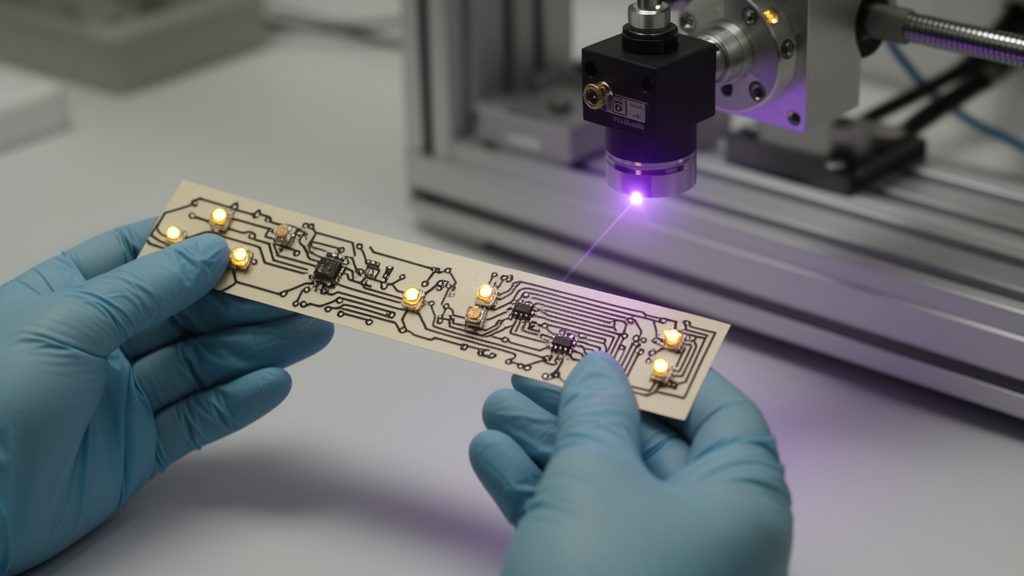
Researchers at the National University of Singapore have developed a method to transform kraft paper into electronic circuits using a pulsed ultraviolet laser. This technique involves patterning laser-induced graphene (LIG) directly onto lignin-rich paper, creating electrodes that maintain stable electrical performance through a thousand bending or stretching cycles. The study, published in npj Flexible Electronics, highlights the potential for biodegradable electronics, addressing the growing issue of electronic waste.
Laser-induced graphene, a porous carbon material, is typically produced using infrared or carbon dioxide lasers on synthetic polymers. However, the Singapore team, led by Truong-Son Dinh Le and colleagues, utilized a 355-nanometer ultraviolet pulsed laser. This approach allows for fine, localized heating of the paper surface, converting the lignin-rich cellulose matrix into conductive graphitic carbon without additional chemicals.
Kraft paper, rich in lignin, serves as an ideal substrate for this process. The resulting LIG electrodes exhibit a sheet resistance of 147 ohms per square and maintain functionality after extensive mechanical stress. The simplicity of this method, which requires no additional processing steps, makes it a cost-effective and environmentally friendly alternative to conventional microfabrication techniques.
The team demonstrated the versatility of their platform by fabricating various devices on paper, including flexible circuits, photodetectors, and electrothermal transducers. These components are essential for soft electronic systems, offering a sustainable solution for applications like smart packaging and single-use diagnostics.
The scalability of this paper-based platform is notable, as it is compatible with roll-to-roll manufacturing processes. This could enable large-scale production of flexible electronics at a low cost, without the need for cleanroom facilities. The environmental benefits are significant, as paper-based electronics can decompose or be composted, reducing the footprint of disposable devices.
The study was supported by several institutions, including the Institute for Health Innovation and Technology and the National Research Foundation of Singapore. Published as open access, it positions paper-based laser-induced graphene as a viable platform for sustainable electronics and soft robotics.
Source: Graphene Feed