13 articles on Carbon Nanotubes (CNTs) in Defense Related.
Researchers have developed closed-form entropy measures for degree-based topological indices in hyper armchair carbon nanotubes.

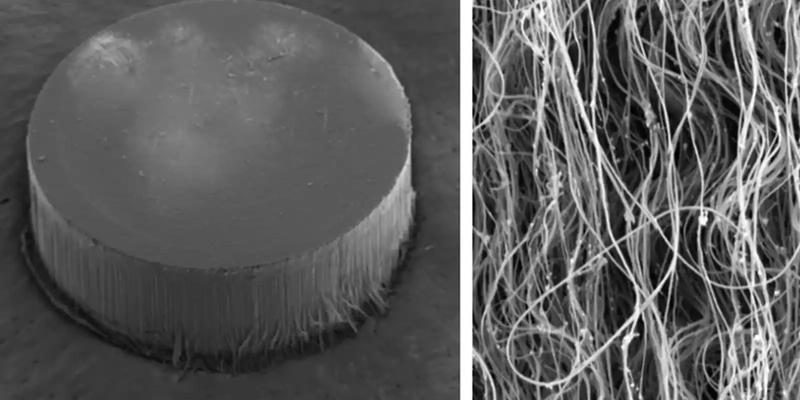
Researchers developed a carbon nanotube foam with mechanical memory, retaining its shape after compression. This property could lead to advanced impact-resistant materials and mechanical computing applications.

The Advanced Carbons Council calls for a U.S. carbon materials innovation platform focused on standards, testing and buyer qualification. The paper links engineered-carbon supply chains to manufacturing, energy, defense and AI infrastructure. Serves as a model for governments world-wide.
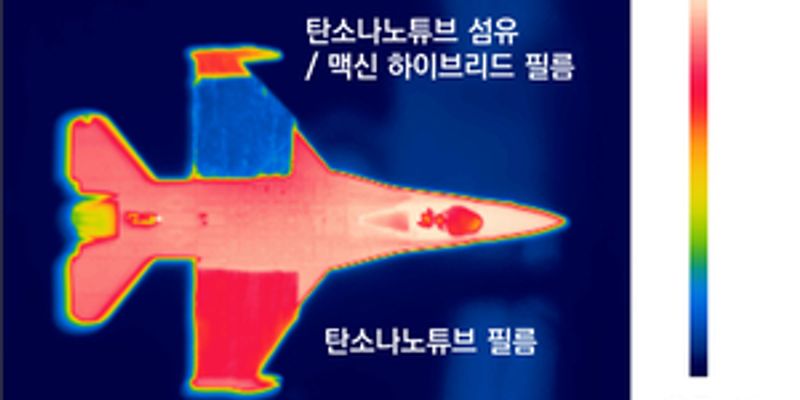
South Korean researchers developed a 17.5-micrometer-thick film that blocks 99.9999999% of radar waves by combining carbon nanotube fibers with MXene nanosheets, enhancing stealth technology.

Canatu Finland Oy concluded change negotiations, resulting in the termination of up to 14 employment contracts for financial and production-related reasons.
South Korean researchers have built a carbon nanotube film thinner than a human hair that blocks more than 99.9999999% of electromagnetic waves and evades thermal imaging, with fighter jets and drones the intended use.

A company led by Cambridge PhD Liu Zhenyu is advancing carbon nanotube materials for lightweight applications.

Canatu has appointed Walter Braun as Chief Technology Officer and Bernd Meier as Chief Marketing Officer, effective September 1, 2026. These appointments aim to enhance Canatu's capabilities in scaling the production and commercialization of its carbon nanotube technologies, crucial for its applications in the semiconductor and medical diagnostics industries.
Researchers from the Skolkovo Institute of Science and Technology have developed a new infrared sensor using single-walled carbon nanotubes, which shows a conductivity change 10,000 to 100,000 times more pronounced than graphene. This advancement could lead to more sensitive and compact thermal cameras and medical sensors, leveraging the unique properties of carbon nanotubes for enhanced infrared detection without the need for cooling.

Pure Resources (ASX: PR1) and Rice University have announced peer-reviewed validation of their carbon nanotube fibre (CNTF) technology, highlighting its high thermal conductivity and potential to outperform traditional materials like copper and aluminum. This development is significant for advanced carbon materials as it demonstrates the potential of CNTF to enhance thermal management in applications such as AI data centers, drones, and defense systems.

AwesomeRay is advancing the industrialization of carbon nanotubes in South Korea, focusing on applications in semiconductors and defense. This development is significant for the carbon nanotube sector as it could lead to enhanced performance and new capabilities in these high-tech industries.

Composites reinforced with graphene and multi-walled carbon nanotubes are reshaping defence and aerospace design, where strength-to-weight now counts for more than the tonnage of steel and platforms.

Canatu Plc restructured its leadership team on June 25, 2026, consolidating reporting lines directly to CEO Maximilian Slawinski and renaming its Automotive business unit to Robotics, Mobility and Defence. The reorganization signals Canatu's broadened market focus for its carbon nanotube products beyond automotive into robotics and defence applications.