New carbon nanotube sensors could shrink thermal cameras, medical devices
Researchers from the Skolkovo Institute of Science and Technology have developed a new infrared sensor using single-walled carbon nanotubes, which shows a conductivity change 10,000 to 100,000 times more pronounced than graphene. This advancement could lead to more sensitive and compact thermal cameras and medical sensors, leveraging the unique properties of carbon nanotubes for enhanced infrared detection without the need for cooling.
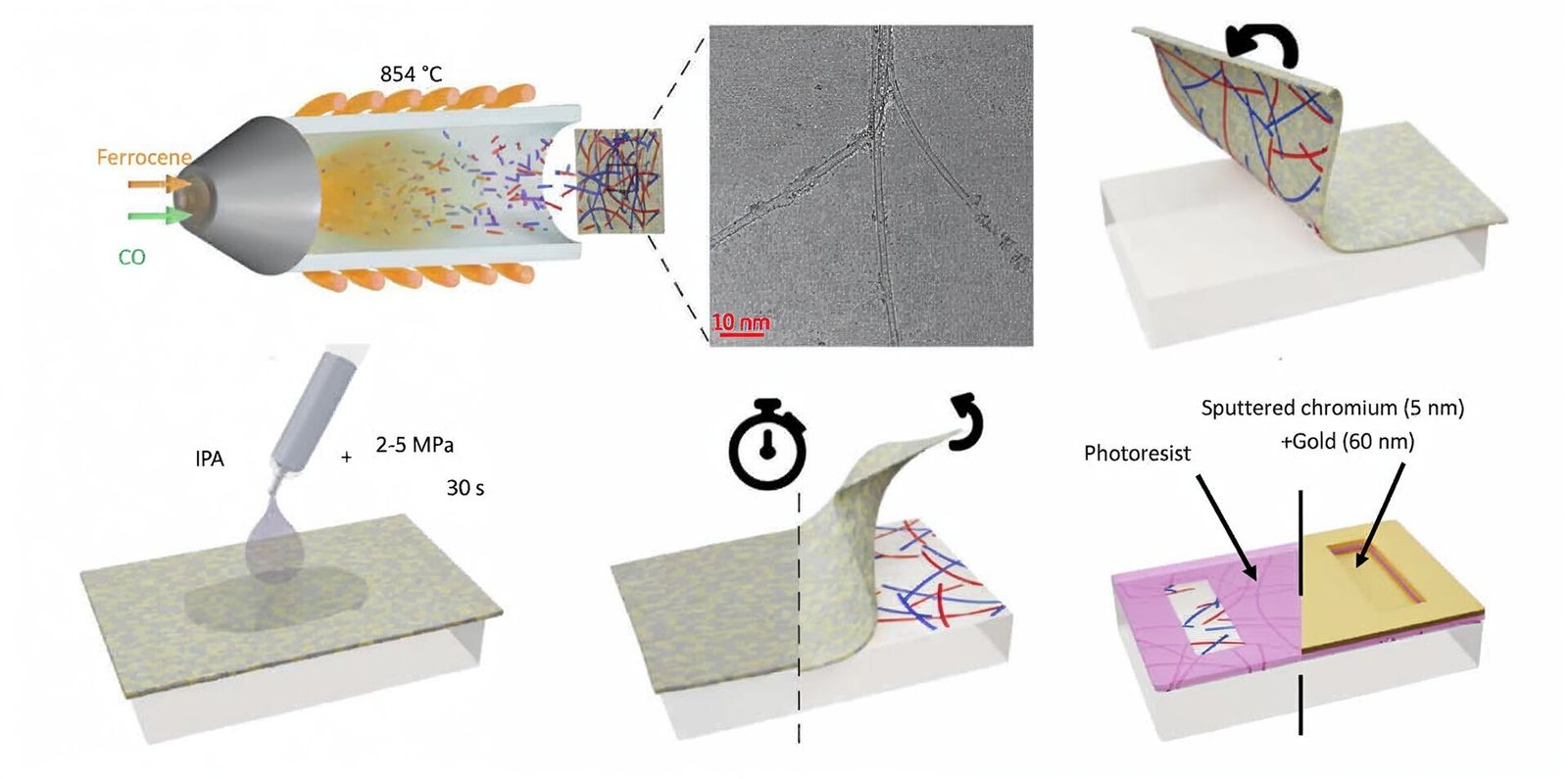
Researchers at the Skolkovo Institute of Science and Technology have developed infrared sensors using single-walled carbon nanotubes, which operate without the need for cooling. This advancement could lead to more affordable and compact thermal cameras and sensors for various applications, including medical, industrial, and safety monitoring.
The team measured changes in electrical conductivity of carbon nanotubes when exposed to infrared light, finding the response to be significantly stronger than that of graphene, which has been used in similar detectors. The findings were published in Opto-Electronic Advances.
Infrared sensors are crucial for detecting heat-related radiation and are used in thermal imaging and temperature measurement in various fields. Traditional photonic detectors require cooling and are costly, while thermal detectors can operate at room temperature but suffer from thermal noise. The Skoltech team's work addresses this issue.
The new detector operates by utilizing changes in the physical properties of the sensing element. Unlike graphene, carbon nanotubes have a bandgap, allowing their conductivity to be controlled with an electric field. This results in a more pronounced change in resistance when exposed to infrared light.
The enhanced sensitivity of the detector is attributed to the replacement of graphene with carbon nanotubes, the high quality of the nanotubes, and their defect-free transfer onto the lithium niobate substrate. This combination allows the detector to outperform graphene-based counterparts and approach the theoretical limit for uncooled thermal detectors.
Professor Albert Nasibulin, head of Skoltech Photonics, emphasized the potential of these detectors to make infrared optics more compact and energy-efficient, enabling applications such as handheld thermal cameras and wearable medical thermometers. The team is now focusing on improving the speed and optimizing the device for practical use.
Source: Carbon Nanotubes Feed