SWCNT pyroelectric phototransistors enhance IR detection
Researchers at the Skolkovo Institute of Science and Technology have developed a room-temperature infrared phototransistor using single-walled carbon nanotubes (SWCNTs) and lithium niobate (LiNbO3), achieving specific detectivities of up to 10^10 cm·Hz^1/2/W. This advancement in SWCNT-based pyroelectric phototransistors could lead to more affordable and portable IR sensing technologies, potentially transforming applications such as thermal imaging, environmental monitoring, and optical communications.
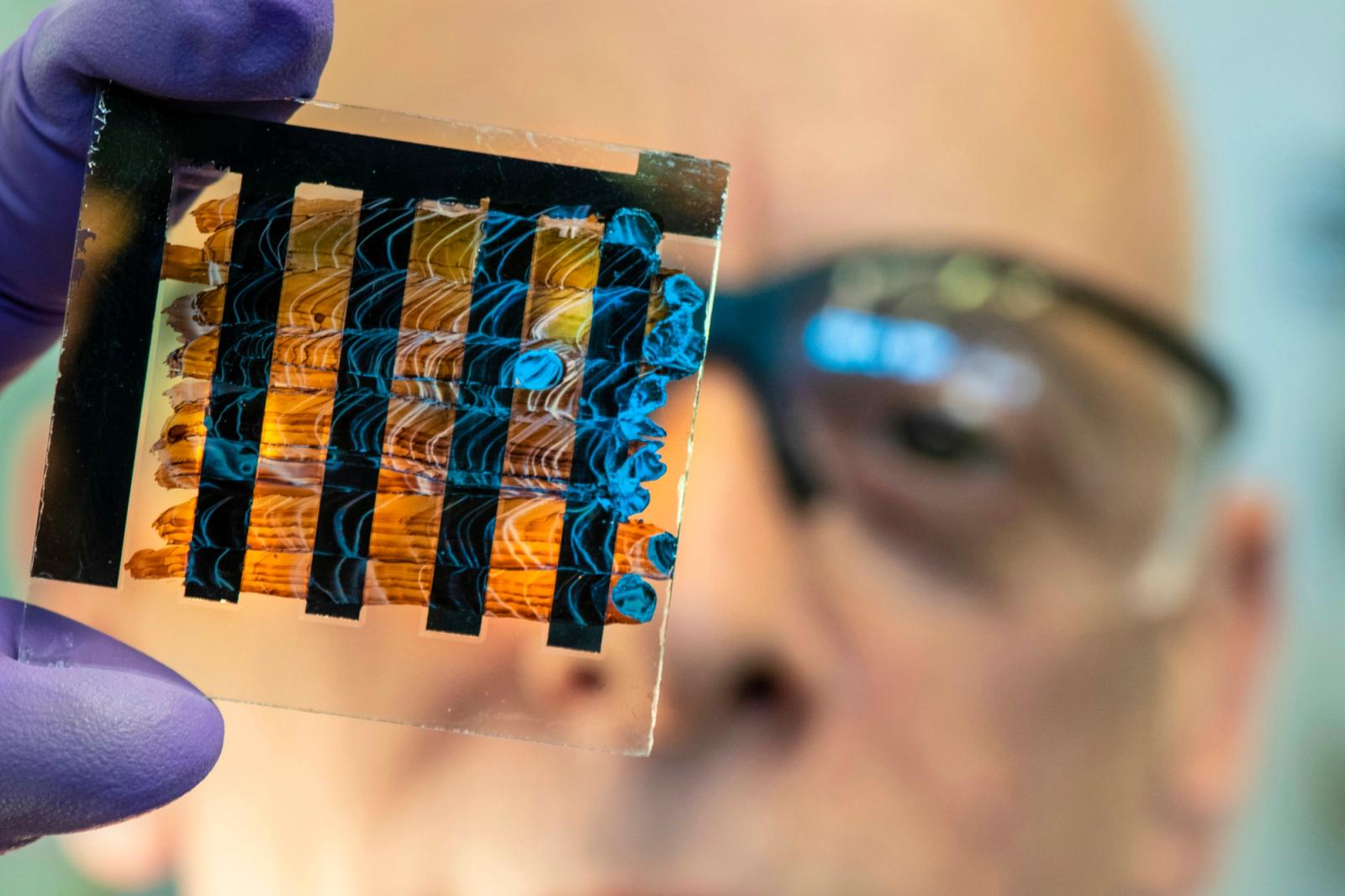
Single-walled carbon nanotubes (SWCNTs) are central to a new class of room-temperature infrared phototransistors developed by researchers at the Skolkovo Institute of Science and Technology (Skoltech), Russia. Led by Dr. Svetlana I. Serebrennikova and Professor Albert G. Nasibulin, the team has demonstrated a device that achieves high sensitivity without the need for cryogenic cooling. This innovation combines SWCNT networks with a pyroelectric lithium niobate (LiNbO3) substrate to enhance infrared (IR) detection capabilities.
The device exploits the pyroelectric effect in LiNbO3. When the crystal absorbs IR light, it experiences a slight temperature increase, altering its internal electric polarization and generating an electric field. This field acts as a gate voltage, significantly changing the conductivity of the attached SWCNT network. The result is a pyroelectric phototransistor that converts heat from incoming light into a strong electrical signal.
Previous graphene-based pyroelectric detectors underperformed due to graphene's lack of an electronic bandgap. In contrast, semiconducting carbon nanotubes possess a bandgap, allowing their conductivity to respond dramatically to the gating field. The Skoltech team used an aerosol chemical vapor deposition method to grow high-quality SWCNT networks, which were then transferred onto a z-cut LiNbO3 surface using a novel capillary transfer technique. This method avoids contaminants that could degrade the nanotube electronics.
The detectors operate effectively from the visible range to 9.3 µm, achieving specific detectivities of approximately 10^10 cm·Hz^1/2/W. This performance surpasses that of graphene-based devices and approaches the theoretical limit for uncooled thermal detection. The detectors' broad spectral sensitivity and room-temperature operation make them suitable for portable, low-power IR sensing applications, such as thermal imaging, gas sensing, and optical communications.
Future development will focus on improving response speed, currently limited by heat diffusion through the LiNbO3 substrate. The team aims to enhance performance with protective coatings and optimize thermal coupling to heat sinks. These advancements could lead to more compact, broadband, room-temperature IR sensors that rival cooled detectors in sensitivity while offering cost and portability advantages.
Professor Albert G. Nasibulin's Laboratory of Nanomaterials at Skoltech is renowned for its research on nanomaterials, including carbon nanotubes. The lab's interdisciplinary environment and international collaborations have resulted in over 150 peer-reviewed publications and numerous patents, contributing to innovations in electronics, photonics, and energy technologies.
Source: Carbon Nanotubes Feed