The carbon removal market doesn't need more innovation, it needs the conditions to scale
Alastair Collier, chief R&D officer of A Healthier Earth, argues in this op-ed that the carbon removal sector's primary obstacle is no longer technological but structural, citing fragmented credit markets, misaligned procurement timelines, and the absence of durable policy frameworks as the core barriers to scale. For the biochar and broader CDR industry, the piece highlights that integrating high-integrity removals into mechanisms like the UK and EU ETS could provide the long-term demand signals and price certainty needed to move projects from pilots to industrial-scale infrastructure.
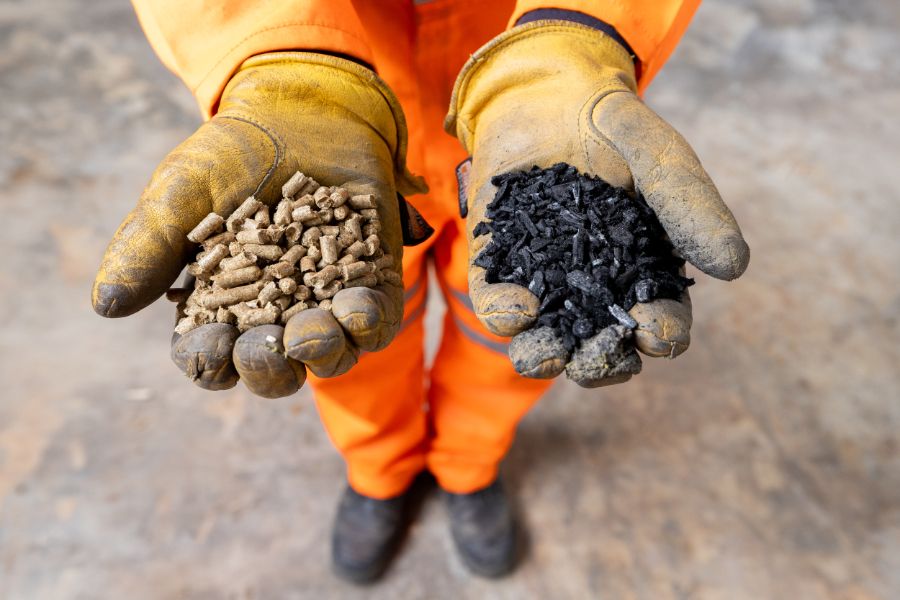
The carbon removal sector is at a pivotal moment, where the focus must shift from innovation to scaling existing technologies. Biochar, a carbon removal pathway using biomass, stands out for its reliability and scalability. However, the market for carbon dioxide removal (CDR) remains fragmented, with challenges in standardization and credit traceability hindering large-scale deployment.
Structural bottlenecks persist, as CDR credit buyers navigate a market with diverse methodologies and standards. This inconsistency complicates credit comparison and limits the availability of high-integrity credits, which are often locked in early agreements. The market is dominated by a few buyers and suppliers, increasing concentration risk and stalling the development of a robust ecosystem.
Despite the growing corporate climate targets that necessitate carbon removal, demand is inconsistent and misaligned with developers' financing needs. To address this, the market is beginning to transition from spot purchases to multi-year offtake agreements. These agreements provide the necessary revenue predictability to attract investment and expand capacity.
Governance will play a crucial role in the next phase of market development. Buyers are increasingly focused on the delivery, verification, and permanence of carbon removal projects. This shift requires projects to demonstrate operational resilience and transparency, while buyers must enhance their ability to manage carbon removal portfolios.
A Healthier Earth, a subsidiary of Pure Data Centres Group, exemplifies this approach with its integrated biochar platform, which combines production, project development, and digital verification to ensure reliable supply. At the system level, clearer standards and integration with policy frameworks are essential. Carbon removal must be embedded within broader climate policies, supported by certification and public procurement.
Momentum is building as governments explore procurement programs, standards bodies refine methodologies, and buyers diversify their portfolios. Integrating high-integrity removals into mechanisms like the UK and EU Emissions Trading Schemes could provide the long-term demand and policy certainty needed for infrastructure development.
Permanence remains a debated issue, but requiring millennial-scale certainty could hinder market progress. Instead, emissions trading frameworks should focus on qualifying high-integrity, verifiable approaches without delaying decarbonization efforts. The immediate climate challenge necessitates action, and even centuries of stable carbon storage offer valuable time to address the crisis.
The future of carbon removal depends on creating market conditions that support growth. The industry's success will be measured not by new inventions, but by its ability to scale up existing solutions with durable demand and trusted governance.
Source: Biochar Feed