India invests heavily in critical minerals for clean energy future
India has launched the National Critical Mineral Mission with a budget of 343 billion rupees to boost domestic graphite mining and reduce import dependency by 2031. This initiative is crucial for securing a stable supply of graphite, an essential material for electric vehicle batteries and other clean energy technologies, as India aims to meet its ambitious climate goals.
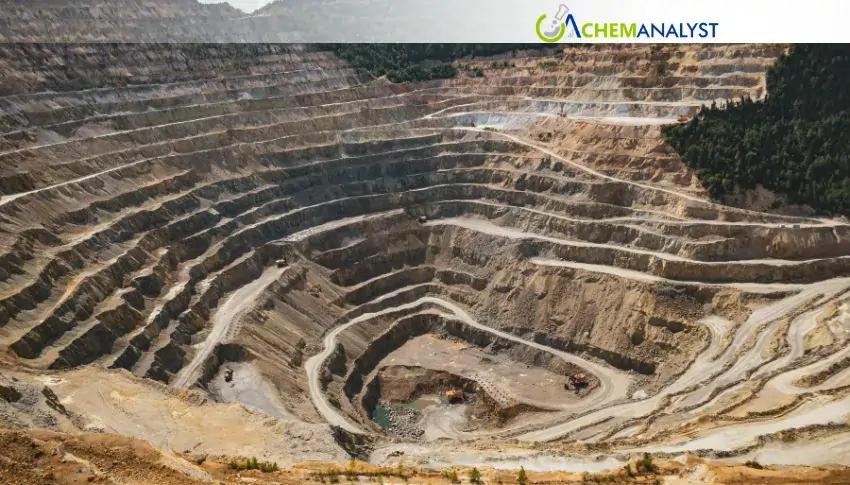
India has initiated the National Critical Mineral Mission to enhance domestic graphite mining, aiming to reduce import reliance and strengthen electric vehicle (EV) battery supply chains.
India is strategically leveraging its substantial graphite reserves to secure a significant position in the global critical minerals market. The increasing demand for graphite, essential for clean energy technologies such as EV batteries, drives this initiative. Currently, India depends heavily on imports for battery-grade graphite, with China dominating the global supply chain.
Graphite plays a crucial role in manufacturing clean technology equipment, including EV batteries, solar panels, and wind turbines. The global shift towards clean energy has heightened the demand for such critical minerals. India's climate goals further necessitate a stable supply of these minerals, with demand projected to grow significantly.
To address import dependency and enhance energy security, India launched the National Critical Mineral Mission (NCMM) in January 2025. This seven-year mission, with a budget of 343 billion rupees ($3.7 billion), aims to bolster India's energy security, accelerate industrial development, and promote technological self-reliance. Key initiatives include auctioning over 100 critical mineral blocks and conducting 1,200 exploration projects by 2030-2031. The government is encouraging domestic processing and refining by waiving customs duties on 25 critical minerals and reducing them on two others. Additionally, India is focusing on recycling e-waste and recovering critical minerals from industrial waste.
India's strategy includes diversifying its critical mineral supply chains away from countries with potential trade risks, such as Russia, Madagascar, Indonesia, Peru, and China. The country has established partnerships with 35 nations, including the United States, Australia, Canada, Germany, and France, to secure access to these resources and enhance technological cooperation. For instance, India is collaborating with the US on lithium refining, cathode materials, and synthetic graphite production. This approach aims to minimize geopolitical vulnerabilities and position India as a reliable player in the global market.
Economically, enhancing domestic graphite mining and processing could generate jobs and stimulate local economies, especially in regions like Arunachal Pradesh. This initiative also aligns with India's broader industrial objectives, such as increasing steel production capacity.
Despite its potential, India faces challenges such as environmental concerns related to mining in sensitive areas, funding gaps, and policy execution delays. The NCMM primarily provides regulatory support rather than direct capital for large-scale projects. Overcoming these challenges is crucial for India to capitalize on its graphite resources and secure a prominent role in the global clean energy supply chain.
In the short term, graphite prices tracked by ChemAnalyst may remain stable or rise slightly, as India's mission indicates increasing demand without immediate domestic supply relief. However, medium-to-long-term price trends could ease as new mining blocks and exploration projects increase supply, alleviating global tightness partly caused by Chinese export controls. Synthetic graphite and related battery-material prices may experience volatility as India diversifies partnerships with the US, Australia, and Canada, reducing reliance on China. Duty waivers on 25 critical minerals could lower input costs for domestic processors, indirectly pressuring prices downward once processing capacity scales, though funding gaps and execution delays may slow this transition, keeping prices elevated in the interim.
Source: Graphite Feed