Portuguese graphene that hides planes and drones could transform defence
GTechPlasma, a spin-off from Instituto Superior Técnico in Lisbon, has developed a plasma-produced graphene powder that its researchers estimate could reduce an F-16's radar signature to that of a bird, and has already supplied 260 grams of the material to a Portuguese drone manufacturer. The development is notable for the graphene sector because it demonstrates a tunable, plasma-based production process capable of reaching 40 milligrams per minute, with industrialization underway through partner company Plasmaphene, targeting a market—radar-absorbent coatings—currently restricted to U.S. suppliers.
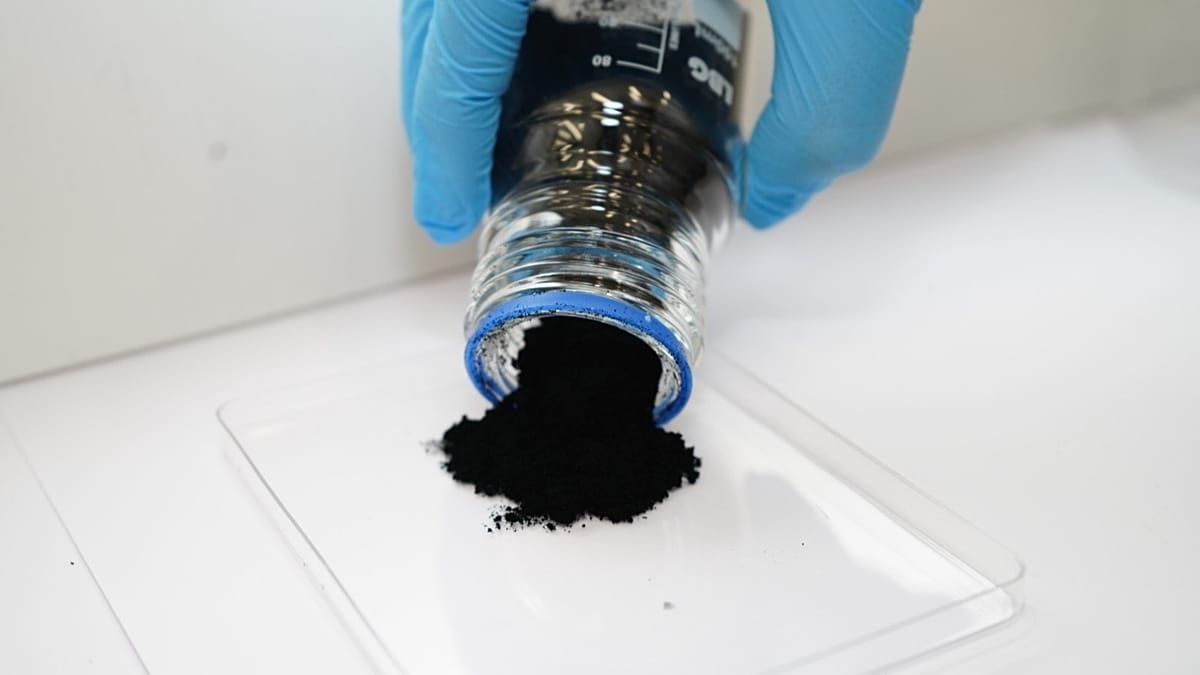
Portugal is advancing in the development of a graphene-based material designed to significantly reduce the radar visibility of drones and military aircraft. This innovation could position Europe competitively in the stealth technology sector.
The project is spearheaded by GTechPlasma, a spin-off from the Institute for Plasmas and Nuclear Fusion at Instituto Superior Técnico in Lisbon. The company has developed a plasma-based system to produce custom, high-quality graphene materials.
"We are currently focused on creating coatings for radar and electromagnetic radiation absorption," stated Bruno Soares Gonçalves, co-founder of GTechPlasma, in an interview with Euronews. The material is engineered to absorb electromagnetic radiation, including radar waves, which is crucial for stealth applications.
While the primary applications are in defense, the material also has potential for electromagnetic shielding in other sectors. "We believe we have a highly interesting material for radar-absorbent coatings," said the Instituto Superior Técnico researcher, noting the rarity and stringent controls of similar solutions internationally.
Currently, such a solution is not available elsewhere in Europe and is limited globally to the United States, where export restrictions apply. "We have a 'made in Portugal' material with significant application potential," added Bruno Soares Gonçalves.
Graphene, a one-atom-thick carbon sheet, is produced from precursors like ethanol or methane using plasma technology. This innovative approach allows control at the atomic level, enabling property tuning for various applications.
Beyond radar absorption, the technology could also be applied to hydrogen storage or the separation of rare earths and uranium. "Graphene and its derivatives have numerous applications, but controlling the process at the atomic level is essential," said the president of the Institute for Plasmas and Nuclear Fusion.
A key application is in military aviation, where the material could render aircraft nearly invisible to radar. "Our estimates suggest an F-16 could have the radar signature of a bird, significantly reducing detectability," explained Gonçalves.
Reducing radar signatures offers strategic military advantages by delaying detection during missions. "This is crucial as it provides a military advantage by delaying radar detection," Gonçalves told Euronews.
The technology is moving towards industrialization, with GTechPlasma's devices currently producing 40 milligrams per minute of high-quality graphene. The company aims to scale up production with its industrial partner, Plasmaphene, based in Vila Viçosa, which received funding from Compete 2030.
"Our goal is to have multiple devices on the factory floor for redundancy and simultaneous production of different materials," explained the Técnico researcher. The company plans to expand partnerships with defense firms and has already supplied 260 grams of radar-absorbing material to a Portuguese drone manufacturer.
Currently, the material is produced as a light black powder, but the aim is to develop ready-to-use coatings or paints for direct application on surfaces like drones. "We aim to provide solutions that clients can directly apply, rather than just supplying a powder," said the head of GTechPlasma.
This innovation could position Portugal at the forefront of graphene-based stealth technologies with potential applications beyond the defense sector.
Source: Graphene Feed