Himachal's first biochar project targets fires, carbon, and rural livelihoods
The Government of Himachal Pradesh, in collaboration with Dr Y.S. Parmar University of Horticulture and Forestry and ProClime Services Private Limited, has launched India's first indigenous biochar project in Hamirpur district, aiming to convert forest biomass into biochar to reduce fire risks and generate carbon credits. This initiative is significant for the advanced carbon materials sector as it transforms waste biomass into biochar, a stable carbon-rich material, thereby contributing to carbon sequestration and offering a sustainable model for forest management and rural livelihoods.
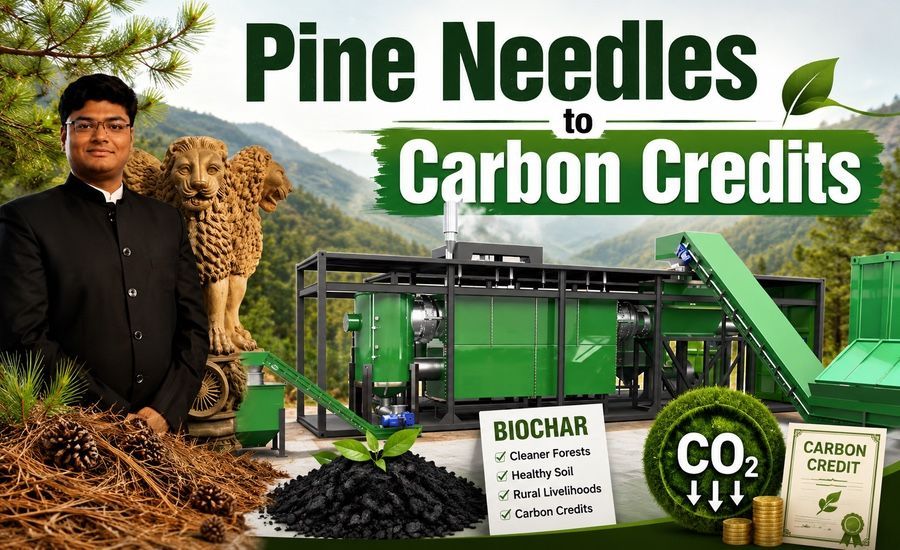
Himachal Pradesh is advancing a biochar initiative that transforms forest biomass into a climate asset, addressing forest fires, carbon sequestration, and rural livelihoods. This project, the first of its kind in India, is a collaboration between the Government of Himachal Pradesh, the Forest Department, Dr Y.S. Parmar University of Horticulture and Forestry, and ProClime Services Private Limited.
The initiative aims to convert pine needles and other biomass into biochar, reducing forest fire risks and generating carbon credits. The project is part of the HIM Evergreen Integrated Climate-Smart Agriculture and Agro-forestry Programme, which integrates sustainable forestry with agriculture across 50,000 hectares in Himachal Pradesh.
Chief Minister Sukhvinder Singh Sukhu recently reviewed the project's progress, highlighting its potential for sustainable forest management and employment generation. Indian Forest Service officer Ankit Kumar Singh explained the project's scope, emphasizing the role of biochar technology in mitigating climate change.
Biochar is produced through pyrolysis, converting biomass into a stable carbon-rich material. This process not only removes hazardous biomass from forests but also creates a circular economy by generating economic value from environmental conservation.
The project operates under a Memorandum of Understanding signed last year, with ProClime Services establishing a pilot biochar plant in Lehri. Plans include two biochar plants in Hamirpur district, with phased investments of up to one million US dollars.
Hamirpur, with its extensive pine forests, faces significant fire risks due to dry pine needles. The biochar initiative targets this biomass, converting it into a resource that enhances soil fertility and stores carbon.
Biochar technology offers multiple benefits, including moisture retention, nutrient storage, and habitat for microorganisms. It also adsorbs pollutants, improving soil quality and agricultural productivity. The project reduces fire hazards by removing combustible materials like pine needles.
The Forest Department facilitates the project by identifying biomass-rich areas and connecting the company with local communities. This initiative not only addresses environmental challenges but also creates livelihoods by purchasing biomass from locals.
The project is expected to generate nearly 50,000 person-days of employment annually and create direct jobs in plant operations. Training programs will enhance local capacity in biomass collection and biochar applications.
Significantly, the project will generate approximately 28,800 carbon credits, monetizing climate-positive actions. The broader HIM Evergreen Programme aims to manage 13.5 million tonnes of carbon dioxide emissions, integrating trees into farming systems and improving biodiversity.
The Hamirpur biochar project exemplifies how climate action can align with forest management, rural livelihoods, and agricultural sustainability. By converting forest waste into a carbon-sequestering resource, the initiative presents a model of conservation that is both environmentally and economically viable.
Source: Biochar Feed