DOE launches $500 million critical mineral and battery supply chain initiative
The U.S. Department of Energy has allocated $500 million to strengthen domestic processing and manufacturing of critical battery materials, aiming to reduce foreign supply chain reliance by 15% by 2030.
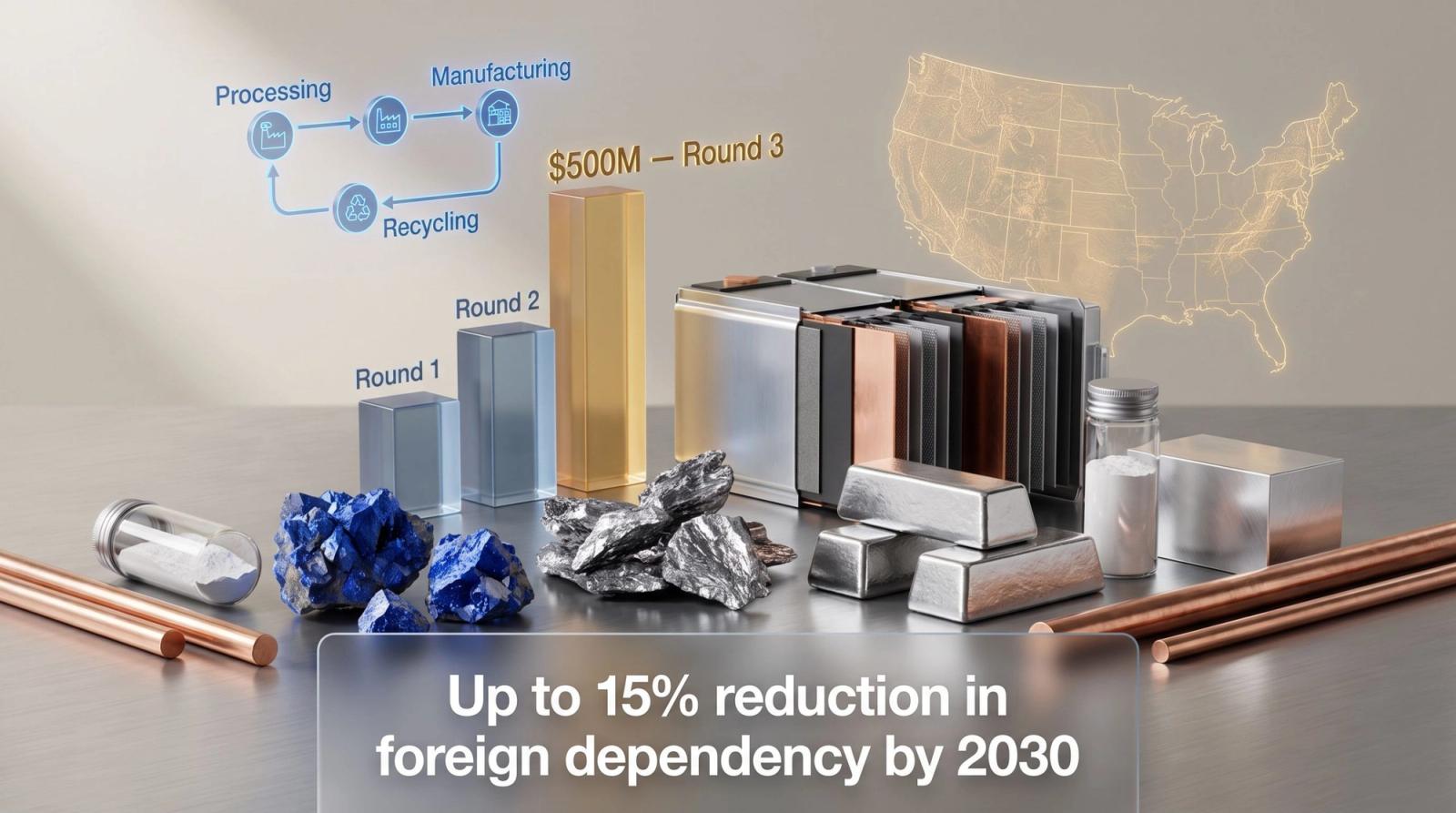
The U.S. Department of Energy (DOE) has announced a $500 million initiative to strengthen critical mineral and battery supply chains, with a focus on domestic processing of materials such as lithium, cobalt, and graphite. This initiative aims to address vulnerabilities in the U.S. industrial supply chain, which currently relies heavily on foreign processing facilities outside American regulatory control.
The program targets midstream and downstream processing capabilities, which are essential for transforming raw materials into battery-grade products. For instance, lithium must be converted into lithium hydroxide or carbonate, cobalt into cobalt sulfate, and graphite into anode material. These processes require specialized infrastructure and expertise, which have largely been offshored over the past decades.
The $500 million allocation is part of the DOE's Battery Materials Processing and Battery Manufacturing and Recycling programs, under the Office of Critical Minerals and Energy Innovation (CMEI). This funding round is the third in a series, indicating a long-term commitment to rebuilding domestic processing capacity. Seven projects have been selected through a competitive evaluation process, highlighting the program's focus on strategic investment in U.S. industrial capabilities.
The initiative encompasses three investment pillars: processing of critical minerals from domestic sources, commercial-scale battery recycling infrastructure, and manufacturing of battery materials and components. The program aims to reduce foreign supply chain reliance by up to 15% by 2030, a significant step given the rapid growth in U.S. battery demand across electric vehicles, grid storage, and defense systems.
A key aspect of the initiative is its emphasis on commercial-scale recycling as a means of supply chain security. By recovering materials like lithium, cobalt, and nickel from spent batteries, the U.S. can reduce its dependence on foreign imports. This approach also supports the development of a domestic secondary materials market, which can further decrease reliance on primary import channels.
The DOE's program operates under the authority of President Trump's Unleashing American Energy Executive Order, framing critical minerals investment as a matter of national security rather than solely an environmental initiative. This strategic positioning underscores the importance of domestic processing capacity in achieving supply chain sovereignty.
The initiative also aligns with international efforts to address similar processing capacity gaps. Concepts such as friend-shoring, which involves aligning supply chains with stable trading partners, are gaining traction. However, without domestic processing capacity, even materials sourced from allies must pass through foreign systems before reaching U.S. manufacturers. Thus, domestic processing remains a critical component of any comprehensive supply chain strategy.
Source: Graphite Feed