11 articles on Carbon Nanotubes (CNTs) in Healthcare.
Researchers at the University of Pittsburgh have developed a scaffold using carbon nanotubes and nano-hydroxyapatite to enhance immune cell activity for faster bone regeneration.

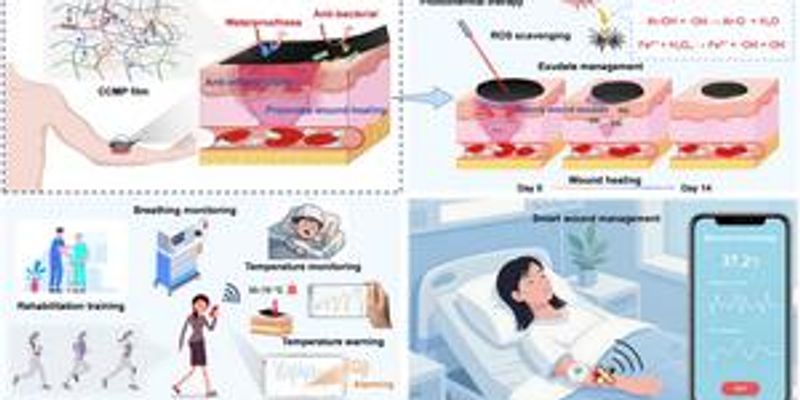
Researchers developed a conductive e-skin patch using aminated multi-walled carbon nanotubes and dopamine integrated into carboxymethyl starch.

Researchers developed a non-invasive glucose monitoring device using carbon nanotubes and a 2D nickel-based metal-organic framework.

Researchers at the Skolkovo Institute of Science and Technology have developed a room-temperature infrared phototransistor using single-walled carbon nanotubes (SWCNTs) and lithium niobate (LiNbO3), achieving specific detectivities of up to 10^10 cm·Hz^1/2/W. This advancement in SWCNT-based pyroelectric phototransistors could lead to more affordable and portable IR sensing technologies, potentially transforming applications such as thermal imaging, environmental monitoring, and optical communications.

Canatu has appointed Walter Braun as Chief Technology Officer and Bernd Meier as Chief Marketing Officer, effective September 1, 2026. These appointments aim to enhance Canatu's capabilities in scaling the production and commercialization of its carbon nanotube technologies, crucial for its applications in the semiconductor and medical diagnostics industries.
Varex Imaging has developed Multi-Beam X-Ray (MBX) technology utilizing Cold Cathode Emitters (CCE) based on carbon nanotube technology. This advancement could enhance the performance and efficiency of x-ray imaging systems by leveraging the unique properties of carbon nanotubes.

Plasma functionalisation stops multi-walled carbon nanotubes agglomerating in polyurethane coatings, a dispersion problem that has limited their antimicrobial performance in solid films.
Researchers at Zhejiang University have developed a piezoresistive fiber bandage using multi-walled carbon nanotubes for shape sensing in slender medical continuum robots. This innovation provides a low-cost, highly stretchable alternative to fiber-optic systems, potentially expanding the use of carbon nanotube-based sensors in medical robotics for improved intraoperative guidance.

Researchers from the Skolkovo Institute of Science and Technology have developed a new infrared sensor using single-walled carbon nanotubes, which shows a conductivity change 10,000 to 100,000 times more pronounced than graphene. This advancement could lead to more sensitive and compact thermal cameras and medical sensors, leveraging the unique properties of carbon nanotubes for enhanced infrared detection without the need for cooling.

Micro-X Limited (ASX: MX1) released an investor presentation outlining its strategy to apply proprietary carbon nanotube X-ray technology to CT imaging, while noting the material is not a prospectus and that its securities are not registered in the United States. The update signals continued commercial development of carbon nanotube-based X-ray sources for medical imaging, a niche application that could influence demand and performance benchmarks for nanotube components in the medtech sector.

Canatu Plc restructured its leadership team on June 25, 2026, consolidating reporting lines directly to CEO Maximilian Slawinski and renaming its Automotive business unit to Robotics, Mobility and Defence. The reorganization signals Canatu's broadened market focus for its carbon nanotube products beyond automotive into robotics and defence applications.