Sensor detects pesticides using material thinner than a strand of hair
Researchers at the Vietnam Academy of Science and Technology have developed a sensor electrode using a composite material of graphene, carbon nanotubes (CNTs), and gold nanoparticles that can detect pesticide residues at concentrations as low as parts per billion (ppb). This advancement is significant for the field of advanced carbon materials as it enhances the sensitivity and functionality of sensors, contributing to improved agricultural product monitoring and food safety.
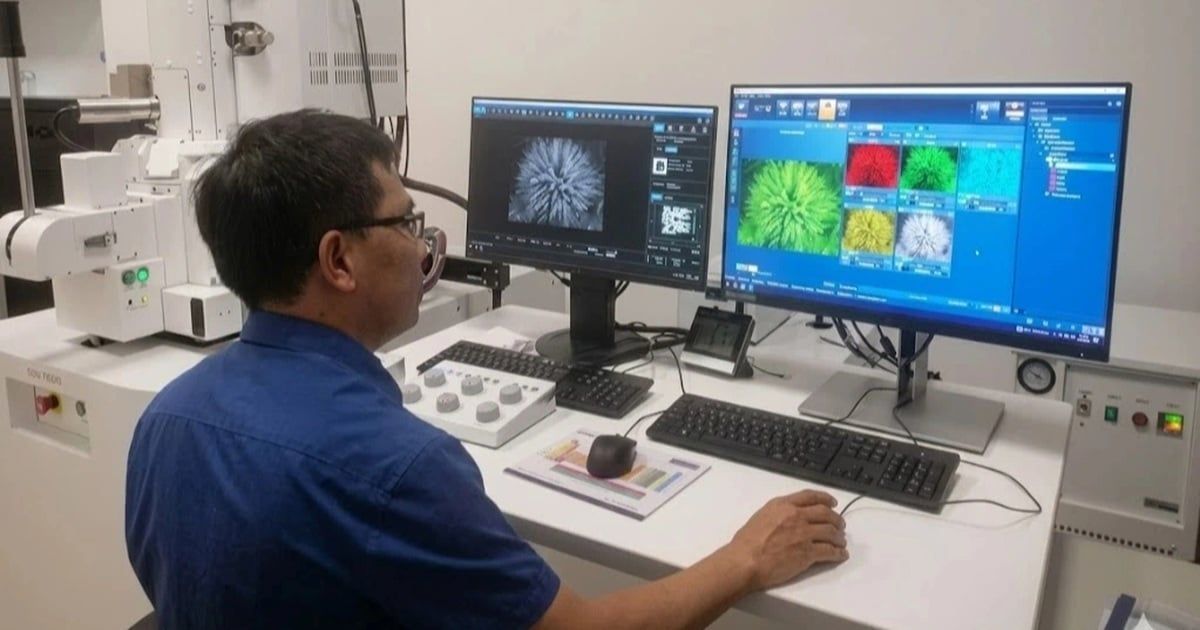
Graphene, carbon nanotubes (CNTs), and hexagonal boron nitride (hBN) are pivotal materials in the 21st century, with applications spanning smart sensors, energy storage, flexible electronics, and environmental technologies. In Vietnam, research has primarily focused on individual materials without fully developing the technological chain from fabrication to product integration.
A research team led by Associate Professor Dr. Nguyen Van Chuc at the Institute of Materials Science, Vietnam Academy of Science and Technology, has taken a comprehensive approach. They have mastered the process from creating matrix materials to testing applications. One notable achievement is the development of a method to separate graphene and hBN nanosheets from bulk materials using high-power ultrasonic vibration and planetary ball milling, producing ultrathin layers with consistent quality.
The team has further processed and functionalized these materials to integrate them with other substances, enhancing their application in sensing, energy storage, electronics, and environmental treatment. They have also developed technology to attach gold and silver nanoparticles to CNTs, graphene, and hBN, creating multifunctional composites that improve electrical conductivity, catalytic activity, and sensor sensitivity.
Dr. Nguyen Van Chuc emphasized the importance of not only creating new materials but also mastering the manufacturing and processing technologies. This foundation allows for the development of applications in environmental, energy, and electronic sectors, showcasing Vietnam's capability in advanced materials research.
In the environmental sector, the team developed a sensor electrode from a composite of graphene, CNTs, and gold nanoparticles, capable of detecting pesticide residues at parts per billion levels. This sensitivity is vital for monitoring agricultural product quality and ensuring food safety.
Additionally, composite materials of graphene, hBN, and TiO₂ have proven effective in the photocatalytic degradation of toxic dyes like Rhodamine B and Methylene Blue, commonly found in industrial wastewater. The team also addressed thermal management in electronics, using CNTs, graphene, and hBN to develop thermal pastes and coolants that enhance heat transfer and device longevity.
In the energy sector, the research team explored the use of nanomaterials in lithium batteries, aiming to improve energy storage efficiency and electrode stability. Preliminary results indicate potential advancements in these areas, along with the development of transparent conductive films for optoelectronic components.
The team's findings have been published in numerous international journals, and one invention has been validated by the Intellectual Property Office. The Vietnam Academy of Science and Technology's council recognized the team's mastery of advanced carbon nanomaterial technologies and their successful application in environment, energy, and electronics.
Moving forward, the team plans to develop multifunctional nanomaterials for smart sensors, clean energy, and electronics, while collaborating with businesses to transition research findings into production.
Source: Carbon Nanotubes Feed