News14 October 2026· Graphene Feed
Graphene oxide transforms stem cell spheroids into exosome factories for healing
GrapheneHealthcareMembranes & FiltrationResearch & InnovationSustainabilitySafety & Toxicology
21 articles on Graphene in Membranes & Filtration.
Researchers in South Korea used graphene oxide to nearly double exosome production from induced pluripotent stem cells. This method enhanced angiogenesis, promoting faster wound healing in animal models.
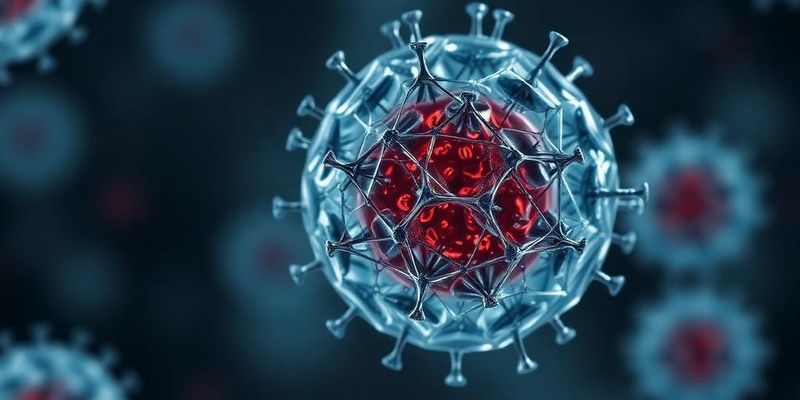
Researchers in Mexico have developed a graphene oxide-modified titanium dioxide photoanode that degrades 85% of methylene blue dye in 120 minutes under acidic conditions, offering potential for direct treatment of industrial effluents.
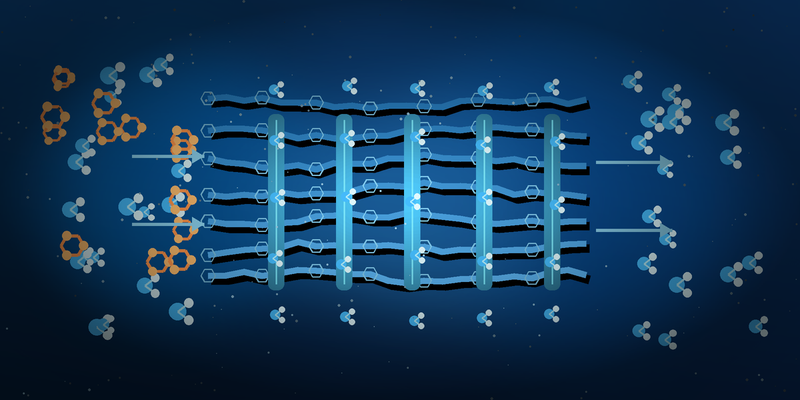
Researchers demonstrated that holey graphene membranes can desalinate water by allowing water molecules to pass through while blocking larger hydrated sodium and chloride ions.
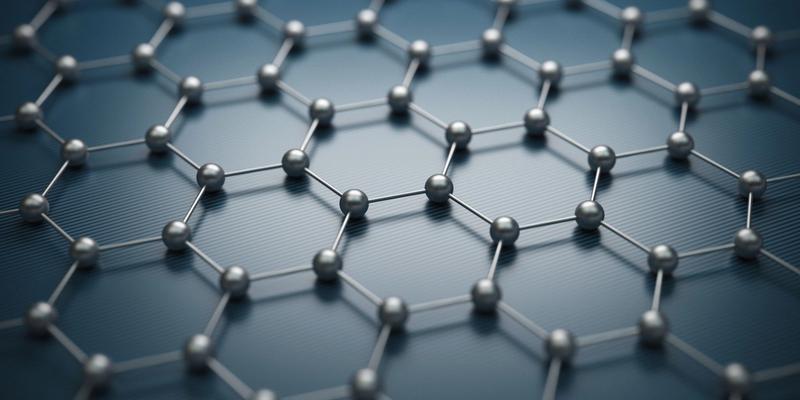
Researchers from Peking University, Tsinghua University, and the University of Hong Kong developed graphene reservoirs to precisely control ice thickness in cryo-electron microscopy, achieving uniform depths as thin as 15 nanometers.
Global Graphene Group seeks a Sales Engineer in Dayton, Ohio, to expand its graphene markets. Apply by December 31, 2026.
Researchers developed a graphene-enhanced MOF-303 composite that captures water from desert air using sunlight, achieving water collection of 0.254 grams per gram of material in 30 minutes.
The Advanced Carbons Council calls for a U.S. carbon materials innovation platform focused on standards, testing and buyer qualification. The paper links engineered-carbon supply chains to manufacturing, energy, defense and AI infrastructure. Serves as a model for governments world-wide.
Researchers at the University of Vienna have achieved atomic-level control over nanopore shapes in hexagonal boron nitride, using electron irradiation and oxygen to form circular or triangular pores.

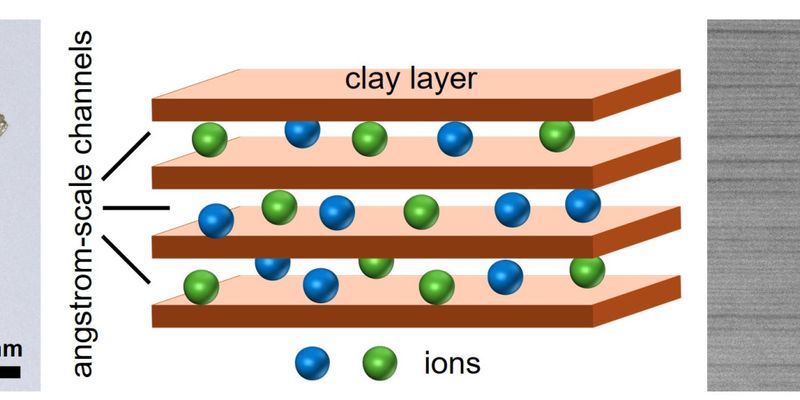
Researchers at the National Graphene Institute demonstrated that vermiculite clay channels can control ion flow in response to pressure, voltage, and pH, mimicking biological ion channels.
Researchers have created a graphene oxide membrane that enhances the efficiency of isopropanol purification by reducing energy consumption and increasing processing speed.
Researchers at KU Leuven have developed a graphene oxide membrane that efficiently separates water from isopropanol, reducing energy use in solvent purification.
Professor Roman Gorbachev at the University of Manchester received a £1.9 million EPSRC Open Fellowship to lead a five-year project scaling van der Waals 2D material heterostructures from micrometre samples to wafer-scale fabrication using a new ultra-high vacuum platform. The work directly advances graphene and 2D materials manufacturing by targeting industrial-process compatibility and establishing a UK fabrication hub accessible to academic and industry users.
Researchers from Cambridge, Harvard, Caltech, and the Max-Planck Institute for Polymer Research published findings in Science Advances showing that nanoconfined water's apparent chemical reactivity is driven by pressure and surface chemistry rather than confinement itself, with hydroxide ions bonding to hexagonal boron nitride walls but not to inert graphene. The work offers a design principle for tailoring water reactivity by selecting confining materials and controlling internal pressures, with direct relevance to graphene-based membranes, carbon electrodes in batteries and fuel cells, and the broader development of two-dimensional carbon and carbon-adjacent materials for electrochemical applications.

Canada's graphene sector has developed across production, construction, filtration, printed electronics, and energy storage, with companies such as NanoXplore operating a 4,000-metric-ton-per-year facility in Montréal and firms like Zentek and Graphene Leaders Canada advancing application-specific products toward commercial deployment. The ecosystem signals a shift from materials science demonstration toward repeatable industrial use cases in carbon-based composites, conductive additives, and separation technologies, though commercial viability still depends on product qualification, standardization, and cost competitiveness against incumbent materials.
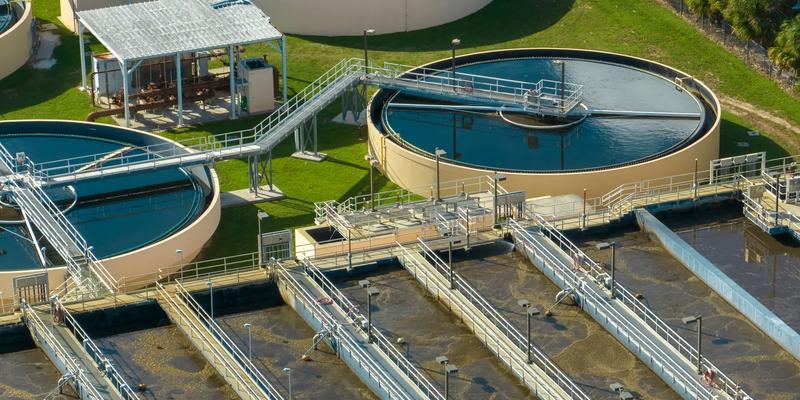
Researchers and engineers are evaluating graphene oxide and reduced graphene oxide as adsorbents, antifouling coatings, catalytic supports, and modified membrane layers within industrial water treatment systems targeting COD removal, biofouling control, and reverse osmosis feed protection. The graphene sector faces a clear scaling challenge, as industrial adoption of these carbon nanomaterials depends on demonstrating mechanical stability, resistance to chemical cleaning cycles, controlled delamination, and validated cost-per-cubic-meter performance in pilot tests using real effluent matrices.
Researchers at the University of Córdoba's Plasma Innovation Laboratory developed two methods for depositing graphene onto metal surfaces using microwave plasmas at atmospheric pressure, but found that neither achieved sufficient adhesion between the graphene layer and the metal. The work advances graphene's potential as a corrosion-resistant coating for industrial applications such as fuel cell electrodes, while identifying adhesion as the key technical barrier to overcome.

Researchers from Cambridge, Harvard, Caltech, and the Max-Planck Institute for Polymer Research used machine-learning simulations to study water confined between graphene and hexagonal boron nitride sheets, finding that confinement alone does not alter water's reactivity but that pressure and surface chemistry of the confining material are the controlling factors. For the carbon materials sector, the study establishes that graphene's chemically inert surface does not enhance water dissociation, while reactive surfaces like hBN do, offering a design principle for selecting 2D carbon and non-carbon materials in membranes, fuel cells, and electrochemical systems.
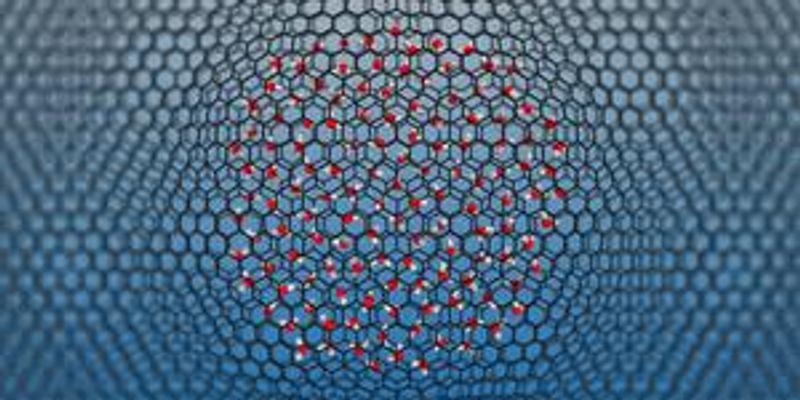
Researchers from Cambridge, Harvard, Caltech, and the Max Planck Institute for Polymer Research published findings in Science Advances showing that nanoconfined water's apparent chemical reactivity is driven by pressure and surface chemistry rather than confinement itself, using machine-learning simulations of water trapped between graphene and hexagonal boron nitride sheets. The work establishes that graphene's chemically inert surface leaves water reactivity unchanged, while reactive surfaces like hBN can actively enhance water dissociation—a design principle relevant to graphene and 2D carbon material applications in membranes, fuel cells, and electrochemical systems.
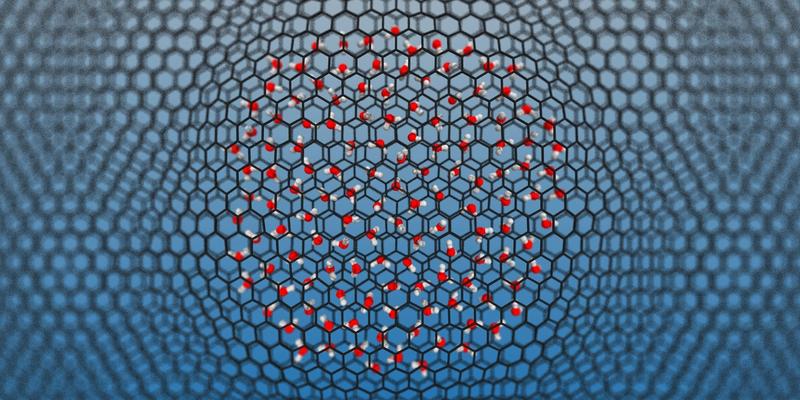
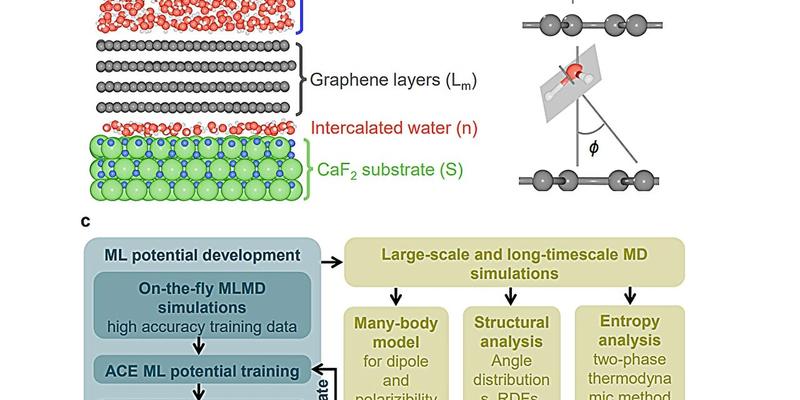
Researchers at the Institute for Basic Science and Korea University used machine-learning interatomic potentials to demonstrate that pristine graphene is intrinsically hydrophobic, with apparent hydrophilic behavior in prior experiments caused by water molecules intercalating beneath monolayer graphene and canceling spectroscopic signals. The findings clarify graphene's true interfacial properties, with direct implications for graphene-based desalination membranes, nanofluidic devices, and fuel cells where unintended water intercalation must be accounted for in design.
Harvard researchers demonstrated a nanoporous single-layer graphene membrane that desalinates seawater at 40% lower energy than reverse osmosis, achieving 99.4% salt rejection over 1,000 hours at 12 bar, published in Science. The result advances graphene's viability as a functional membrane material at scale, with a 100 m³/day pilot plant planned in Carlsbad, California in collaboration with Suez Environnement and IDE Technologies.
Levidian and Zentek have signed an agreement to explore building a graphene-integrated manufacturing facility in the Middle East, combining Levidian's methane-derived graphene production with Zentek's graphene-enhanced air filters. The deal signals growing regional demand for graphene-enhanced products and positions the Middle East as an emerging hub for graphene manufacturing and deployment across multiple industries.