News & Intelligence

Original reporting and market intelligence on advanced carbon materials.

Full intelligence on every material

For in-depth production methods, pricing dynamics, applications by sector, and verified company profiles, explore the ACC market reports covering each advanced carbon material.

View market reports

Materials

Coverage forDefence, Space and EnergyClear ×
Filtered by topic:Safety & ToxicologyClear ×
Berlin lab solves perovskite solar's stability problem with graphene-oxide fix
News14 July 2026

Berlin lab solves perovskite solar's stability problem with graphene-oxide fix

Researchers at the Helmholtz-Zentrum Berlin, along with collaborators, have developed a perovskite solar cell with a graphene-oxide interface that achieves 27.3% power conversion efficiency and maintains over 90% of this efficiency after 770 hours of operation. This advancement addresses the stability issues in all-perovskite triple-junction cells, potentially paving the way for more durable and efficient solar technologies using carbon-based materials like graphene.

Sensor detects pesticides using material thinner than a strand of hair
News6 July 2026

Sensor detects pesticides using material thinner than a strand of hair

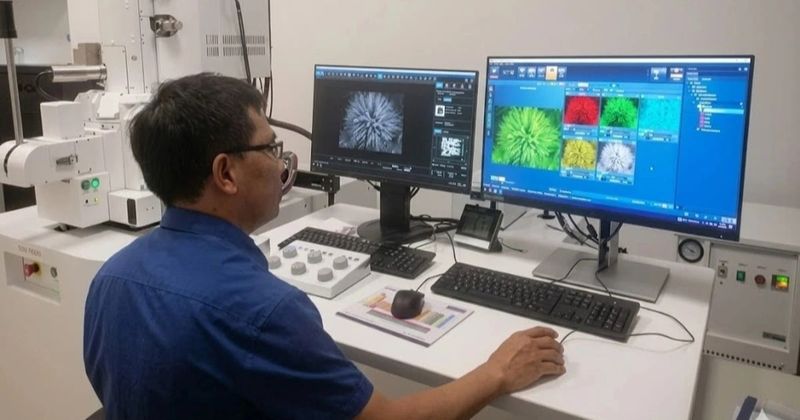
Researchers at the Vietnam Academy of Science and Technology have developed a sensor electrode using a composite material of graphene, carbon nanotubes (CNTs), and gold nanoparticles that can detect pesticide residues at concentrations as low as parts per billion (ppb). This advancement is significant for the field of advanced carbon materials as it enhances the sensitivity and functionality of sensors, contributing to improved agricultural product monitoring and food safety.

Singapore builds its largest composite warship piece
News6 July 2026

Singapore builds its largest composite warship piece

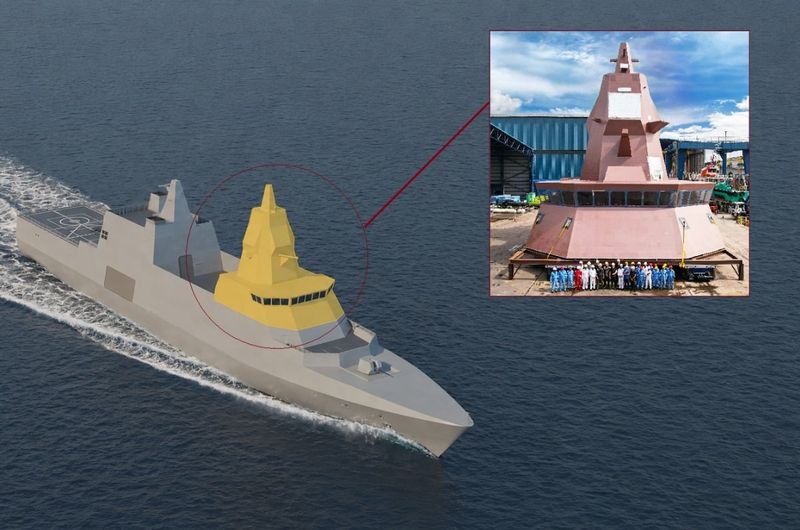
Penguin Shipyard International has completed and delivered the largest composite superstructure ever built in Singapore for the Republic of Singapore Navy's new Multi Role Combat Vessel, with the first of six structures handed over to Saab on June 27, 2026. The use of carbon fiber composites in the superstructure reduces weight and radar cross-section, enhancing the ship's stability and stealth capabilities compared to conventional steel designs.

Why A Boeing 787 Or Airbus A350 Tail Strike Means Weeks In The Hangar While A 777 Does Not
News30 June 2026

Why A Boeing 787 Or Airbus A350 Tail Strike Means Weeks In The Hangar While A 777 Does Not

The Boeing 787 and Airbus A350 use carbon-fiber-reinforced composite materials for roughly 50% of their airframe by weight, making tail strike damage harder to detect and repair than on metal-fuselage aircraft like the Boeing 777, as illustrated by an Air France A350 that required nearly ten months of repairs after a 2024 tail strike in Toronto. For the carbon fiber composites sector, the article highlights that barely visible impact damage, complex non-destructive inspection requirements, and process-sensitive repair procedures drive significant maintenance downtime and cost, underscoring the need for advanced damage detection and repair capabilities in aerospace composite applications.


News10 June 2026

CSIC develops graphene-polymer separator for safer lithium-ion batteries

CSIC researchers developed an 18-micron graphene-polymer composite separator combining polypropylene with 0.5 wt% reduced graphene oxide, achieving 4x greater puncture resistance and a 60% reduction in thermal-runaway initiation temperatures in lithium-ion batteries. The development advances reduced graphene oxide as a functional additive in battery separators, with pilot-scale production underway alongside a Spanish cell manufacturer targeting NCM-based EV applications.