22 articles on Carbon Nanotubes (CNTs) in Electronics.
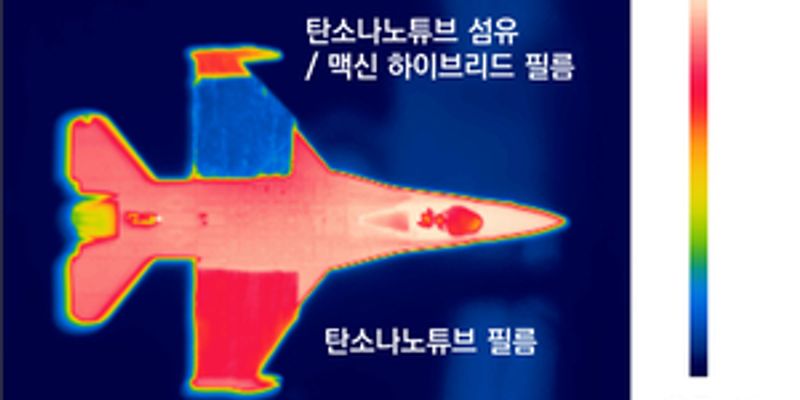
South Korean researchers have built a carbon nanotube film thinner than a human hair that blocks more than 99.9999999% of electromagnetic waves and evades thermal imaging, with fighter jets and drones the intended use.

The IMMENSE team created a conductive photopolymer resin with multi-walled carbon nanotubes for advanced additive manufacturing applications.

A company led by Cambridge PhD Liu Zhenyu is advancing carbon nanotube materials for lightweight applications.

Researchers developed suspended microdevices to measure the thermal conductivity of carbon nanotubes, revealing quasiballistic transport behavior at micrometer lengths, challenging traditional diffusive models.

Researchers incorporated carboxylated multi-walled carbon nanotubes into a chitosan hydrogel to enhance red blood cell membrane stability for use in environmental sensors.

Himadri Specialty Chemicals will establish India's first carbon nanotube production facility at its West Bengal complex, with an initial capacity of 200 tons per year, starting commercial production by FY2027.

Researchers at École Polytechnique are studying fermion parity in a carbon nanotube system using a pair of quantum-dot Josephson junctions.

Researchers at QUT developed a molecular strategy to prevent carbon nanotube clumping, enhancing thermal power efficiency for wearable devices that convert body heat into electricity.

Researchers at the Skolkovo Institute of Science and Technology have developed a room-temperature infrared phototransistor using single-walled carbon nanotubes (SWCNTs) and lithium niobate (LiNbO3), achieving specific detectivities of up to 10^10 cm·Hz^1/2/W. This advancement in SWCNT-based pyroelectric phototransistors could lead to more affordable and portable IR sensing technologies, potentially transforming applications such as thermal imaging, environmental monitoring, and optical communications.

Researchers at Aix-Marseille University, CNRS and C12 Quantum Electronics have demonstrated a hybrid qubit-boson gate in a circuit QED platform, using a carbon nanotube double quantum dot as the mechanical element.

Researchers at the University of Modena and Reggio Emilia have demonstrated that narrow-gap carbon nanotubes function as excitonic insulators, with exciton binding energy scaling inversely with tube radius. This finding is significant for the study of carbon nanotubes, as it reveals the potential for spontaneous exciton condensation, which could influence the electronic properties and applications of these materials in advanced carbon technologies.

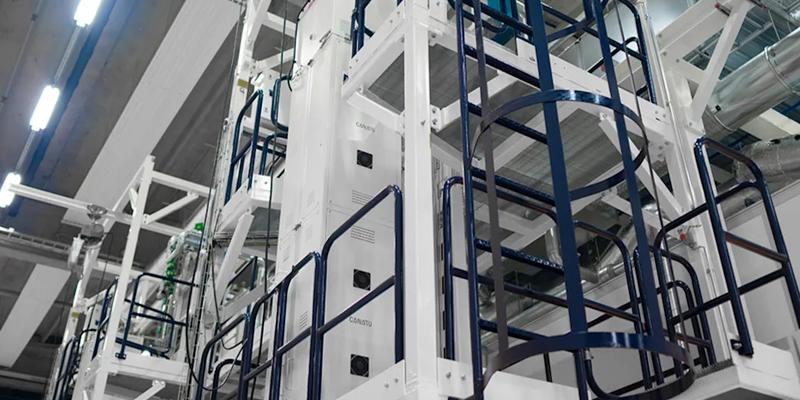
Canatu has appointed Walter Braun as Chief Technology Officer and Bernd Meier as Chief Marketing Officer, effective September 1, 2026. These appointments aim to enhance Canatu's capabilities in scaling the production and commercialization of its carbon nanotube technologies, crucial for its applications in the semiconductor and medical diagnostics industries.
Researchers at Peking University have developed the first all-carbon nanotube CFET digital logic circuits, achieving highly balanced electrical performance between p-type and n-type transistors. This advancement is significant for the future of carbon nanotube technology, as it introduces a new path for high-density computing architectures in artificial intelligence and edge computing applications.

Physicists at Martin Luther University Halle-Wittenberg have demonstrated that carbon nanotori, specifically C₁₂₀, C₁₄₄, and C₁₆₈, can generate and control toroidal dipole moments, offering a third control channel for quantum computers with zero crosstalk. This discovery is significant for quantum computing as it introduces a new method for qubit control that is orthogonal to existing electric and magnetic control methods, potentially reducing errors caused by crosstalk in superconducting quantum processors.

Researchers at Manipal Academy of Higher Education have built a taxonomy of topological failure modes in carbon nanotube field-effect transistors, addressing a barrier to their adoption in sequential logic.
AwesomeRay is advancing the industrialization of carbon nanotubes in South Korea, focusing on applications in semiconductors and defense. This development is significant for the carbon nanotube sector as it could lead to enhanced performance and new capabilities in these high-tech industries.

Researchers at the Vietnam Academy of Science and Technology have developed a sensor electrode using a composite material of graphene, carbon nanotubes (CNTs), and gold nanoparticles that can detect pesticide residues at concentrations as low as parts per billion (ppb). This advancement is significant for the field of advanced carbon materials as it enhances the sensitivity and functionality of sensors, contributing to improved agricultural product monitoring and food safety.

Researchers from China and Russia have developed stretchable metasurfaces using single-walled carbon nanotube (SWCNT) film, achieving dynamic terahertz wavefront manipulation at 0.35 THz. This advancement is significant for the development of smart, wearable THz components in 6G communication and intelligent sensing applications.

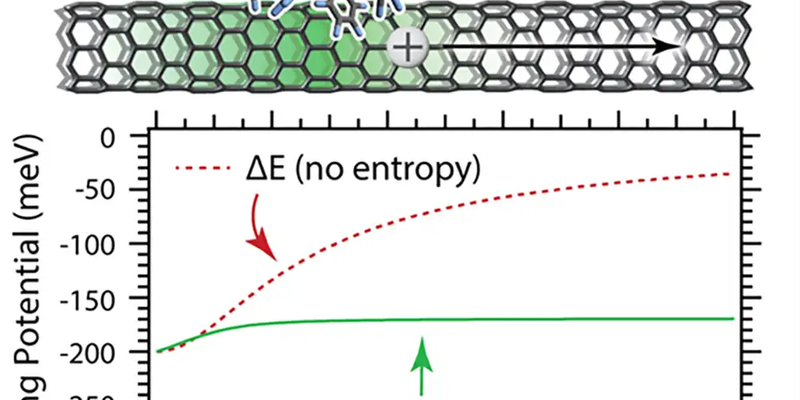
Researchers at the Netherlands Lattice Research (NLR) have demonstrated that entropy can facilitate charge separation in single-walled carbon nanotubes (SWCNTs) by attaching a negatively charged dodecaborane structure. This finding could enhance the efficiency of carbon nanotube-based semiconductors, potentially impacting electronics and energy applications.

Researchers integrated carbon nanotubes into an on-chip topological photonic system to enable electrical tuning of photonic properties. This demonstrates a functional role for carbon nanotubes in reconfigurable photonic devices, expanding potential applications beyond electronics and conventional optical components.
Professor Chang Liu of the Institute of Metal Research, Chinese Academy of Sciences presented research at an NTU MSE seminar on SWCNT-based hybrid materials, including a SWCNT/Cu core-shell fiber with a specific electrical conductivity of 1.15×10⁴ S m² kg⁻¹ and FeCl3-filled CNT fibers reaching 1.35×10⁷ S m⁻¹ conductivity and 2.54 GPa tensile strength. The work advances CNT fiber and film applications in electrical conductors, thermoelectric devices, and electrocatalysis by addressing the longstanding dispersion challenge that has limited SWCNT composite development.

Canatu Plc restructured its leadership team on June 25, 2026, consolidating reporting lines directly to CEO Maximilian Slawinski and renaming its Automotive business unit to Robotics, Mobility and Defence. The reorganization signals Canatu's broadened market focus for its carbon nanotube products beyond automotive into robotics and defence applications.