19 articles on Carbon Nanotubes (CNTs) in Sensors.
Researchers have developed a new carbon nanotube strategy that could significantly extend the lifespan of wearable strain sensors, potentially lasting for years.

Researchers developed a conductive e-skin patch using aminated multi-walled carbon nanotubes and dopamine integrated into carboxymethyl starch.

A company led by Cambridge PhD Liu Zhenyu is advancing carbon nanotube materials for lightweight applications.

Researchers incorporated carboxylated multi-walled carbon nanotubes into a chitosan hydrogel to enhance red blood cell membrane stability for use in environmental sensors.

Researchers at Skoltech and the Harbin Institute of Technology have modelled how carbon nanotube smart sensors behave under the extreme temperatures and loads found in aircraft, predicting performance without physical testing.

Researchers at QUT developed a molecular strategy to prevent carbon nanotube clumping, enhancing thermal power efficiency for wearable devices that convert body heat into electricity.

Researchers incorporated carboxylated multi-walled carbon nanotubes into a chitosan hydrogel to enhance electrical conductivity and signal transmission in red blood cell sensors.

Researchers at the Skolkovo Institute of Science and Technology have developed a room-temperature infrared phototransistor using single-walled carbon nanotubes (SWCNTs) and lithium niobate (LiNbO3), achieving specific detectivities of up to 10^10 cm·Hz^1/2/W. This advancement in SWCNT-based pyroelectric phototransistors could lead to more affordable and portable IR sensing technologies, potentially transforming applications such as thermal imaging, environmental monitoring, and optical communications.

Canatu has appointed Walter Braun as Chief Technology Officer and Bernd Meier as Chief Marketing Officer, effective September 1, 2026. These appointments aim to enhance Canatu's capabilities in scaling the production and commercialization of its carbon nanotube technologies, crucial for its applications in the semiconductor and medical diagnostics industries.
Researchers at the University of Electronic Science and Technology of China have developed a CNT@Ag-MXene sensor that resists corrosion even under high strain conditions. This advancement in carbon nanotube composites could enhance the durability and lifespan of sensors used in harsh environments.

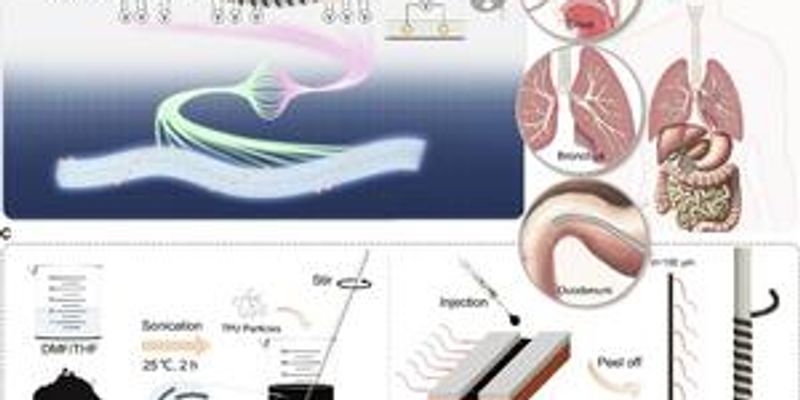
Researchers at Zhejiang University have developed a piezoresistive fiber bandage using multi-walled carbon nanotubes for shape sensing in slender medical continuum robots. This innovation provides a low-cost, highly stretchable alternative to fiber-optic systems, potentially expanding the use of carbon nanotube-based sensors in medical robotics for improved intraoperative guidance.

Researchers from the Skolkovo Institute of Science and Technology have developed a new infrared sensor using single-walled carbon nanotubes, which shows a conductivity change 10,000 to 100,000 times more pronounced than graphene. This advancement could lead to more sensitive and compact thermal cameras and medical sensors, leveraging the unique properties of carbon nanotubes for enhanced infrared detection without the need for cooling.

Researchers at Peking University have developed the first all-carbon nanotube CFET digital logic circuits, achieving highly balanced electrical performance between p-type and n-type transistors. This advancement is significant for the future of carbon nanotube technology, as it introduces a new path for high-density computing architectures in artificial intelligence and edge computing applications.

Physicists at Martin Luther University Halle-Wittenberg have demonstrated that carbon nanotori, specifically C₁₂₀, C₁₄₄, and C₁₆₈, can generate and control toroidal dipole moments, offering a third control channel for quantum computers with zero crosstalk. This discovery is significant for quantum computing as it introduces a new method for qubit control that is orthogonal to existing electric and magnetic control methods, potentially reducing errors caused by crosstalk in superconducting quantum processors.

Researchers at the Vietnam Academy of Science and Technology have developed a sensor electrode using a composite material of graphene, carbon nanotubes (CNTs), and gold nanoparticles that can detect pesticide residues at concentrations as low as parts per billion (ppb). This advancement is significant for the field of advanced carbon materials as it enhances the sensitivity and functionality of sensors, contributing to improved agricultural product monitoring and food safety.

Researchers from China and Russia have developed stretchable metasurfaces using single-walled carbon nanotube (SWCNT) film, achieving dynamic terahertz wavefront manipulation at 0.35 THz. This advancement is significant for the development of smart, wearable THz components in 6G communication and intelligent sensing applications.

Researchers functionalized fabric with reduced graphene oxide (RGO) and MWCNT-CuxO composites to create a flexible, non-enzymatic glucose sensor. The work advances carbon nanotube and graphene applications in wearable electrochemical sensing for health monitoring.
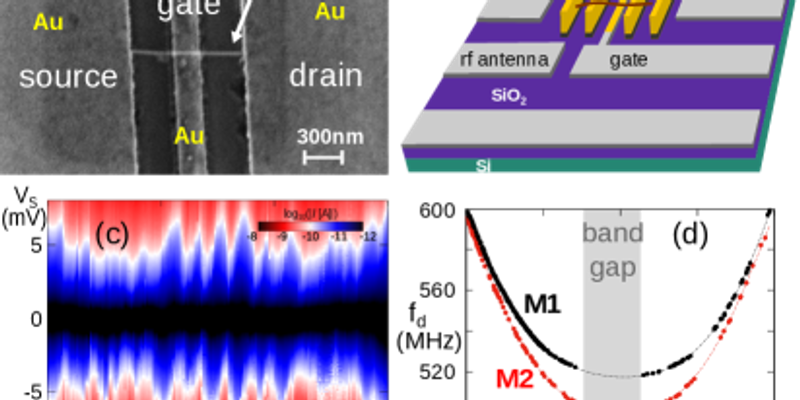
Researchers measured the Duffing nonlinear mechanical response of a suspended single-wall carbon nanotube quantum dot at 13 mK, extracting an electromechanical coupling ratio g/ωm of 4.0 and observing an anomalous stiffening-spring Duffing parameter near single-electron tunneling regions where softening was theoretically expected. The unexplained sign discrepancy in the nonlinear spring behavior challenges existing models of electron-vibron coupling in carbon nanotube resonators and has implications for the design of CNT-based nanoelectromechanical sensors and qubits operating in the ultrastrong coupling regime.

Canatu Plc restructured its leadership team on June 25, 2026, consolidating reporting lines directly to CEO Maximilian Slawinski and renaming its Automotive business unit to Robotics, Mobility and Defence. The reorganization signals Canatu's broadened market focus for its carbon nanotube products beyond automotive into robotics and defence applications.