News13 October 2026· Graphene Feed
AI predicts how graphene keeps machines cool
GrapheneLubricantsThermal ManagementResearch & InnovationSustainability
34 articles on Graphene in Thermal Management.
Researchers developed a machine learning model to predict the thermal and wear behavior of grease enhanced with graphene.
Global Graphene Group seeks a Sales Engineer in Dayton, Ohio, to expand its graphene markets. Apply by December 31, 2026.
Researchers developed a graphene-enhanced MOF-303 composite that captures water from desert air using sunlight, achieving water collection of 0.254 grams per gram of material in 30 minutes.

Researchers at Khalifa University reviewed how graphene enhances high-density polyethylene (HDPE). They examined compounding techniques and found that graphene improves HDPE's thermal, electrical, and barrier properties when well-dispersed.
The Advanced Carbons Council calls for a U.S. carbon materials innovation platform focused on standards, testing and buyer qualification. The paper links engineered-carbon supply chains to manufacturing, energy, defense and AI infrastructure. Serves as a model for governments world-wide.
Haydale's graphene-based additive boosts thermal conductivity in glycol coolants by 28%, aligning performance with water while preserving glycol's protective properties. The company is expanding market partnerships and production capacity.
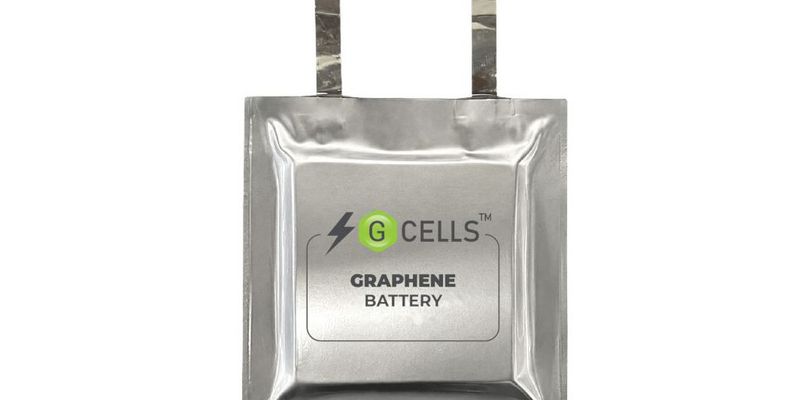
Graphene Manufacturing Group's G CELLS maintained capacity after 489 fast-charge cycles, outperforming lithium titanate oxide cells tested under the same conditions.
Graphene and carbon nanotubes are now sold in named coatings. ACC's webcast with AMPP looked at where they add value, why grades that look alike can behave very differently and what evidence buyers should ask for before specifying them.

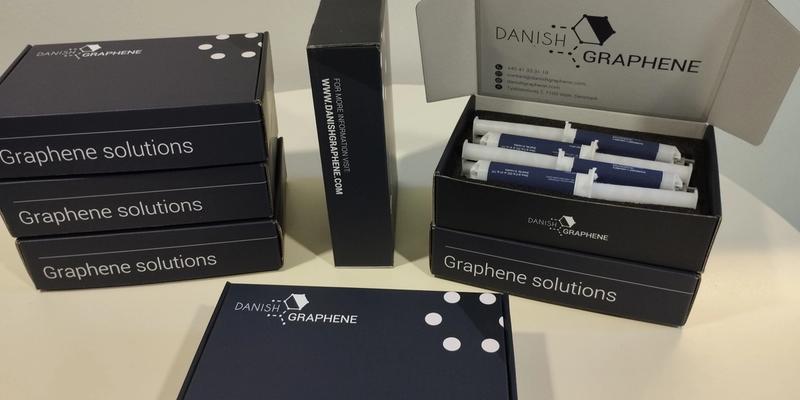
Danish Graphene secured GBP 2.5 million in seed funding to scale up production of its graphene-enhanced thermal adhesive for the space industry, attracting significant interest from hardware manufacturers.
Midea launched the SpaceMaster oven series at IFA, featuring Graphene Turbo Hot Air Technology with a rapid 0.2-second heating response.
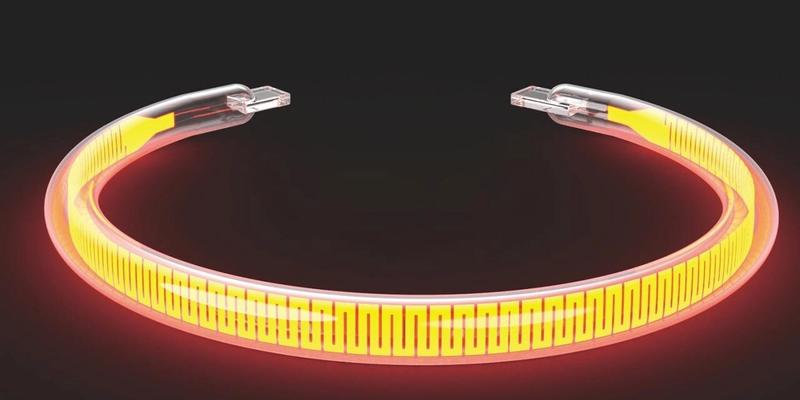
Graphene Manufacturing Group Ltd. has launched G FLUID, a graphene-based water coolant additive for data centres. Preliminary tests show a 20% increase in heat transfer when used at 1% concentration.
Researchers explain how optothermal Raman thermometry measures thermal conductivity in graphene by using laser-induced temperature changes. The method's accuracy depends on precise absorbed-power measurements.

Graphene fibers, when graphitized at high temperatures, achieve thermal conductivities around 1290 W m⁻¹K⁻¹, surpassing most metals, but require per-fiber measurement for accurate application-specific values.

Graphene Manufacturing Group has partnered with Blackwoods to distribute its graphene-based lubricant additive, G® LUBRICANT, across Australia.
Researchers have directly measured the anisotropic thermal properties of micrometer-thick graphene-based films, providing insight into their potential for advanced thermal management applications.
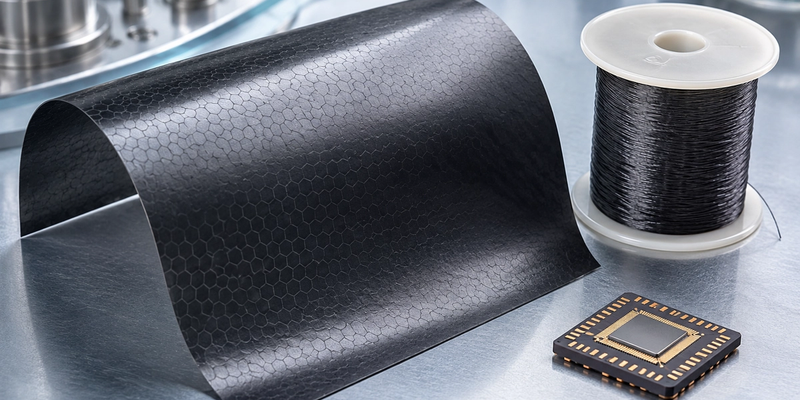
Mivium is developing high-quality gallium nitride nanopowders to enhance semiconductor performance, while Avadain is licensing technology to produce large-scale, defect-free graphene for industrial applications.

HydroGraph Clean Power is urging the U.S. to classify graphene as a critical material to reduce reliance on foreign graphite, highlighting its domestic production capability from hydrocarbon gases.
Lyten showcased its 3D graphene technology and high-temperature adhesives, emphasizing their applications in AI data centers.
HydroGraph Clean Power has launched Fractal Graphene Paste, a pre-dispersed aqueous concentrate containing 20% graphene by weight, designed to simplify the incorporation of graphene into water-based industrial formulations. This development is significant for the advanced carbon materials sector as it addresses the dispersion challenges associated with graphene, potentially accelerating its adoption in applications such as construction materials, coatings, and thermal management systems.
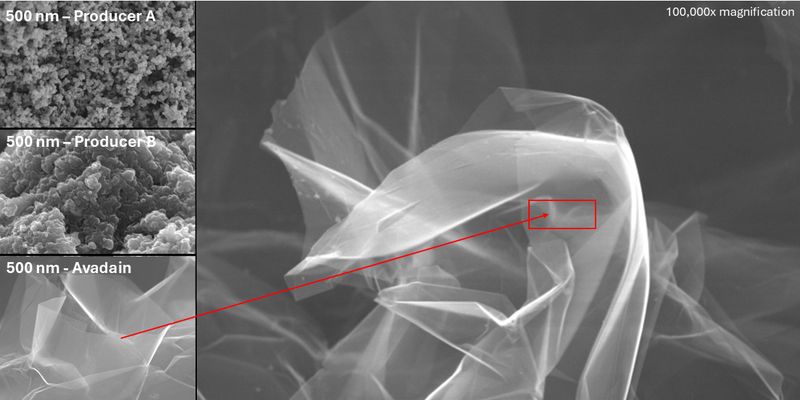
Avadain has developed a new graphene type called Large, Thin, Defect-Free (LTDF) graphene, which features flakes in the 25-100+ µm² range and averages under 5 atomic layers, aiming to enhance applications in critical minerals, rare-earth-free magnets, and high-power electronics. This advancement is significant because it addresses key limitations of commercial graphene, such as flake size, layer count, and defect density, potentially improving the performance of carbon-based materials in demanding applications.
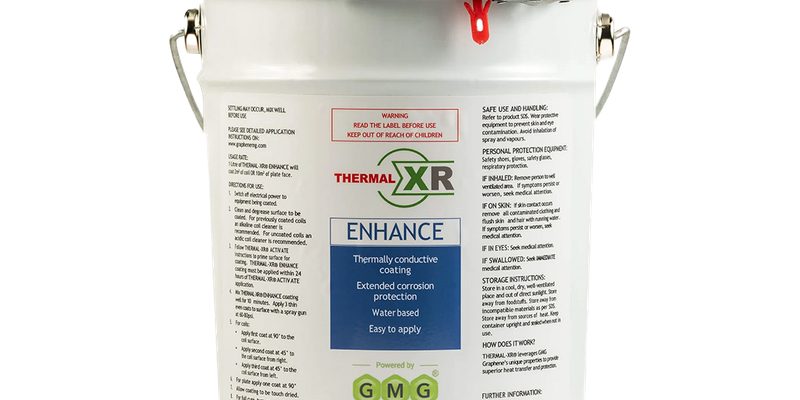
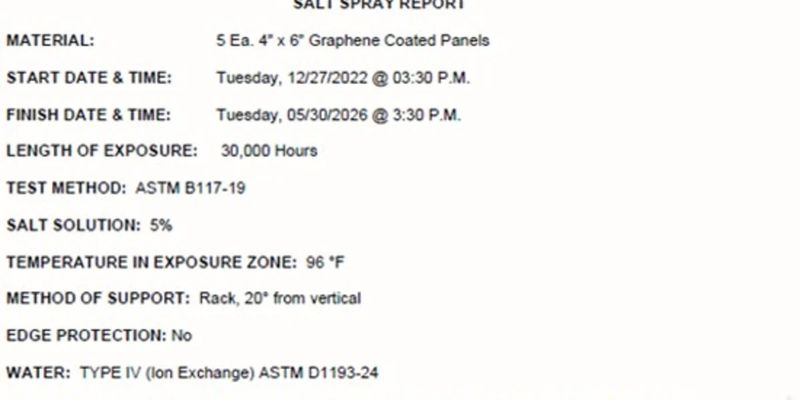
Graphene Manufacturing Group Ltd. (GMG) announced that its graphene coating product, THERMAL-XR(R), has reached a global benchmark testing milestone. This development is significant for the graphene sector as it demonstrates the material's potential in enhancing thermal management solutions.
A study of fluoroelastomer compounds reinforced with graphene nanoplatelets finds that platelet size drives the mechanical and thermal performance of the resulting composite.
European semiconductor companies raised substantial funding in 2025, with the ten largest rounds ranging from NXP Semiconductors' €1 billion EIB loan down to IQE's £18 million convertible note, spanning AI chips, photonics, power electronics, memory, and chip cooling. Two graphene-focused companies, Paragraf ($55M Series C) and CamGraPhIC (€25M Series A), secured funding to scale graphene-based electronic devices and graphene silicon photonics respectively, signaling continued investor commitment to graphene's commercial role in semiconductors and optical interconnects.

HydroGraph Clean Power Inc. commercially launched Fractal Graphene Paste, a 20% graphene-by-weight aqueous dispersion with a 99.8% carbon purity and over two-year shelf life, and has supplied samples to more than 30 customers. The product targets the graphene sector's core adoption barrier—dispersion difficulty—by delivering a stable, ready-to-use concentrate compatible with standard mixing equipment, which could accelerate graphene uptake in composites, coatings, and construction materials.

Professor Roman Gorbachev at the University of Manchester received a £1.9 million EPSRC Open Fellowship to lead a five-year project scaling van der Waals 2D material heterostructures from micrometre samples to wafer-scale fabrication using a new ultra-high vacuum platform. The work directly advances graphene and 2D materials manufacturing by targeting industrial-process compatibility and establishing a UK fabrication hub accessible to academic and industry users.

Canada's graphene sector has developed across production, construction, filtration, printed electronics, and energy storage, with companies such as NanoXplore operating a 4,000-metric-ton-per-year facility in Montréal and firms like Zentek and Graphene Leaders Canada advancing application-specific products toward commercial deployment. The ecosystem signals a shift from materials science demonstration toward repeatable industrial use cases in carbon-based composites, conductive additives, and separation technologies, though commercial viability still depends on product qualification, standardization, and cost competitiveness against incumbent materials.
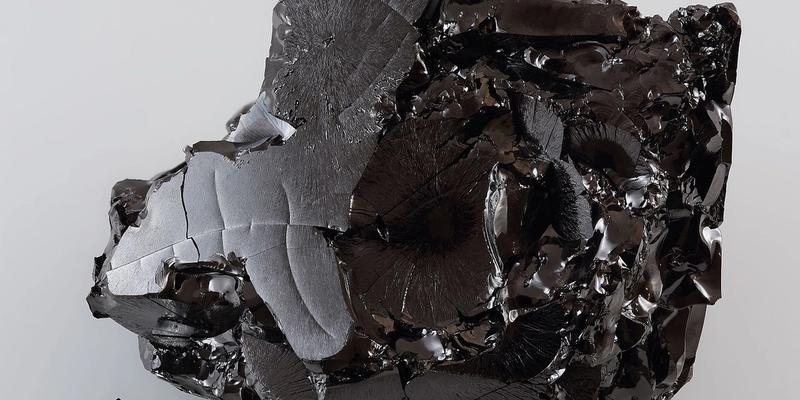
Graphene's single-atom-thick sheet structure forms strong in-plane covalent bonds that enable rapid heat conduction along its surface while limiting conductivity in the perpendicular direction, producing highly anisotropic thermal behavior. This directional heat management capability makes graphene-based thermal materials relevant for electronics cooling and composite applications where controlling heat flow pathways is a design requirement.

The Advanced Carbons Council published a position paper in May 2026 arguing that carbon credit financing should be redirected from geological carbon capture and sequestration toward conversion of captured carbon into advanced materials such as graphene, carbon fiber, biochar, and carbon nanotubes. The paper contends that carbon-to-materials conversion projects are commercially self-sustaining without ongoing subsidies, unlike CCS, and deliver compounding lifecycle emissions reductions across sectors including construction, aerospace, agriculture, and energy storage.

Graphene Manufacturing Group (GMG) submitted a Significant New Use Notice (SNUN) to the US EPA on June 2, 2026, seeking authorization to manufacture, distribute, and sell graphene coatings, lubricants, and fluids domestically in the United States, with approval expected by end of June 2027. The filing marks a shift from export-only access to domestic graphene production in the US, which could establish a local graphene supply chain for industrial applications including HVAC coatings and engine lubricant additives.
Researchers at EMPA demonstrated a graphene-composite leading-edge skin that reduces aircraft de-icing energy consumption by 60%, achieving ice shedding at 5 W/cm² in panels tested at -25°C and 240 km/h after 1,200 cycles without delamination. The result advances graphene's case as a functional heating element within carbon-fibre-reinforced polymer structures for aerospace applications, with EMPA now scaling production toward trial integration in a commercial trainer aircraft.

Graphene-X, a Hong Kong-based outdoor gear company, launched the Tardigrade Sleeping System via Kickstarter, a modular sleeping bag rated to -22°F that incorporates graphene-based materials. The product signals growing commercial application of graphene in consumer thermal regulation gear beyond industrial and electronics uses.

NeoGraf commissioned a new production line at its Lakewood, Ohio facility, adding 2,000 tonnes per annum of flexible graphite sheet capacity funded by a $38 million investment, bringing its total to 11,000 tonnes per annum. The expansion increases domestic supply of high-purity exfoliated graphite sheets for EV battery thermal management, where the material's in-plane thermal conductivity above 600 W/m·K at low density addresses a critical requirement for North American automotive manufacturers.

Graphene Manufacturing Group (GMG) partnered with Australian Supercars team Tickford Racing to trial GMG's liquid graphene products, including G Lubricant and THERMAL-XR, across Tickford's workshop and event infrastructure. The partnership provides GMG with a real-world performance testing environment to generate documented case studies validating its graphene-based lubricant and thermal products for broader industrial customers.