28 articles on Graphene in Energy Generation.
HydroGraph Clean Power Inc. opened its Texas headquarters in Austin, featuring a facility capable of producing 30 tons of pristine graphene annually. Congressman John Carter attended the event.

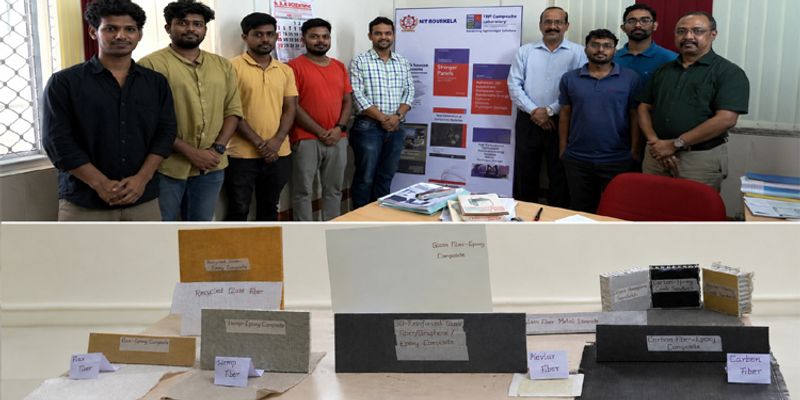
NIT Rourkela has patented a 3D-reinforced composite technology that boosts Fibre-Reinforced Polymer strength and durability, with potential applications in aerospace and automotive industries.

Argo Graphene Solutions Corp. secured a 10-year exclusive license from Grapherry, Inc. for its STREAM graphene production technology, issuing 2.5 million shares and 5.5 million warrants.

Helmholtz-Zentrum Berlin, Universität Potsdam, and Empa developed a solar cell with 27.3% efficiency using a graphene oxide and self-assembled monolayer bilayer, targeting 30% efficiency.

Lyten showcased its 3D graphene technology and high-temperature adhesives, emphasizing their applications in AI data centers.
Researchers at the University of Arizona demonstrated that graphene nanoribbons can withstand gamma radiation, suggesting their potential use as radiation sensors in fusion reactors and deep space applications.

Graphene Manufacturing Group Ltd signed an exclusive MOU with Alstom to develop graphene products for rail HVAC systems.

Researchers have shown that graphene nanoribbons may enhance semiconductor technologies, benefiting applications in fusion energy and space environments.

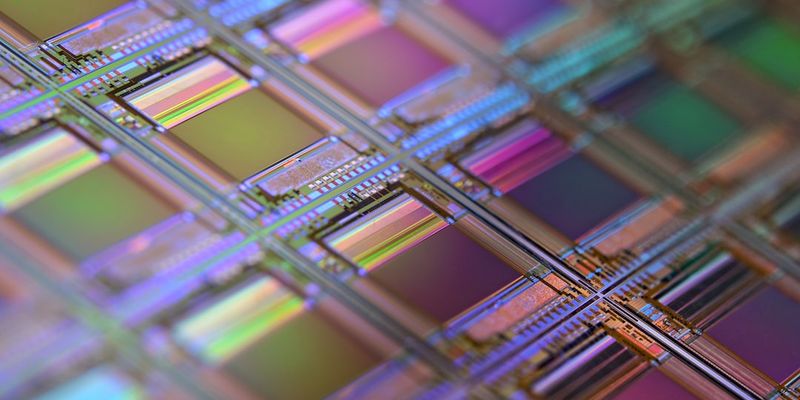
Researchers at Penn State have developed a battery-free solar computing chip that integrates silicon photovoltaics, MoS₂/WSe₂ complementary logic, and graphene chemical sensors. This innovation highlights the potential of graphene in enhancing the efficiency and functionality of solar-powered computing devices.

Researchers at Helmholtz-Zentrum Berlin have developed a new perovskite solar cell by incorporating graphene, enhancing its durability and efficiency. This advancement in perovskite technology could significantly reduce production costs and improve the performance of solar cells, potentially increasing the adoption of lightweight, flexible solar solutions over traditional silicon-based panels.

Nex Cap Energy has identified key industries that benefit most from graphene supercapacitors, highlighting sectors such as telecommunications, electric vehicle fleets, solar, and marine applications. This development underscores the potential of graphene in enhancing energy storage solutions across diverse fields.

Researchers at the Helmholtz-Zentrum Berlin, along with collaborators, have developed a perovskite solar cell with a graphene-oxide interface that achieves 27.3% power conversion efficiency and maintains over 90% of this efficiency after 770 hours of operation. This advancement addresses the stability issues in all-perovskite triple-junction cells, potentially paving the way for more durable and efficient solar technologies using carbon-based materials like graphene.

Researchers at UCLA have developed new graphene supercapacitors capable of storing significantly larger amounts of energy than existing models. This advancement could enhance the performance and efficiency of energy storage systems, impacting sectors that rely on advanced carbon materials like graphene.
Researchers at Helmholtz-Zentrum Berlin built a perovskite triple-junction solar cell reaching 27.3% efficiency with no measurable degradation over 770 hours of operation.

Graphene Manufacturing Group Ltd. (GMG) has successfully commenced operations of its second-generation graphene production facility in Brisbane, Queensland. This development enhances GMG's capacity to supply high-quality graphene, potentially benefiting industries reliant on advanced carbon materials.

ZNShine Solar has partnered with Solmais to expand the distribution of its photovoltaic modules across Brazil, leveraging Solmais' extensive network. This collaboration is notable for the integration of ZNShine's patented graphene technology, which enhances the efficiency and durability of solar panels.

Researchers at Tohoku University have developed a graphene-based interlayer for lithium-sulfur batteries that maintains capacity over 1,000 charge-discharge cycles. This advancement addresses the polysulfide shuttle effect, enhancing the lifespan and efficiency of lithium-sulfur batteries, which are seen as a promising alternative to lithium-ion technology due to their higher energy storage potential.

Researchers at MIT have discovered that rhombohedral graphene can host multiple superconducting states simultaneously, with some states becoming stronger under magnetic fields. This finding is significant for advanced carbon materials as it reveals new possibilities for manipulating graphene's superconducting properties, which could impact quantum computing and other technologies relying on superconductivity.

Tsinghua University Press awarded the 13th annual Nano Research Award to UCLA professor Xiangfeng Duan, recognized for his work on 2D materials, van der Waals heterostructures, and porous graphene architectures, and to Akira Fujishima of the University of Shanghai for Science and Technology, recognized for discovering the Honda–Fujishima Effect and pioneering TiO₂ photocatalysis. Duan's advances in graphene-based energy storage and 2D material synthesis are directly relevant to the carbon materials sector, while Fujishima's photocatalytic coatings have established commercial applications in surface decontamination and industrial wastewater treatment.

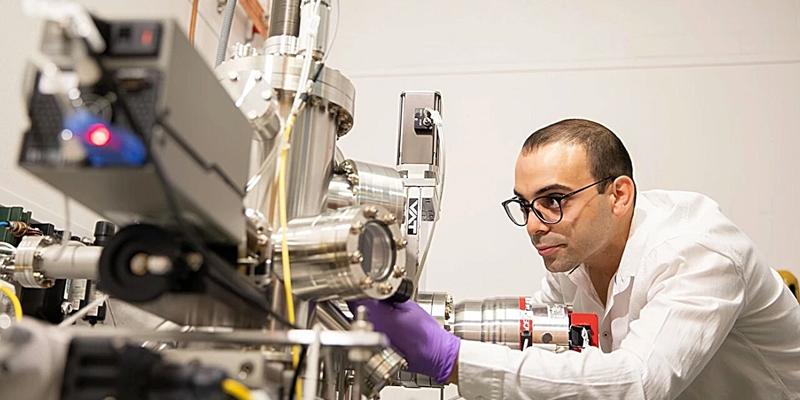
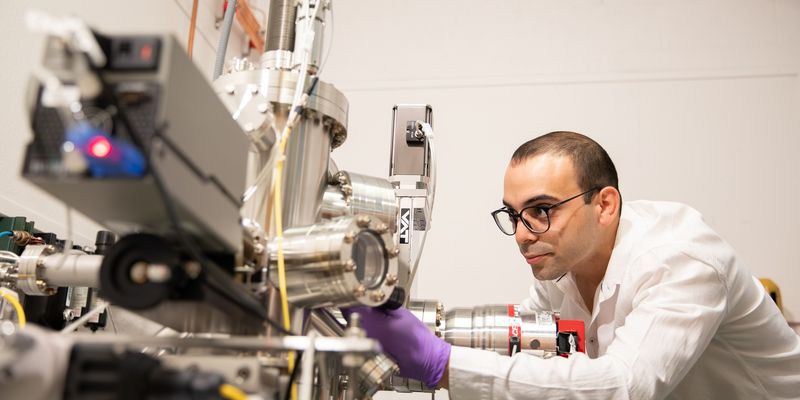
Professor Roman Gorbachev at the University of Manchester received a £1.9 million EPSRC Open Fellowship to lead a five-year project scaling van der Waals 2D material heterostructures from micrometre samples to wafer-scale fabrication using a new ultra-high vacuum platform. The work directly advances graphene and 2D materials manufacturing by targeting industrial-process compatibility and establishing a UK fabrication hub accessible to academic and industry users.

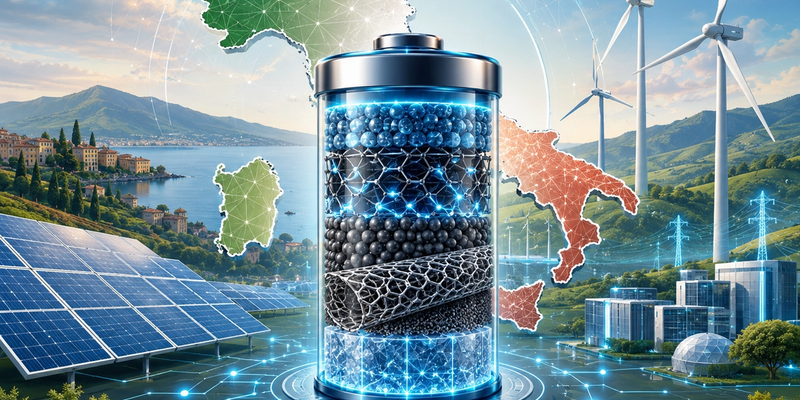
Graphene-based energy storage systems have been reported to reach energy densities up to 650 Wh/kg, compared to 150–250 Wh/kg for conventional lithium-ion batteries, according to a report focused on Italy's renewable energy storage needs. This performance gap highlights graphene's potential role in grid-scale storage applications, a key growth area for the advanced carbon materials sector.

Nanospan commercially launched GalvaShield-G, a graphene-enhanced corrosion inhibitor coating for offshore wind turbine towers and monopile foundations, priced at EUR 18 per litre and produced at its Hyderabad facility at 1,200 tonnes per annum capacity. The product demonstrates a commercial application of graphene in protective coatings for harsh marine environments, with third-party-validated maintenance interval extension from 5 to 12 years supporting the case for graphene's functional value in infrastructure composites.

GraphEnergyTech, the University of Cambridge, Taiwan Perovskite Solar Corporation, and ITRI launched the GETPSC project to develop graphene-based electrodes as a replacement for silver electrodes in perovskite solar cells. The project targets a known barrier to commercial-scale perovskite adoption, with potential secondary applications for GraphEnergyTech's conductive carbon technology in batteries, supercapacitors, and electronics.
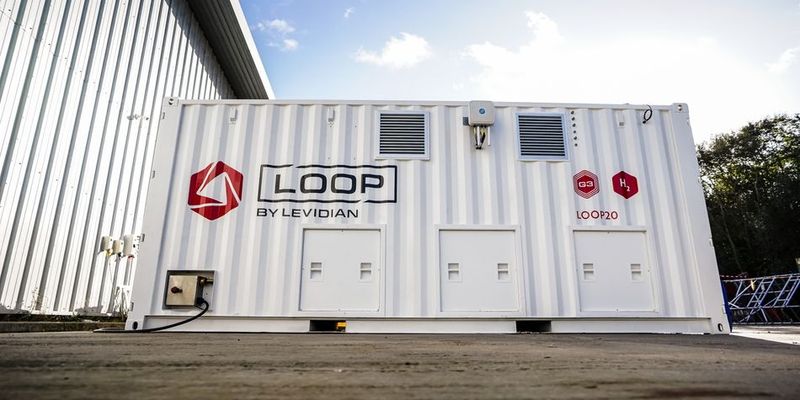
Levidian and Zentek have signed an agreement to explore building a graphene-integrated manufacturing facility in the Middle East, combining Levidian's methane-derived graphene production with Zentek's graphene-enhanced air filters. The deal signals growing regional demand for graphene-enhanced products and positions the Middle East as an emerging hub for graphene manufacturing and deployment across multiple industries.
First Graphene and Halocell Energy, in collaboration with Queensland University of Technology, reported that adding First Graphene's PureGraph graphene product to Halocell's perovskite solar cells raised efficiency to 30.6% and cut production costs by up to 80% by replacing gold and silver conductors via roll-to-roll processing. The result demonstrates a commercial application for graphene as a functional coating material in photovoltaics, with cost and efficiency metrics that could accelerate perovskite cell adoption over conventional silicon.

Researchers developed a 3D porous solar evaporator using recycled carbon fiber combined with a CuO/reduced graphene oxide photothermal layer to improve solar-driven water evaporation performance and salt resistance. The work demonstrates a pathway for valorizing recycled carbon fiber as a functional substrate in graphene-based photothermal composites, linking carbon fiber recycling with emerging solar evaporation applications.
Researchers at Yunnan Normal University and Kunming University of Science and Technology used biomass-derived graphene as a catalyst support to cut iridium loading in oxygen-evolution reaction catalysts for PEM electrolysis while maintaining performance.
First Graphene (ASX:FGR) reported 53% revenue growth in the half to December 2025, pinning its scale-up thesis on construction additives, protective coatings and energy-storage applications.