News11 October 2026· Graphene Feed
Real-world trial of graphene nanoplatelet-modified ready-mix concrete
GrapheneCompositesResearch & InnovationSupply Chain
36 articles on Graphene in Composites.
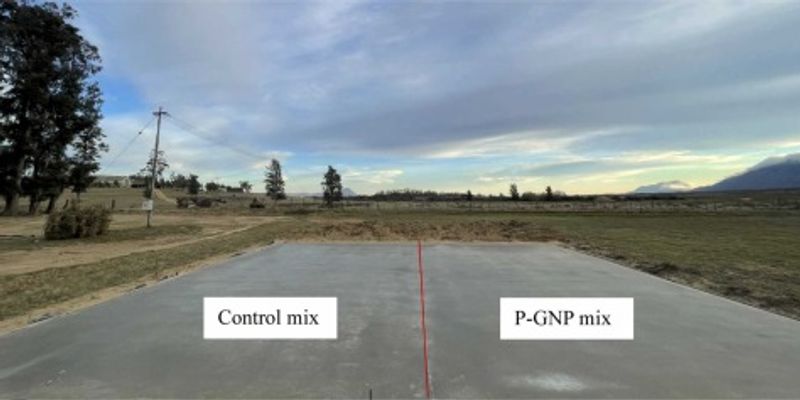
Researchers are conducting a real-world trial of pristine graphene nanoplatelet modified ready materials to assess their performance on a large scale.
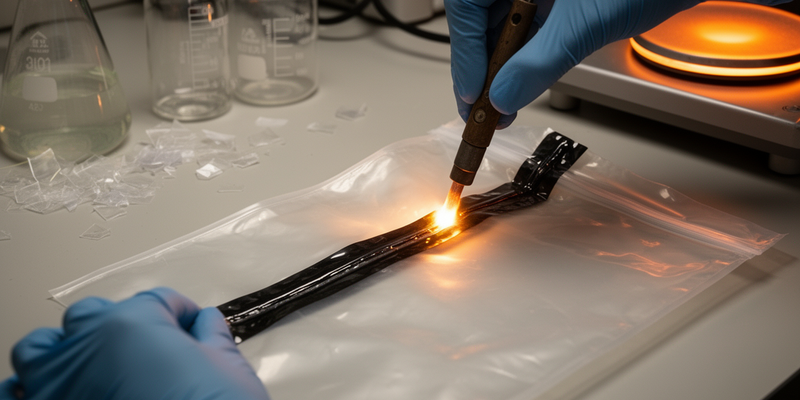
Researchers achieved thermal welding of PBAT and graphene oxide, reducing it to form porous composites with reduced graphene oxide.
Global Graphene Group seeks a Sales Engineer in Dayton, Ohio, to expand its graphene markets. Apply by December 31, 2026.
Researchers at Khalifa University reviewed how graphene enhances high-density polyethylene (HDPE). They examined compounding techniques and found that graphene improves HDPE's thermal, electrical, and barrier properties when well-dispersed.
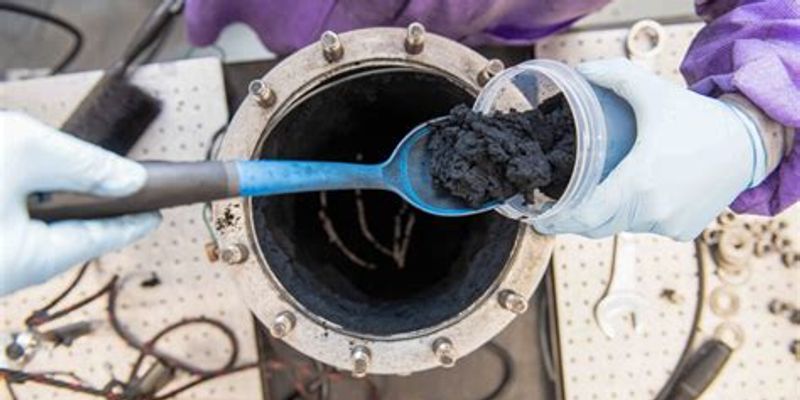
Researchers in Texas discovered their plasma reactor, initially aimed at hydrogen production, also creates graphene oxide from methane. This unexpected find offers a potentially cheaper production method.
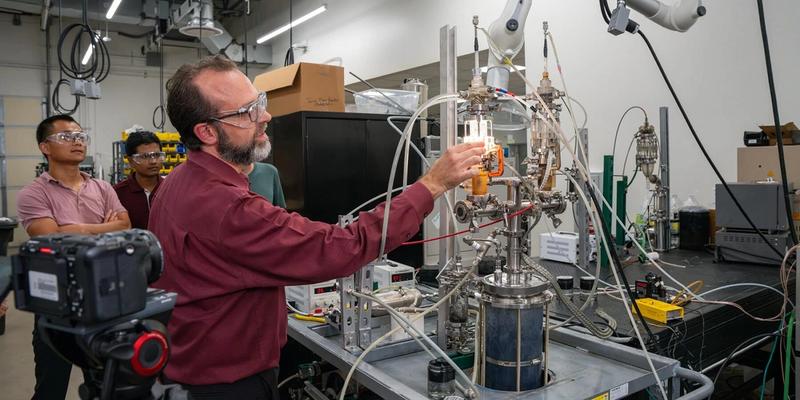
The Advanced Carbons Council calls for a U.S. carbon materials innovation platform focused on standards, testing and buyer qualification. The paper links engineered-carbon supply chains to manufacturing, energy, defense and AI infrastructure. Serves as a model for governments world-wide.
NanoXplore and VoltaXplore have been approved as qualified suppliers under Canada's Defence Drone Initiative Marketplace, covering graphene-enhanced composites and lithium-ion battery cells.

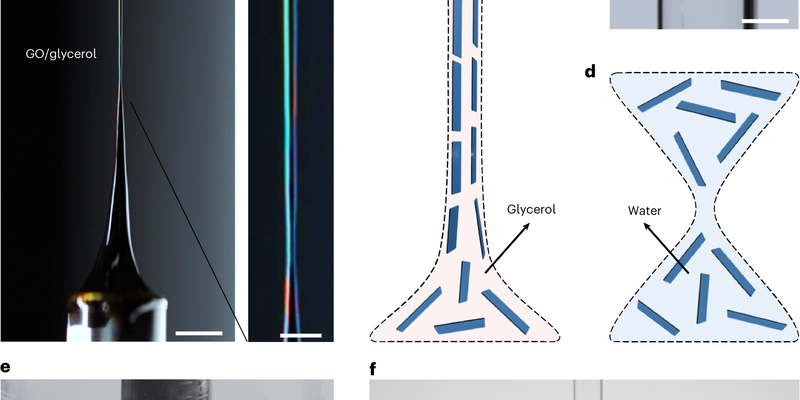
Researchers created polymer fibres with carbon nanotubes and graphene oxide flakes, reaching a gravimetric toughness of nearly 1,000 J g−1, surpassing spider silk and Kevlar.
China GRINM, Beijing Graphene Institute, and China Reform Fund are collaborating to commercialize graphene-metal composites, advancing the material from laboratory research to market applications.
Graphene is being formulated, screened, qualified and packaged around specific applications. Some of those products are beginning to move through conventional distribution networks. That may be one of the clearest signs yet that parts of the graphene industry are maturing.
This paper considers how graphene additions may improve mechanical and barrier performance in polymer-based materials while supporting lightweight designs. It notes that dispersion, processing and application-specific validation remain important.
First Graphene has acquired MITO Material Solutions' assets, equipment, intellectual property, and product lines, expanding its portfolio with functionalised graphene oxide.
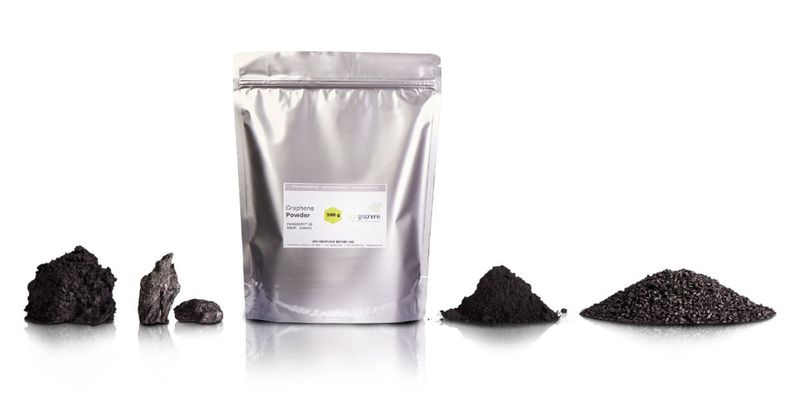
HydroGraph Clean Power Inc. opened its Texas headquarters in Austin, featuring a facility capable of producing 30 tons of pristine graphene annually. Congressman John Carter attended the event.

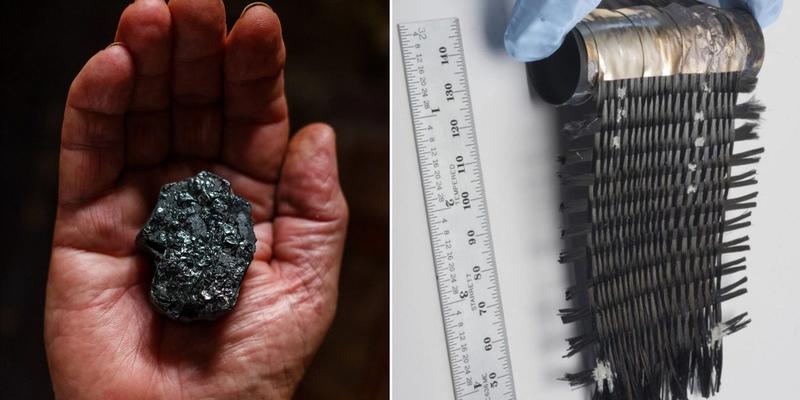
China has introduced a technology to convert regular coal into advanced carbon materials like carbon fibers and graphene.
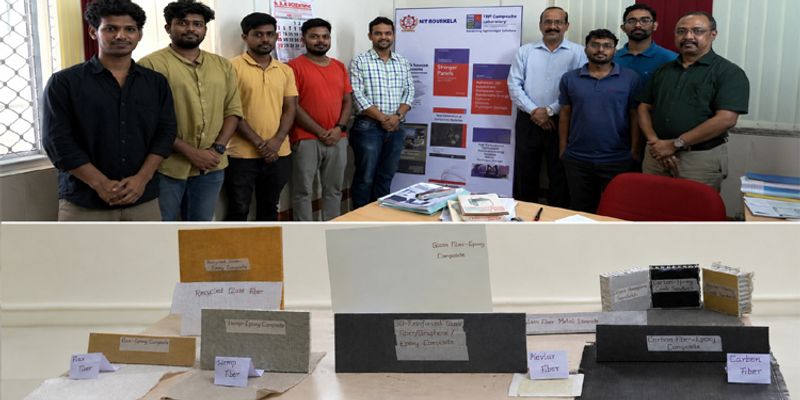
NIT Rourkela has patented a 3D-reinforced composite technology that boosts Fibre-Reinforced Polymer strength and durability, with potential applications in aerospace and automotive industries.
Mackenzie Fly Fishing has developed graphene-infused outdoor clothing that deters ticks, following unexpected results during a Highlands stalking trip. The fabric's anti-tick properties require no chemical treatments.

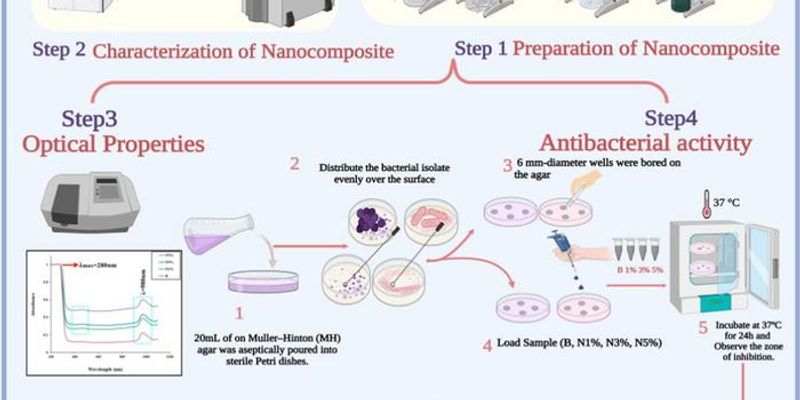
KeAi Communications Co., Ltd. reports on the antibacterial and anticancer capabilities of polymer nanocomposites enhanced with graphene-silicon nitride nanomaterials.
In a video, HydroGraph CEO Kjirstin Breure discusses how their graphene enabled a biosensor company to create technology that wasn't possible with other commercially available graphenes.

Researchers at Texas A&M University have developed a process to convert methane into graphene oxide using a nonthermal plasma-water interface, potentially reducing production costs.
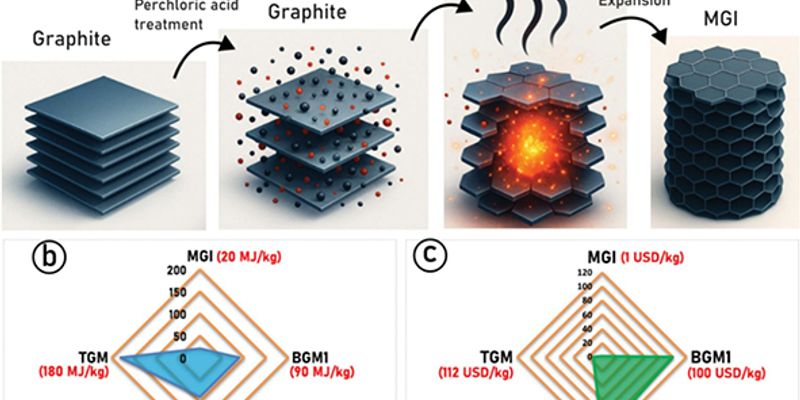
Researchers evaluated four graphene-based materials in carbon fibre/epoxy laminates for hydrogen storage tanks. The study focused on microwave-assisted graphene intermediate (MGI) composites.
Premier Graphene and HGI Industrial Technologies have reached a new milestone by completing the first manufacturing payment for 1,600 protective military belts under a contract with Mexico's Secretaría de la Defensa Nacional. This development highlights the growing use of graphene in defense applications, showcasing its potential to enhance the durability and protective capabilities of military equipment.
HydroGraph has certified Midland Compounding & Consulting (MCC) as a U.S. compounding partner for graphene-enhanced polymer applications. This certification enables MCC to support the development and commercialization of advanced graphene-enhanced materials, focusing on performance improvements and functional enhancements in industrial applications.

Turquoise Group has achieved Verified Graphene Producer® status, confirming its capability to produce 30 tonnes of high-purity few-layer graphene annually at its Brisbane facility. This certification enhances the company's credibility in delivering high-quality graphene, a material crucial for applications in coatings, composites, and energy storage.

Researchers at Texas A&M University have developed a new method to produce graphene oxide from methane using a plasma-based reactor, which simultaneously generates hydrogen as a byproduct. This scalable approach could reduce reliance on graphite for graphene oxide production, offering a cost-effective alternative for applications in batteries, electronics, and advanced manufacturing.
South Korea's Ministry of Science and ICT rated four of its 14 Small-scale R&D Zones—Seoul Hongneung, Pohang, Incheon Seo-gu, and Jinju—as "Excellent" in the 2025 annual evaluation, with Pohang's zone directing roughly 11 billion won toward Graphene Square and POSTECH to build the world's first mass-production plant for graphene film. The Pohang result signals growing state-backed infrastructure for scaling graphene manufacturing, a persistent bottleneck for the advanced carbon materials sector.
Professor Roman Gorbachev at the University of Manchester received a £1.9 million EPSRC Open Fellowship to lead a five-year project scaling van der Waals 2D material heterostructures from micrometre samples to wafer-scale fabrication using a new ultra-high vacuum platform. The work directly advances graphene and 2D materials manufacturing by targeting industrial-process compatibility and establishing a UK fabrication hub accessible to academic and industry users.

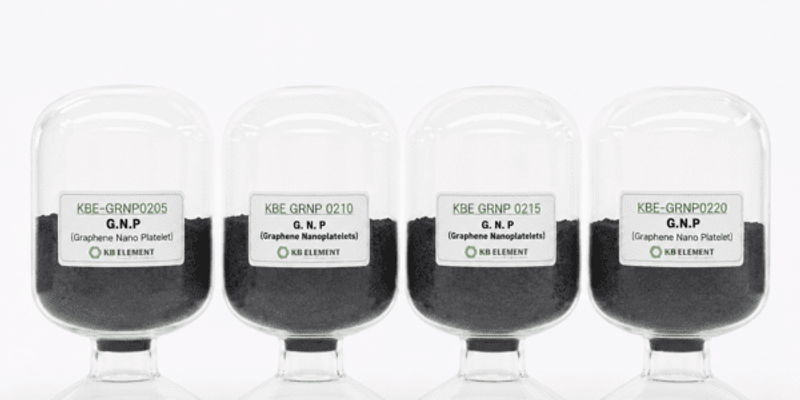
KB-Element will exhibit its non-oxidized graphene products, including graphene masterbatch pellets, at Nano Korea 2026 in Goyang, South Korea, from July 8 to 10. The company's plasma-based exfoliation process cuts production costs to roughly one-tenth of conventional methods, and its masterbatch format addresses graphene's longstanding dispersion challenges in polymer composites.
Canada's graphene sector has developed across production, construction, filtration, printed electronics, and energy storage, with companies such as NanoXplore operating a 4,000-metric-ton-per-year facility in Montréal and firms like Zentek and Graphene Leaders Canada advancing application-specific products toward commercial deployment. The ecosystem signals a shift from materials science demonstration toward repeatable industrial use cases in carbon-based composites, conductive additives, and separation technologies, though commercial viability still depends on product qualification, standardization, and cost competitiveness against incumbent materials.
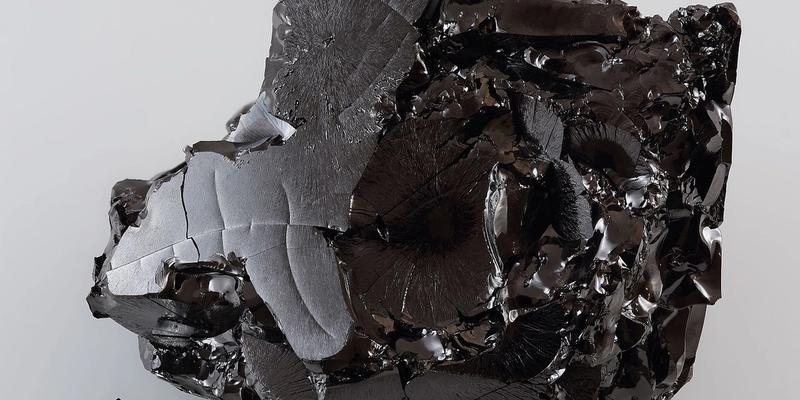
Terrance Barkan of the Advanced Carbons Council and Dr. Andrew Pollard of the UK's National Physical Laboratory discussed how measurement science, standardization, and materials verification underpin the commercialization of graphene and other advanced carbon materials. For the sector, the conversation highlights that without validated characterization methods and traceable measurement standards, reproducible manufacturing and scalable deployment of carbon nanomaterials — including graphene, carbon nanotubes, and emerging MXenes — remain unachievable.
Researchers used a modified tear-and-stack technique with a PDMS/PPC stamp to prepare twisted bilayer graphene samples for infrared microscopy analysis. The method enables nanoscale force mapping in graphene, which could improve characterization of stacked graphene structures used in advanced carbon materials research.
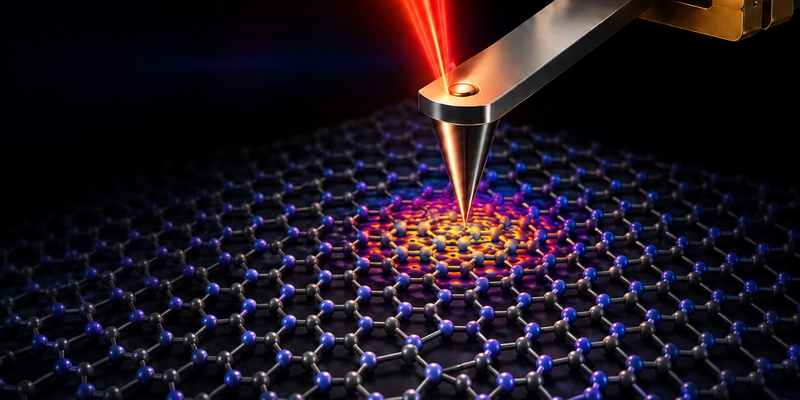
The Advanced Carbons Council published a position paper in May 2026 arguing that carbon credit financing should be redirected from geological carbon capture and sequestration toward conversion of captured carbon into advanced materials such as graphene, carbon fiber, biochar, and carbon nanotubes. The paper contends that carbon-to-materials conversion projects are commercially self-sustaining without ongoing subsidies, unlike CCS, and deliver compounding lifecycle emissions reductions across sectors including construction, aerospace, agriculture, and energy storage.
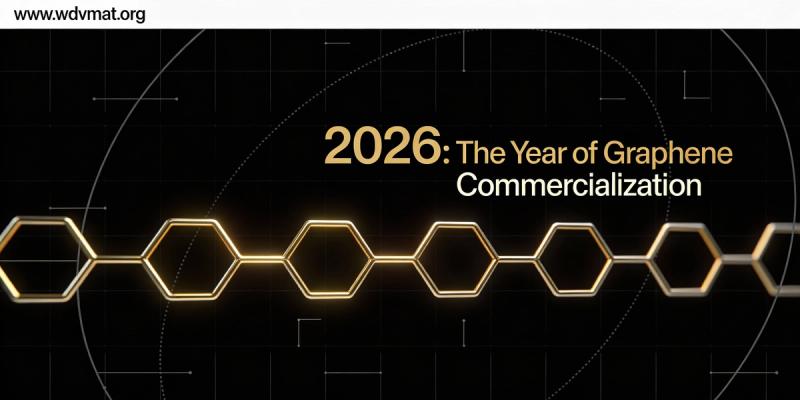
Researchers at the National University of Singapore developed monolayer amorphous carbon (MAC), a two-dimensional material with toughness measured at eight times that of graphene's ~130 GPa tensile strength benchmark. The finding suggests that engineered structural disorder in carbon nanomaterials may offer performance advantages over crystalline perfection, with potential implications for composite reinforcement and next-generation carbon material design.
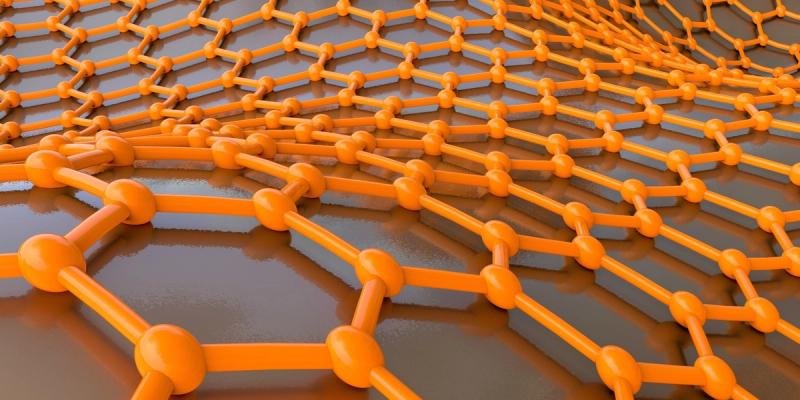
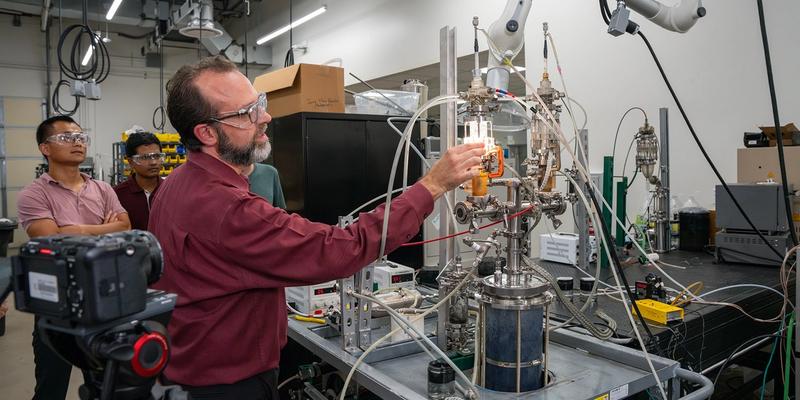
Researchers at EMPA demonstrated a graphene-composite leading-edge skin that reduces aircraft de-icing energy consumption by 60%, achieving ice shedding at 5 W/cm² in panels tested at -25°C and 240 km/h after 1,200 cycles without delamination. The result advances graphene's case as a functional heating element within carbon-fibre-reinforced polymer structures for aerospace applications, with EMPA now scaling production toward trial integration in a commercial trainer aircraft.

Jin, Hong, Fonseca, and colleagues used MD simulations with AIREBO and ReaxFF potentials to study how parallel crack spacing affects fracture in H-passivated graphene, finding a brittle-to-ductile transition beyond a critical crack gap. The results show that crack geometry alone can tune graphene's fracture behavior, with direct implications for defect engineering strategies in graphene-based composites and devices.

Levidian and Graphmatech announced a partnership to co-develop graphene-based polymer composites for hydrogen applications, including pipelines and pressure vessels where graphene reduces hydrogen gas leakage by up to 83%. The collaboration combines Levidian's graphene production with Graphmatech's dispersion technology, targeting a growing market for high-performance composites in the hydrogen sector.
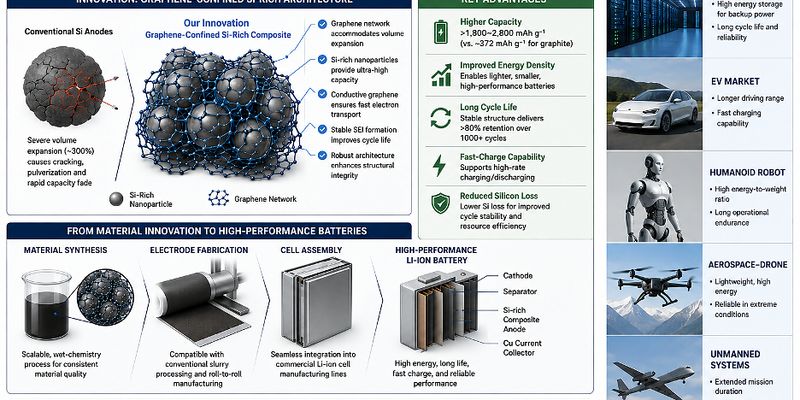
Solidion Technology (Nasdaq: STI) was granted 7 new US patents on June 8, 2026, bringing its total anode materials patent portfolio to 130 US patents. The patents cover a silane-free, graphene-enabled silicon anode process that raises Si loading in porous graphene balls to 90%, directly addressing cost, safety, and energy density limitations in current CVD-based carbon-silicon composite anode manufacturing.